
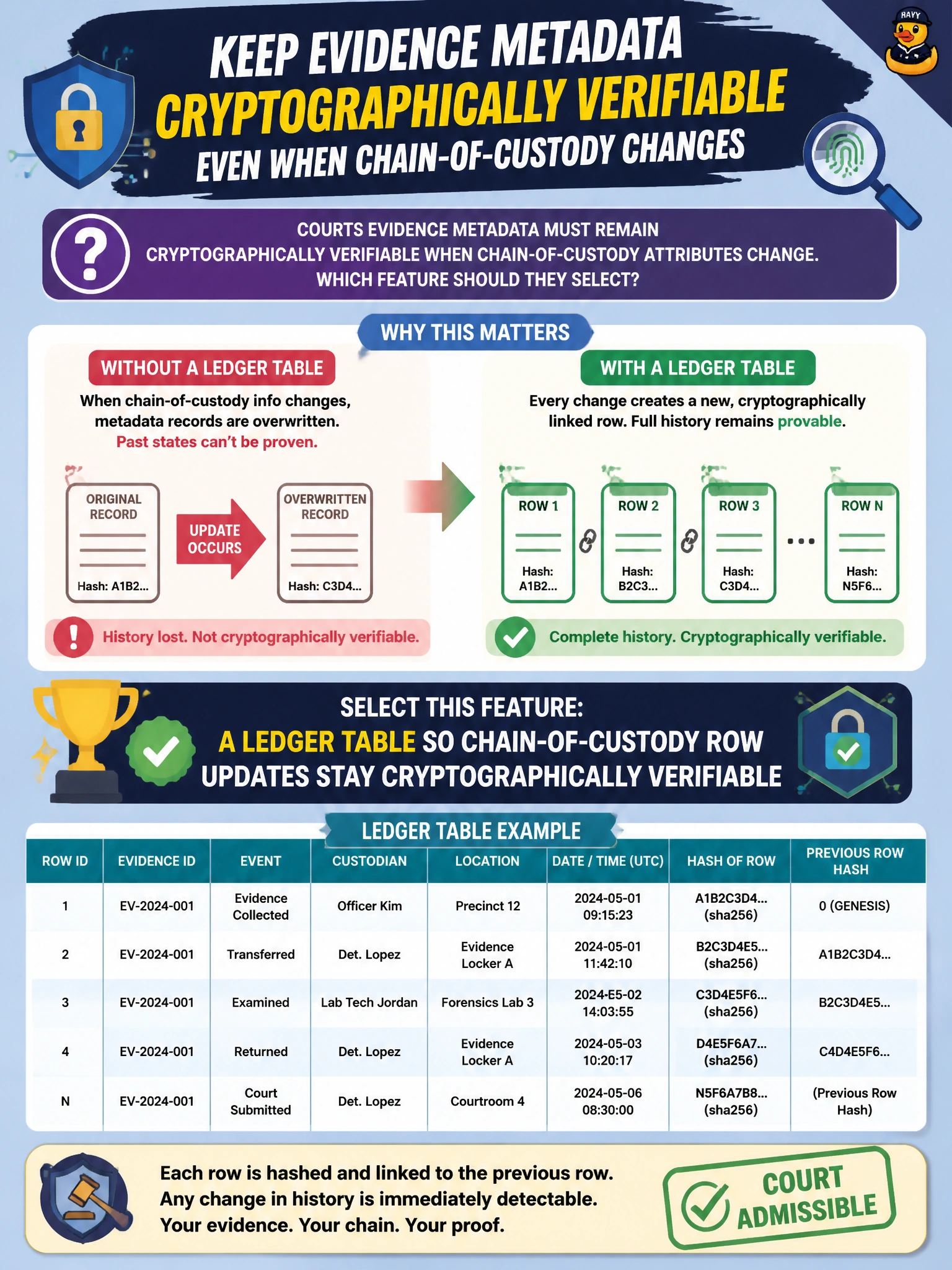
Courts evidence metadata must remain cryptographically verifiable when chain-of-custody attributes change. Which feature should they select?
Select an answer to reveal the explanation.
Short Explanation
Ledger on evidence metadata is the court’s unbroken seal—if custody fields change, the cryptographic trail shows it. A default “clerk” stamp or a hiding view does not give you that tamper-evident chain.
Full Explanation
Chain-of-custody attributes on evidence metadata must remain cryptographically verifiable when updates occur. Ledger tables provide digests and verification paths so courts can detect unauthorized or unnoticed alterations to custody-related columns, supporting integrity expectations beyond ordinary discretionary updates. That is the specialized Azure SQL capability aligned with tamper-evident custody tracking for municipal evidence systems. A DEFAULT that stamps ModifiedBy as 'clerk' only writes a label; it does not cryptographically verify prior values. A view that hides custody columns may reduce exposure but offers no digest verification of what changed. A SEQUENCE that renumbers evidence IDs nightly actively damages lineage and obscures custody rather than protecting it. Caveat: ledger protects integrity of stored data; it does not replace physical evidence procedures or application authentication—use it as the database layer of a broader chain-of-custody control set. Also plan who can run verification and how digest history is retained for audits. Operational check: update a custody attribute on a ledger-protected evidence row in a test environment, then run ledger verification for that table and confirm you can detect or account for the change according to your ledger configuration.