
Permits silver must enrich applications with parcel keys and combine multiple historical years. Which approach is correct?
Select an answer to reveal the explanation.
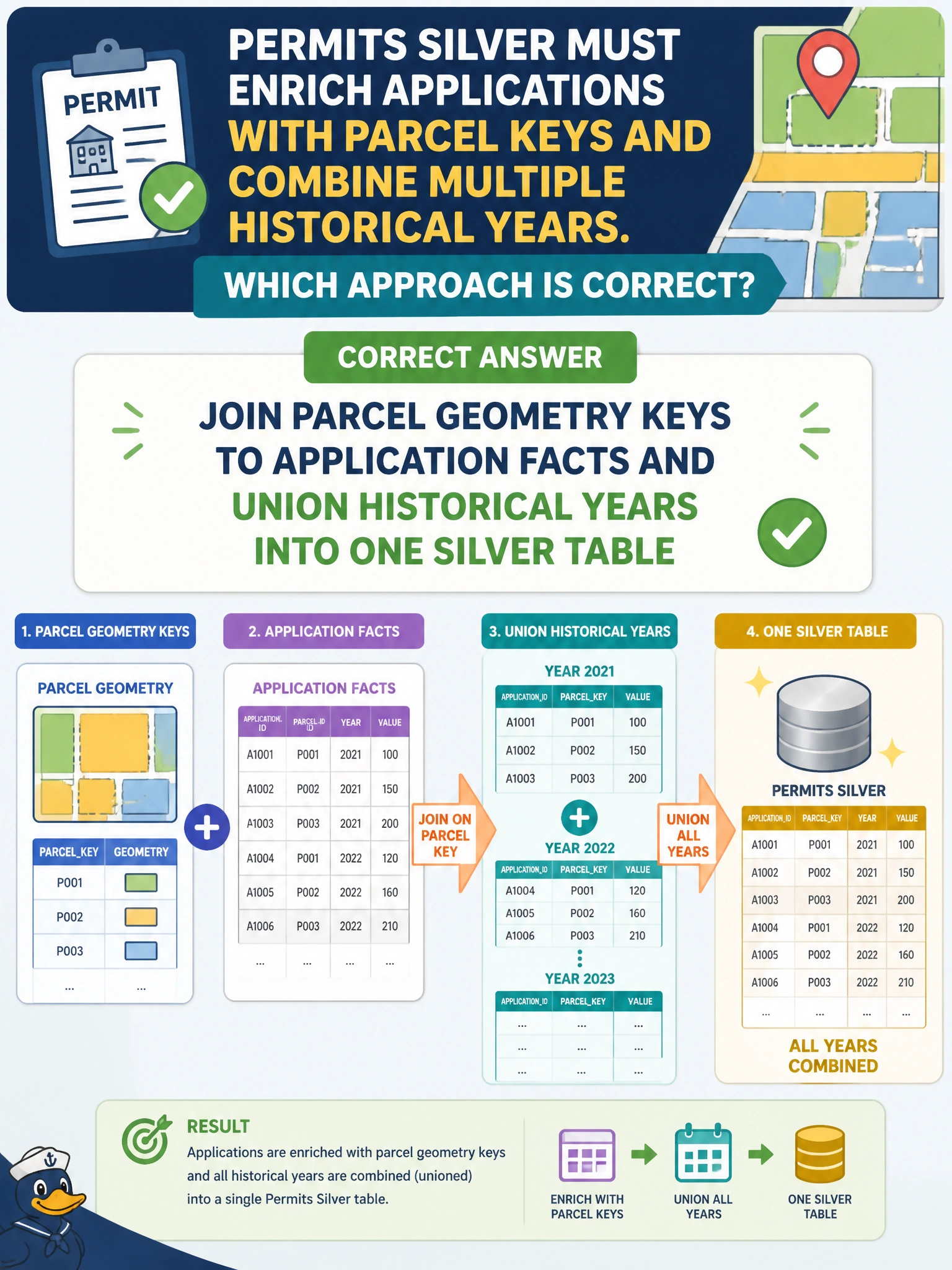
Short Explanation
You'll join parcel geometry keys onto each application and you'll stack historical years with a union into one silver table. Aggregating wipes out the row-level detail you'll need, joining years mangles them side-by-side, and street address text can't give you the geometry you'll need for location work.
Full Explanation
Permits silver should join parcel geometry keys onto application facts and union historical years into one curated table. Parcel enrichment enables location analytics, inspections routing, and neighborhood rollups; unioning years gives analysts a single silver history instead of fragmented annual silos. Together, join-plus-union is the standard way to curate multi-year municipal permit applications against the parcel fabric.
Aggregating parcel geometry keys with application facts while unioning historical years into one silver table throws away the application-level detail the stem calls for—aggregates show totals per parcel but cannot support the row-level parcel-enriched history silver is supposed to curate. Joining parcel geometry keys to application facts gets the enrichment right but joining historical years is the wrong combine operation—joins match rows side-by-side on keys and can mismatch or multiply across years, while unioning compatible schemas stacks yearly rows into the single multi-year history silver needs. Joining parcel address attributes to application facts while unioning historical years gets the union right but enriches with the wrong parcel fields—address text cannot support the geometry-based location analytics and inspections routing that parcel geometry keys enable, so silver still lacks the required enrichment.
Exam caveat: Enrichment joins use defined keys (parcel_id, APN); unions stack compatible historical schemas, keyed equi-joins, not aggregates, year-to-year joins, or address-attribute joins. Bronze may hold raw yearly files; silver consolidates and enriches.
Operational check: Join a known application_id to its parcel_id and verify geometry or APN attributes appear in silver. Union two historical years and confirm row counts equal the sum of valid yearly rows without schema drift errors. Run an explain or count check proving the join is equi-join keyed, not a cartesian product.
Prefer to study offline? Printable PDF study book + test engine ($7.50, unofficial). These questions stay free here.