
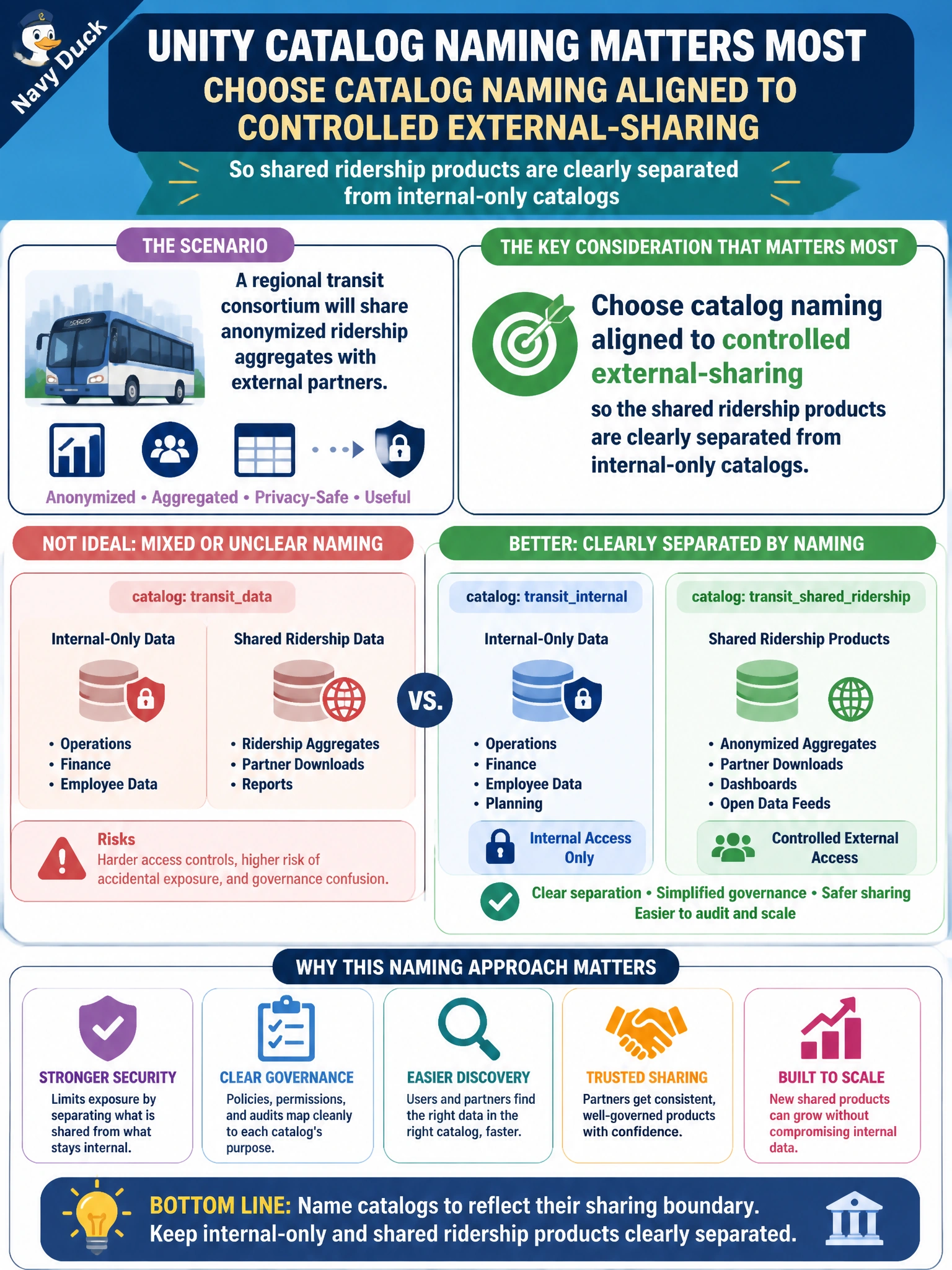
A regional transit consortium will share anonymized ridership aggregates with external partners. What Unity Catalog naming consideration matters most when creating the catalog?
Select an answer to reveal the explanation.
Short Explanation
If partners will receive anonymized ridership aggregates, name and isolate that catalog for external sharing so it never gets confused with internal-only piles. Mixing shareable gold with raw bronze PII under “misc” is how incidents start.
Full Explanation
When a regional transit consortium will share anonymized ridership aggregates with external partners, the Unity Catalog naming consideration that matters most is choosing catalog naming aligned to controlled external-sharing so shared ridership products are clearly separated from internal-only catalogs. Clear catalog boundaries reduce mistaken shares of internal bronze/PII datasets and make Delta Sharing / external recipient grants easier to reason about for multi-agency governance.
Naming the catalog after a temporary laptop hostname so partners can SSH to the driver misunderstands sharing (partners receive governed data shares, not SSH to drivers) and creates unstable, non-governable names. Hiding all names and sharing raw bronze PII under a generic misc catalog violates anonymization intent and least privilege. Using identical names for internal PHI catalogs and external share catalogs to “reduce documentation” maximizes confusion and mis-share risk across agencies.
Exam caveat: Delta Sharing shares schemas/tables from UC; catalog design should make shareable gold/aggregate products obvious versus internal-only zones. Anonymized aggregates still need contractual and technical controls—naming alone is insufficient but is what this stem asks. Do not put partner-facing shares in catalogs that also hold unrestricted PII “for convenience.”
Operational check: create a distinctly named external-share or partner catalog for anonymized ridership products, keep internal operational catalogs separate, grant share recipients only on approved objects, and review share inventory before each partner onboarding.
Prefer to study offline? Printable PDF study book + test engine ($7.50, unofficial). These questions stay free here.