
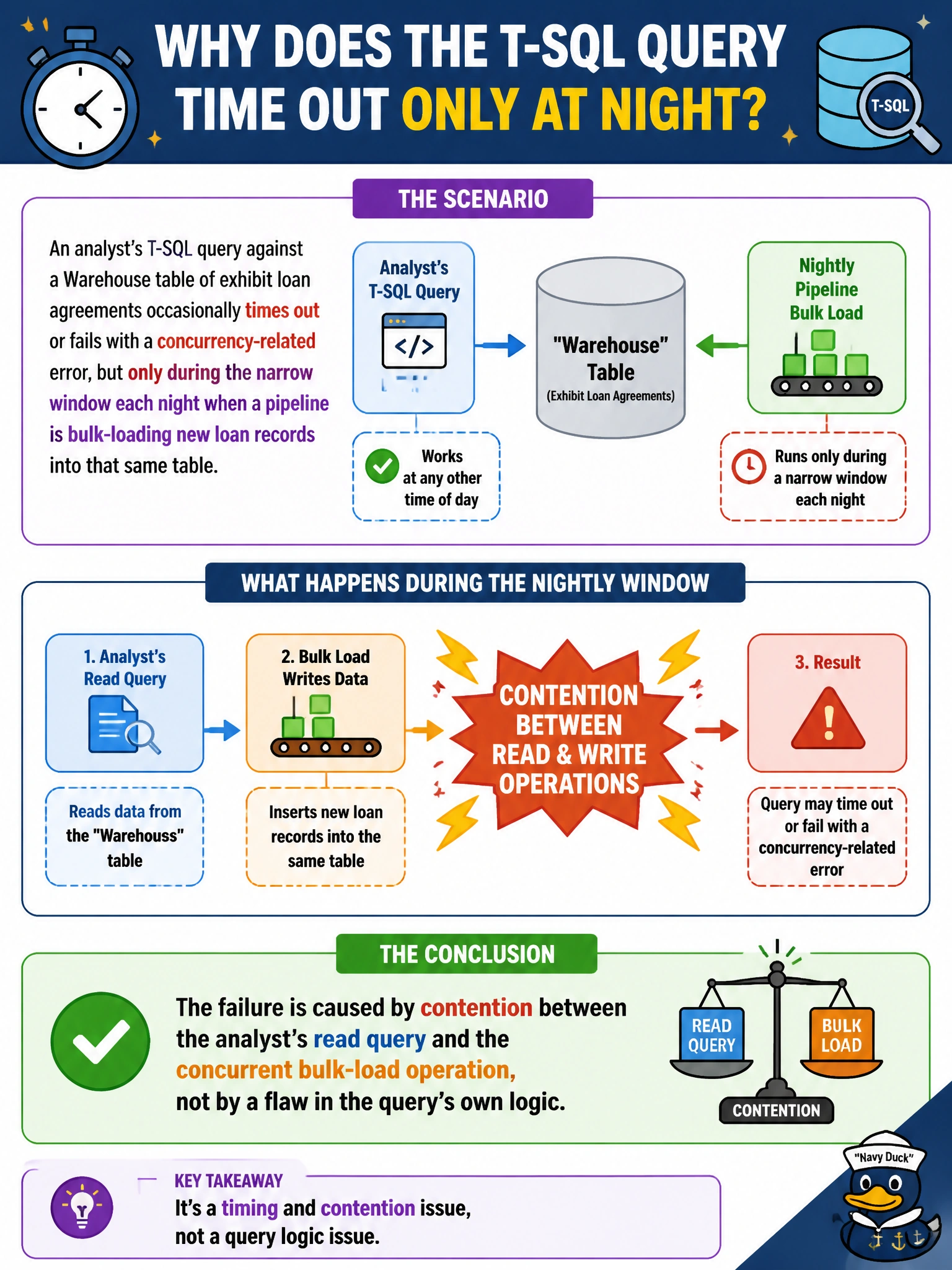
An analyst's T-SQL query against a Warehouse table of exhibit loan agreements occasionally times out or fails with a concurrency-related error, but only during the narrow window each night when a pipeline is bulk-loading new loan records into that same table. Running the identical query at any other time of day works without issue. What should the engineer conclude?
Select an answer to reveal the explanation.
Short Explanation
A query that only breaks when something else is hammering the same table at the same time isn't lying to you about its own logic — it's caught in someone else's traffic jam. Run it any other hour and it's fine, which is exactly the signature of two operations colliding over the same data, not a bug sitting quietly in the query.
Full Explanation
The scenario's timing detail is the whole story: the query fails only during the exact window a separate bulk-load pipeline is writing into the same table, and succeeds reliably at every other time, which is the classic signature of resource contention or concurrency conflict between a read and a concurrent write-heavy load rather than a defect in the query's own logic. A genuine logic bug would be expected to reproduce based on the data's content or shape, not based on the clock, and would not correlate so tightly with another process's schedule. Intermittent account permission problems would not correlate with a specific nightly load window either, since permissions do not fluctuate on that kind of external schedule. Schema corruption during a load is a far more severe condition that would typically produce persistent, structural errors rather than a transient issue that clears up the moment the load finishes. The concrete resolution path is to coordinate the timing of reporting queries against this table with the load window, or to design the pipeline's load pattern to reduce contention with concurrent readers, and to confirm the fix by verifying the same query now succeeds consistently even when deliberately run during the former problem window.