
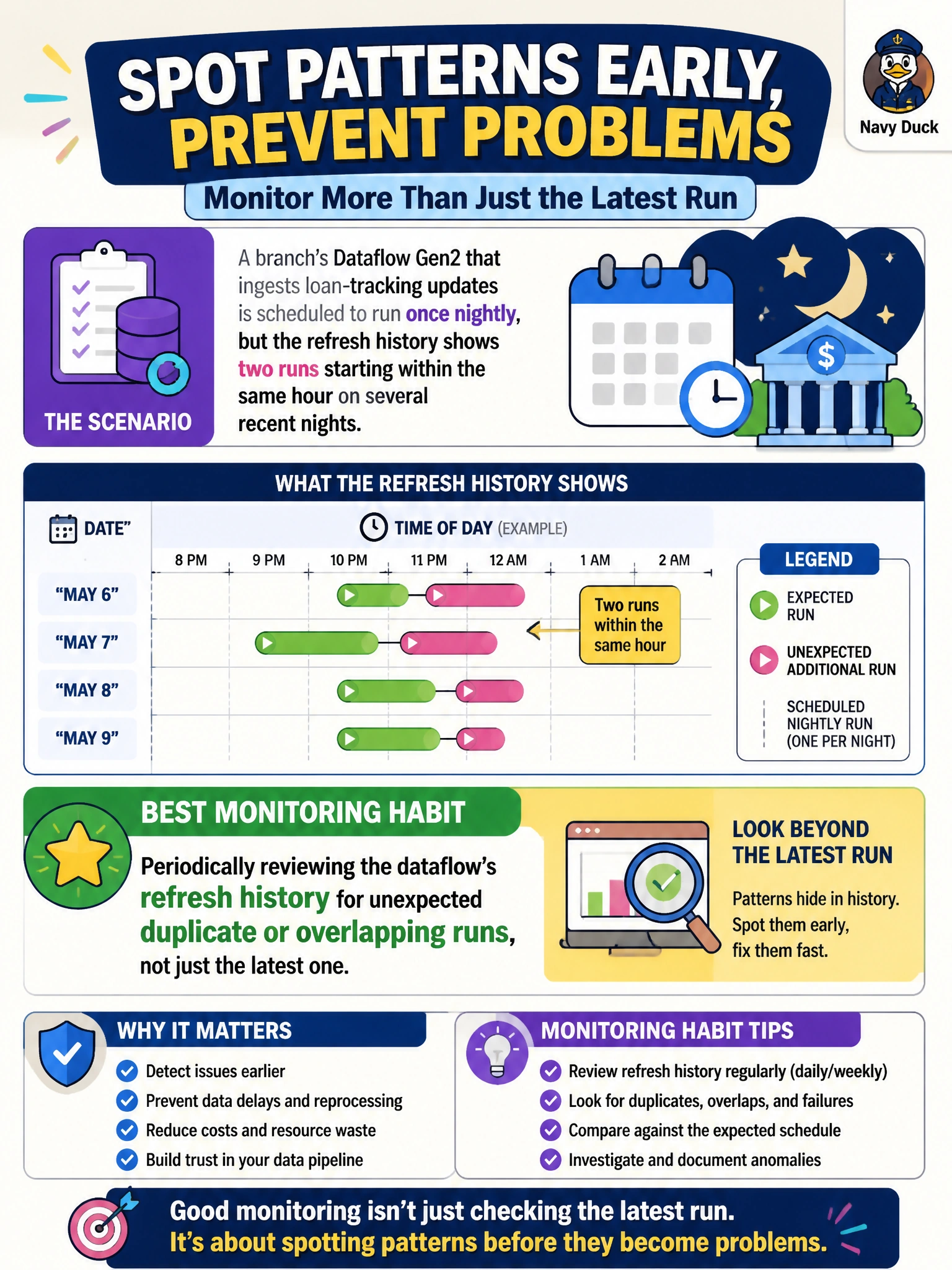
A branch's Dataflow Gen2 that ingests loan-tracking updates is scheduled to run once nightly, but the refresh history shows two runs starting within the same hour on several recent nights. Which monitoring habit would have surfaced this pattern earliest?
Select an answer to reveal the explanation.
Short Explanation
Only ever glancing at whether last night's run worked is like only checking today's mail and missing that two duplicate bills arrived last week. Scanning the fuller refresh history is what catches the pattern.
Full Explanation
Reviewing a dataflow's refresh history over a stretch of nights, rather than only checking the single most recent run, is what would have surfaced a recurring pattern like two runs starting within the same hour, since that kind of overlap is invisible if only the latest entry is ever checked. Sensitivity label assignments are a governance and classification concern tracked separately from run history and would show nothing about scheduling or duplicate runs. The Eventhouse's ingestion monitoring surface reports on a different item type's streaming ingestion entirely, unrelated to this Dataflow Gen2's own scheduled runs. Item endorsement status reflects certification or promotion of an item for trust purposes and has no connection to its run history. Making a habit of periodically scanning several nights of history, rather than only the latest entry, is a general monitoring practice that catches slow-forming or intermittent patterns long before they escalate into a visible failure.