
A data engineer designing the archives network's nightly ingestion wants to isolate any failure in a branch's export format so a bad file cannot corrupt the conformed silver tables, and wants the ability to reprocess a failed run without re-extracting from the source branch system. Which practice addresses this?
Select an answer to reveal the explanation.
Short Explanation
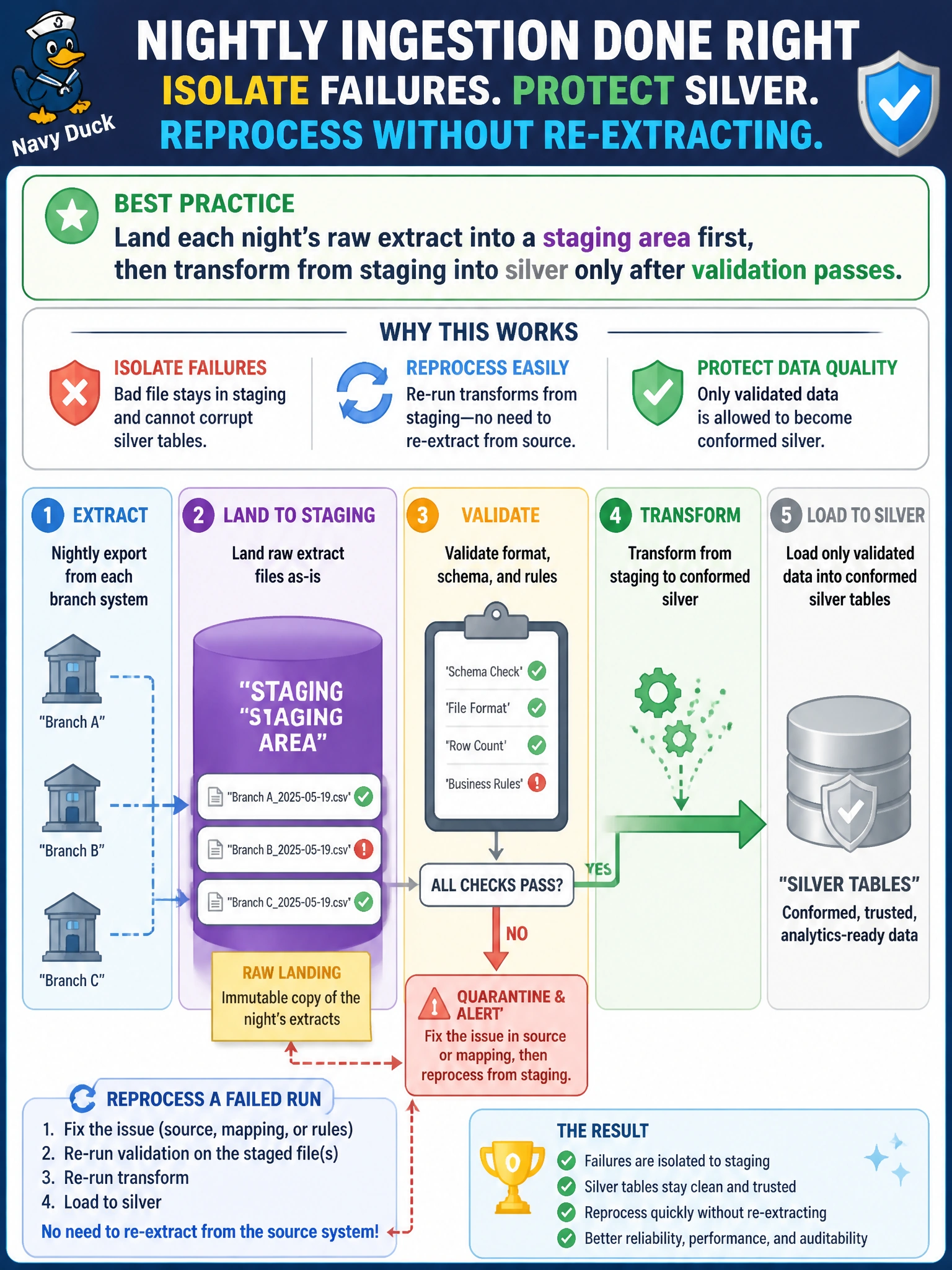
Give the incoming data a holding pen before it touches anything important. A staging area catches the raw nightly extract first, so a bad file gets caught and reprocessed from staging, without corrupting silver or re-hitting the source branch.
Full Explanation
A staging strategy lands raw extracted data in an intermediate location before any transformation into the conformed silver layer, which isolates format or quality problems in a single branch's export and gives the pipeline a safe point to reprocess from without going back to the source system. This directly satisfies both requirements in the scenario: containing bad data before it reaches silver, and enabling reprocessing without re-extraction. Loading each night's extract directly into silver while transforming it as it lands removes that isolation entirely, so a malformed file corrupts the very table downstream reports depend on, with no intermediate copy to recover from. Skipping raw landing and transforming only in memory means a failure loses the data outright, forcing a full re-extraction from the branch system every time something goes wrong, which is the opposite of what's being asked for. Overwriting the prior night's silver table in place before validating the new extract is especially risky, since a bad load destroys the last known-good state with no staged copy to fall back on and no validation gate in front of the overwrite. When implementing staging, define a clear retention and cleanup policy for the staging area, since keeping every night's raw extract indefinitely can quietly become a significant storage cost.