
A national archives network is designing a medallion architecture in its Lakehouse for digitised-collection metadata pulled nightly from each branch's collection-management system. What should the bronze layer contain?
Select an answer to reveal the explanation.
Short Explanation
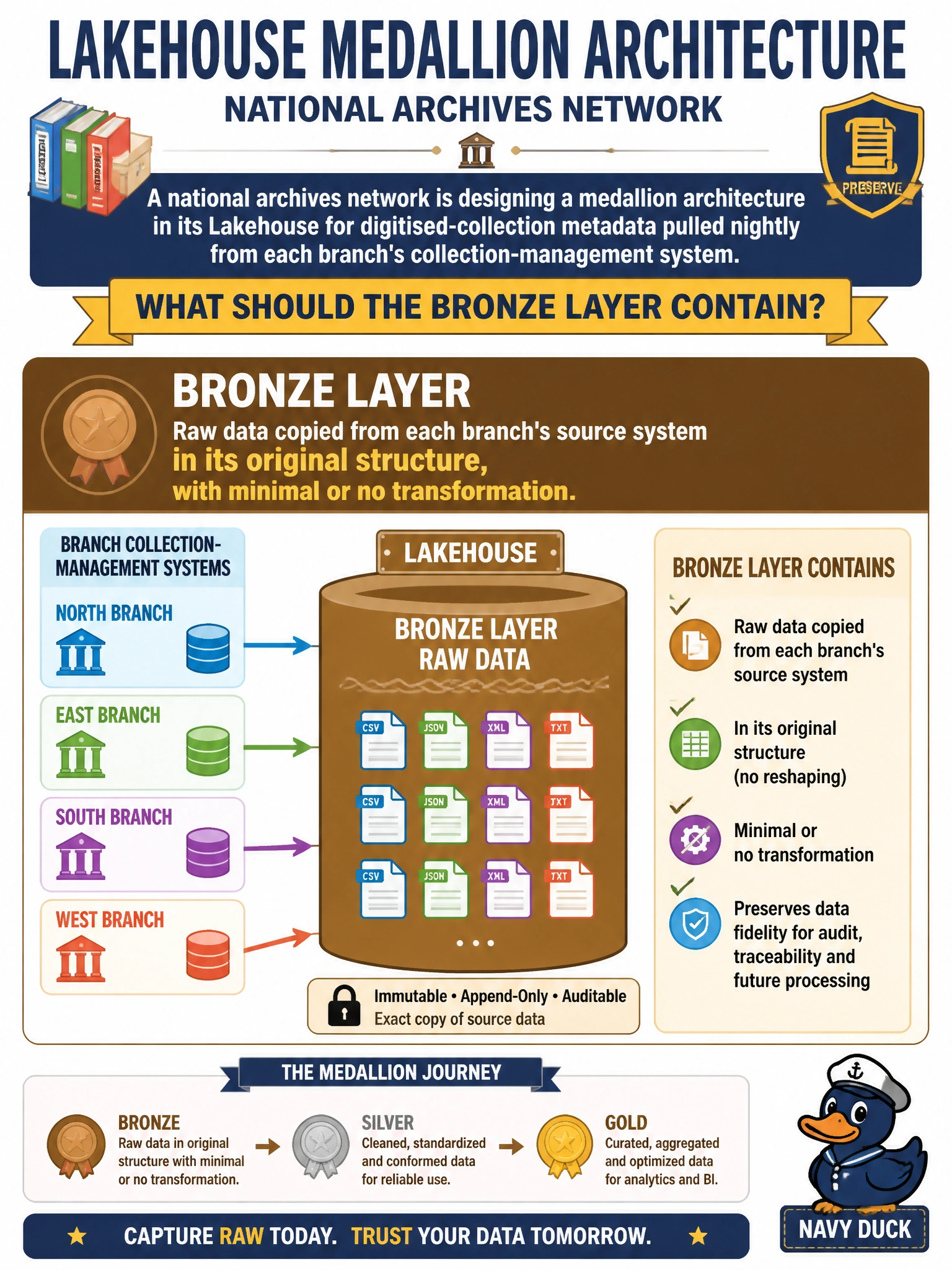
Think of the bronze layer as the museum's intake dock: everything comes in exactly as it arrived, unsorted and untouched, so nothing gets lost before anyone's had a chance to look at it. It holds raw data, preserved close to source structure, before any cleansing happens.
Full Explanation
The bronze layer in a medallion architecture is the landing zone for raw, largely unmodified data as it comes from the source, preserving the original structure and values so the pipeline always has an unaltered copy to reprocess from if a downstream transformation needs correcting or a bug is found. This matters for nightly ingestion from multiple branch systems, since it gives a single, trustworthy point of truth for what each source actually sent. Deduplicated and conformed records joined across branches describe the silver layer's job, where cleansing, standardization, and cross-source conforming happen after the raw data has landed; putting that logic in bronze would remove the safety net of an unmodified copy. Business-ready aggregates for Power BI describe the gold layer, the final, curated layer built for consumption, which is several transformation stages downstream of bronze. Records that failed validation describe an error or quarantine pattern that might exist alongside silver-layer processing, but it is not what defines the bronze layer's purpose, and a bronze layer isn't a filter for bad data, it's simply a mirror of what arrived. When implementing this, confirm the bronze ingestion step captures enough source metadata, such as ingestion timestamp and source system identifier, so later layers can trace any record back to exactly where and when it arrived.