
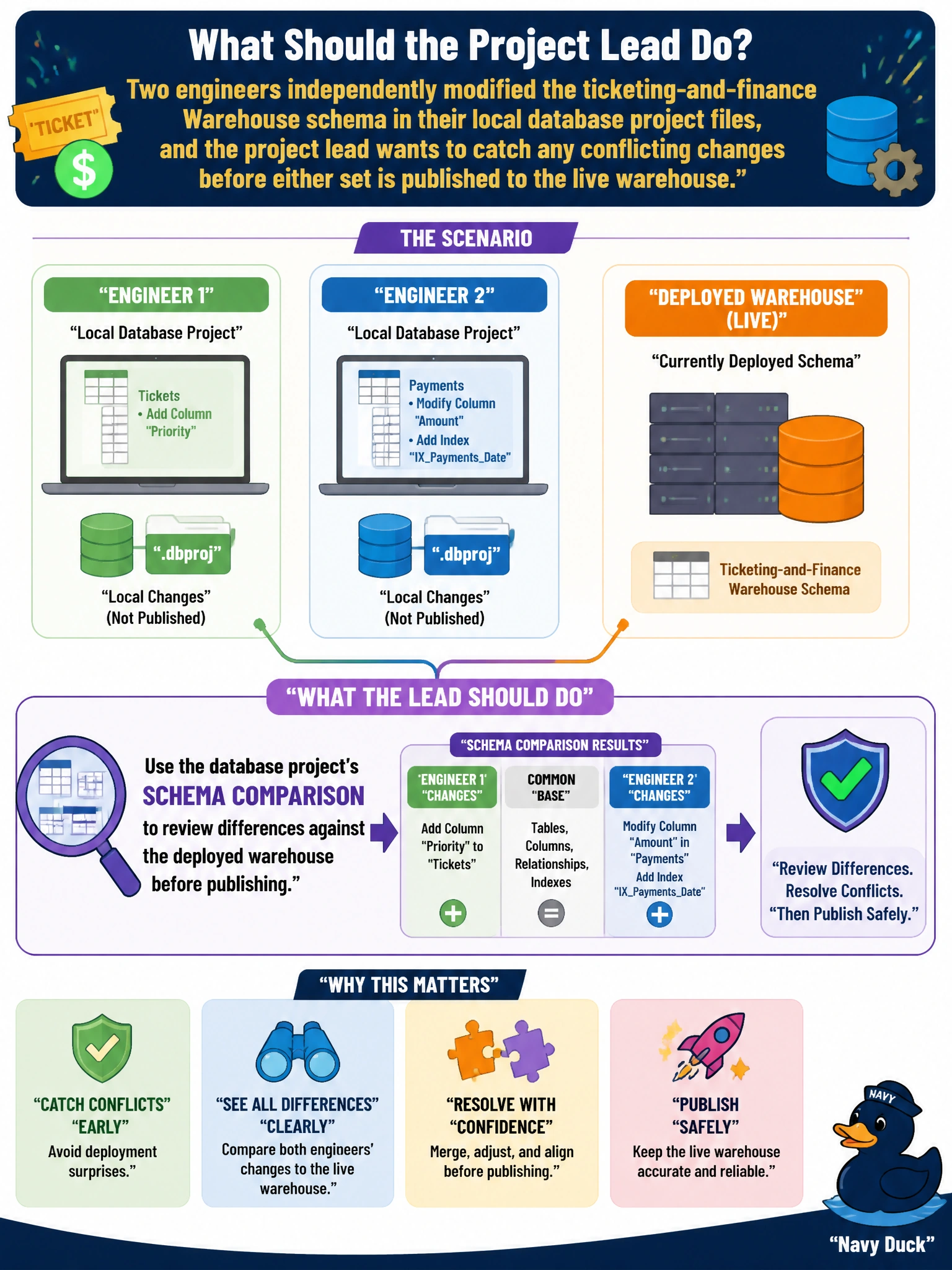
Two engineers independently modified the ticketing-and-finance Warehouse schema in their local database project files, and the project lead wants to catch any conflicting changes before either set is published to the live warehouse. What should the lead do?
Select an answer to reveal the explanation.
Short Explanation
A database project's schema comparison is like running a spellchecker before you hit send -- it lines up the proposed changes against what's actually live and flags exactly where they diverge, so conflicting edits get caught before they collide inside the real warehouse.
Full Explanation
The database project's schema comparison tool is built specifically to diff proposed schema changes against the currently deployed warehouse, surfacing exactly where two independently modified projects conflict before either gets published -- which is the precise safeguard this scenario calls for. Relying only on the deployment pipeline's item-level stage comparison shows whether an item differs between stages at a coarser level; it isn't designed to surface a fine-grained, table-and-column-level schema conflict between two competing local edits before either is committed. Manually querying system catalog views and eyeballing the results is slow, error-prone, and doesn't scale as schemas grow -- exactly the manual process schema comparison tooling replaces. Turning off version control removes the safeguard that's tracking the changes in the first place and does nothing to resolve the underlying conflict. A caveat: schema comparison catches structural conflicts, not data-level conflicts, so any seed or reference data changes still need separate review. Confirm resolution by re-running the comparison after merging and seeing a clean diff against the deployed warehouse.