
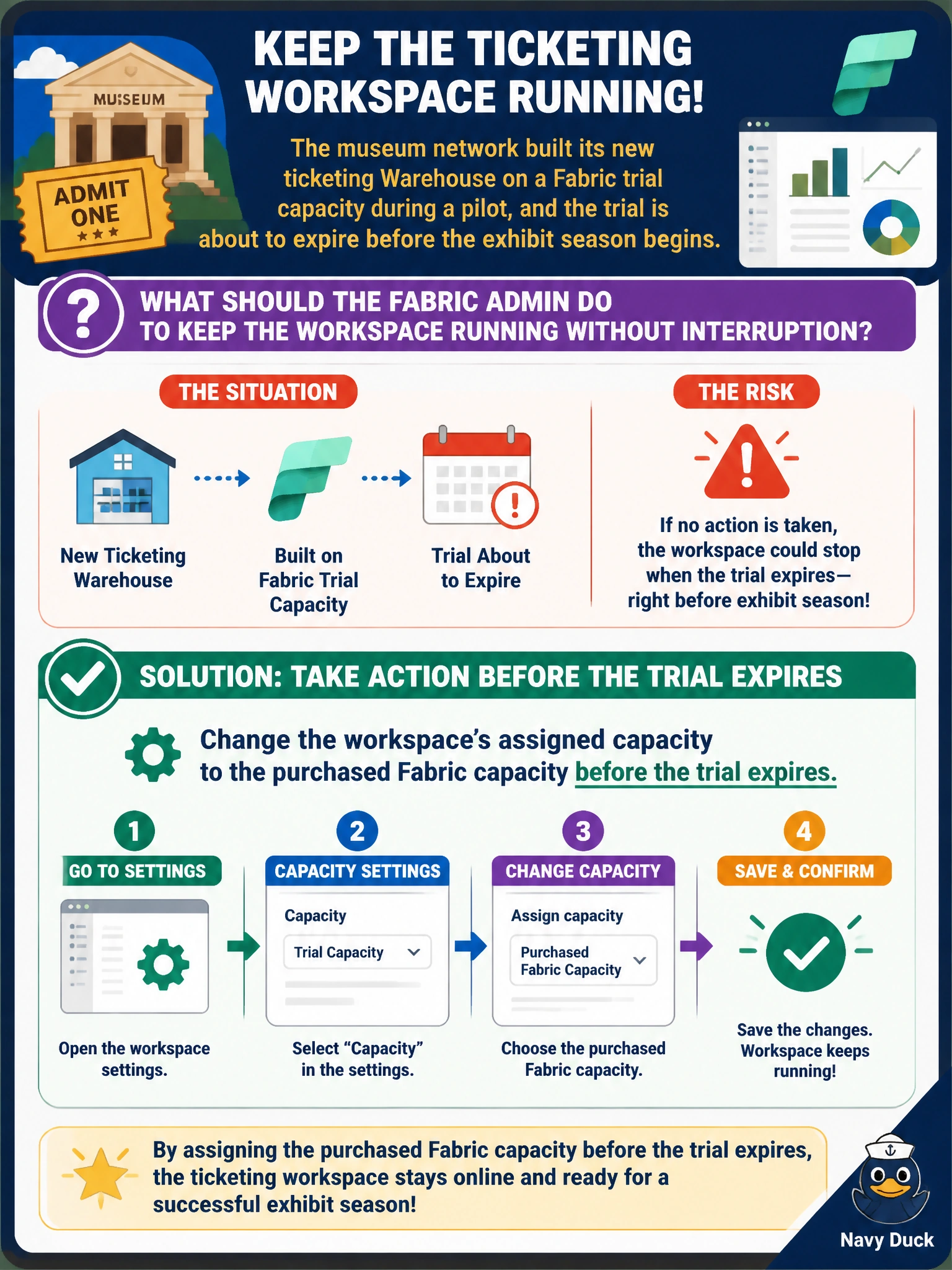
The museum network built its new ticketing Warehouse on a Fabric trial capacity during a pilot, and the trial is about to expire before the exhibit season begins. What should the Fabric admin do to keep the workspace running without interruption?
Select an answer to reveal the explanation.
Short Explanation
A trial capacity is like a rental car with a return date stamped on it -- once that date hits, the workspace has nowhere to run unless it's already moved to a capacity it actually owns. Switching the workspace's assigned capacity ahead of the expiry is what keeps the lights on.
Full Explanation
Every Fabric workspace runs on whichever capacity it's assigned to in its settings, and a trial capacity has a fixed expiration after which workspaces still pointing at it lose their compute backing -- so the fix is changing the workspace's capacity assignment to the purchased Fabric capacity before that date. Creating a deployment pipeline manages lifecycle promotion between environments; it has no bearing on which capacity powers the workspace's compute. Enabling Apache Airflow provisions a DAG-orchestration environment, an unrelated workspace setting that doesn't touch capacity assignment. Connecting to Git manages source control for item definitions, again a separate concern from what pays for compute. A scope note: reassigning capacity does not migrate data or move the workspace to a different domain -- it only changes the compute backing it, so item content and permissions carry over untouched. Confirm the change by checking workspace settings shows the purchased capacity's name and that queries continue to run without interruption after the trial's expiration date passes.