
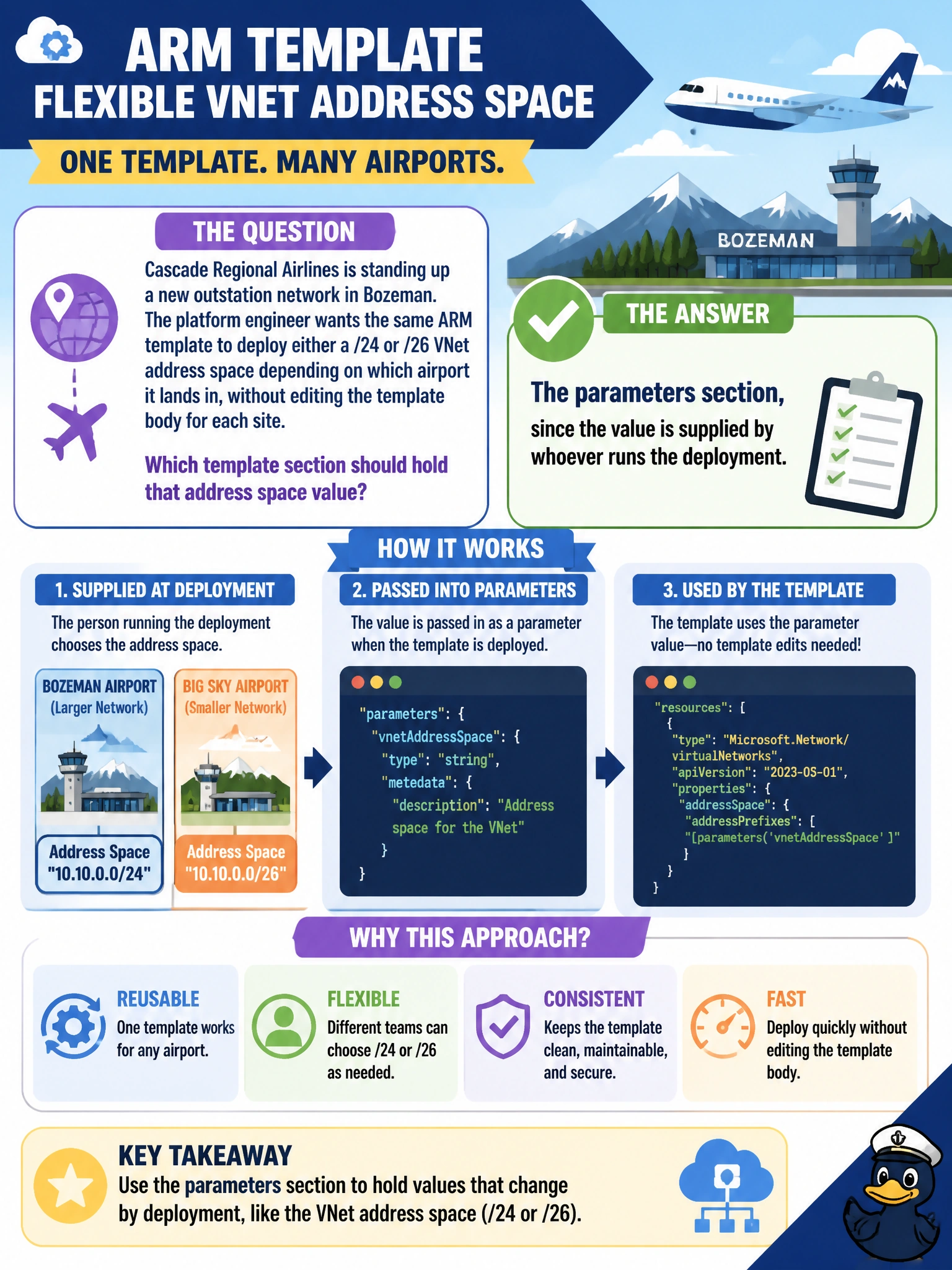
Cascade Regional Airlines is standing up a new outstation network in Bozeman. The platform engineer wants the same ARM template to deploy either a /24 or /26 VNet address space depending on which airport it lands in, without editing the template body for each site. Which template section should hold that address space value?
Select an answer to reveal the explanation.
Short Explanation
Think of parameters as the blanks you fill in on a form before you submit it. The template stays the same for every outstation; only the values plugged in at deployment time change. That's exactly what the parameters section is for.
Full Explanation
ARM templates separate what is fixed from what varies by deployment. The parameters section declares named inputs the caller supplies at deployment time, so one template can serve Bozeman, Missoula, or any future outstation just by passing a different value for the same parameter name. Outputs run the opposite direction: they surface values after the deployment finishes, such as a resulting resource ID, and cannot be used to change how resources are built. Variables are computed or fixed inside the template itself and are not meant to be supplied externally, so hard-coding the address space there would force a template edit for every new site. Hard-coding the value directly on the resource works but reproduces the template-editing problem the parameters section exists to avoid, and it is the least reusable option of the four. Before deploying, the engineer can run a template validation or a what-if operation with the intended parameter values to confirm the address space is read correctly for that outstation.