
Cascade is standing up a new flight-data ingestion service on Linux virtual machines at the hub, and the team needs the servers to mount an Azure file share using POSIX-style file permissions and Linux-native file locking, similar to how the existing Windows maintenance workstations mount their share over SMB. Which protocol should this new share use?
Select an answer to reveal the explanation.
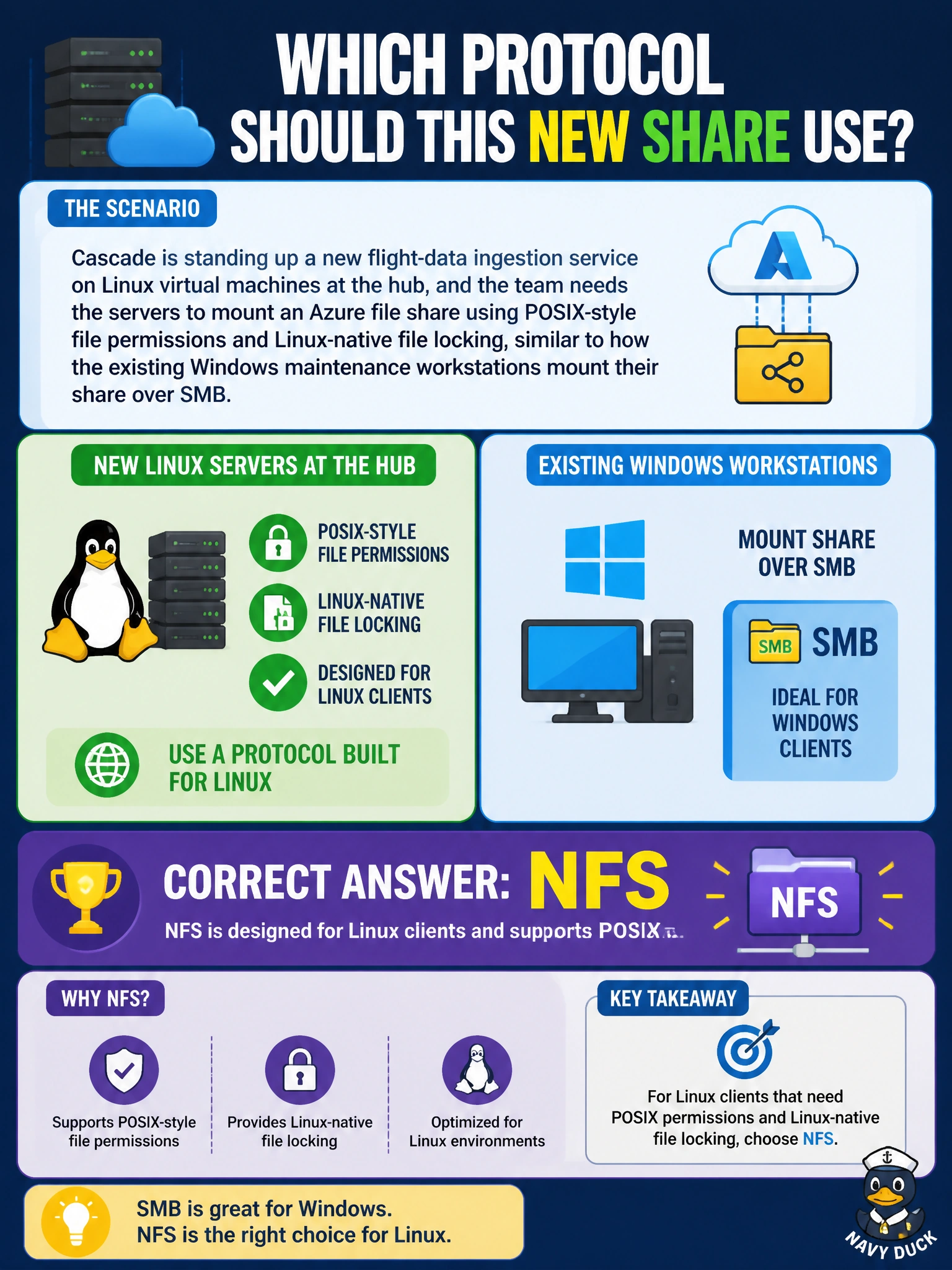
Short Explanation
Think of SMB and NFS as two different native languages for file sharing — Windows speaks SMB fluently, Linux speaks NFS. Reusing the SMB share just because it already works for the maintenance workstations forces the Linux servers to work in a language that doesn't carry POSIX permissions or Linux-style locking. Matching the protocol to the client keeps both simple.
Full Explanation
An NFS Azure file share is purpose-built for Linux and Unix-like clients: it natively supports POSIX-style permissions and file locking semantics that Linux applications expect, and it mounts directly without needing an identity translation layer. Reusing the SMB share with Windows-style ACLs is the right idea applied to the wrong layer — SMB shares can technically be mounted from Linux, but they carry Windows-oriented ACL semantics rather than POSIX permissions, and this scenario specifically calls for POSIX-style behavior the ingestion service depends on. Mounting Blob storage directly as a filesystem confuses two different services: Blob storage is object storage accessed via REST or a blob-specific driver, not a POSIX-compliant network file share, so it doesn't provide the file-locking behavior a shared filesystem needs. Choosing SMB 1.0 for compatibility ignores that SMB 1.0 is a legacy, insecure protocol version that Azure Files does not treat as a preferred choice, and it still wouldn't deliver POSIX semantics even if it worked. A caveat worth flagging: NFS file shares have their own prerequisites around premium tier and private networking that differ from typical SMB shares. To confirm the setup is correct, mount the share from one Linux host and verify a chmod-style permission change actually takes effect as expected.