
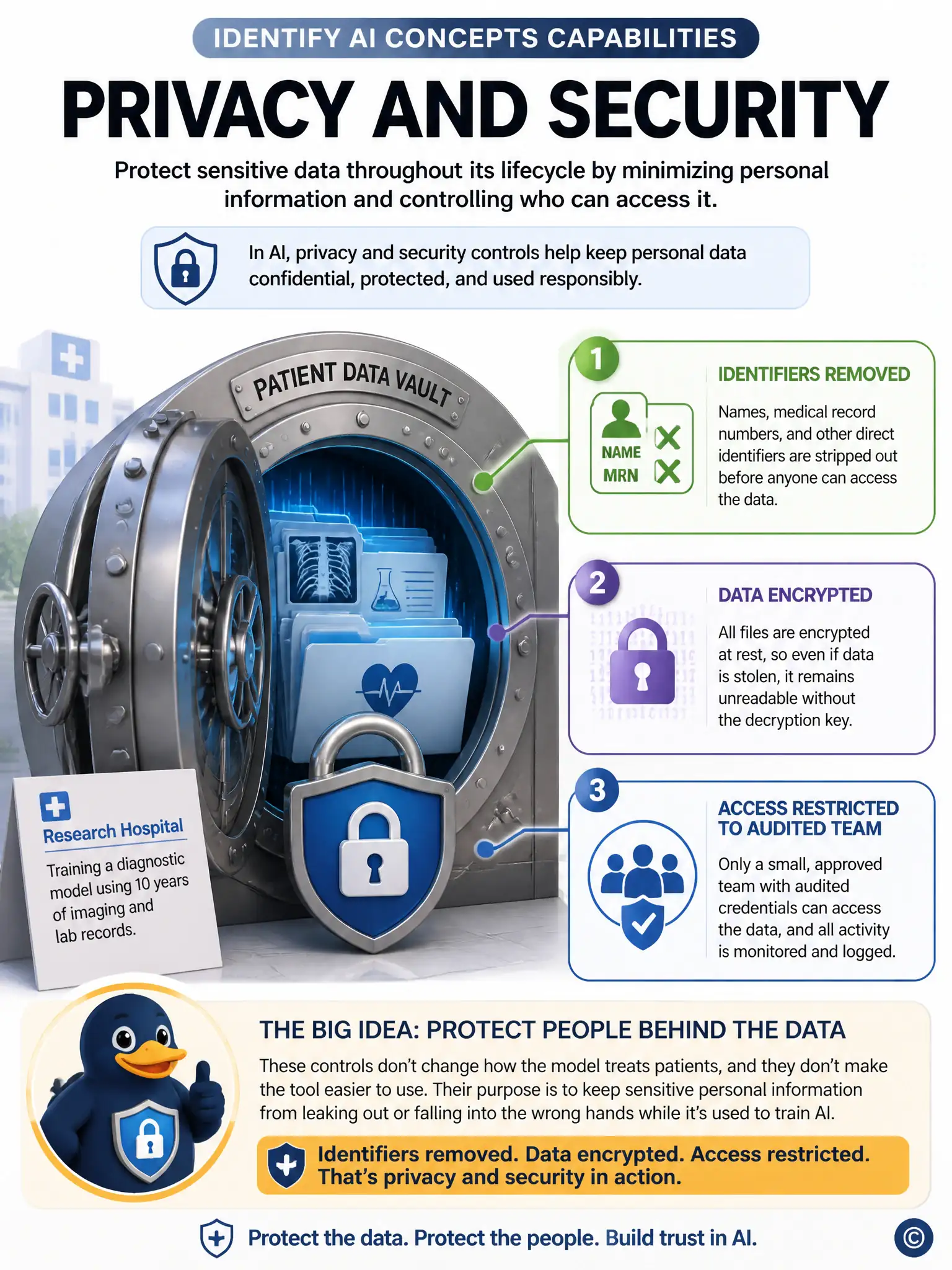
A research hospital wants to train a diagnostic model using ten years of patient imaging and lab records. Before any data scientist can access the dataset, the hospital's IT team strips out direct identifiers such as names and medical record numbers, encrypts the data at rest, and restricts access to a small approved team under audited credentials. Which responsible AI principle are these controls primarily supporting?
Select an answer to reveal the explanation.
Short Explanation
Before anyone touches ten years of patient records, the hospital strips identifiers, encrypts the data, and limits access to an audited team. You're protecting sensitive personal information from exposure or misuse, not judging how the model behaves or who can use it. When identifiers are removed, encryption is applied, and access is tightly controlled, you're looking at privacy and security.
Full Explanation
Privacy and security is the principle concerned with protecting personal data throughout its lifecycle, including limiting who can access it, removing identifying details when possible, and safeguarding it from unauthorized exposure. Stripping direct identifiers, encrypting the dataset at rest, and restricting access to a small audited team are all concrete controls aimed at keeping sensitive patient information protected while still allowing the model to be trained. The fairness principle is incorrect because fairness concerns whether a system's outputs treat different groups of people equitably, which is a separate question from how the underlying data is secured and de-identified. The reliability and safety principle is incorrect because reliability and safety concerns whether the resulting model performs consistently and safely once built and deployed, not how the training data was protected beforehand. The inclusiveness principle is incorrect because inclusiveness concerns designing systems so people of varying abilities and backgrounds can use them effectively, which has nothing to do with data access controls or de-identification. The controls described here exist specifically to reduce the risk of patient data being exposed or misused, which is the essence of privacy and security.