
A voice-controlled kiosk deployed in transit stations correctly understands able-bodied adult speakers but frequently fails to recognize commands from riders who use assistive speech devices or who speak with strong regional accents. The vendor responds by expanding its training data to cover a much wider range of speech patterns and by adding alternative input methods such as touch and text for anyone the voice system still struggles with. Which responsible AI principle does this response primarily address?
Select an answer to reveal the explanation.
Short Explanation
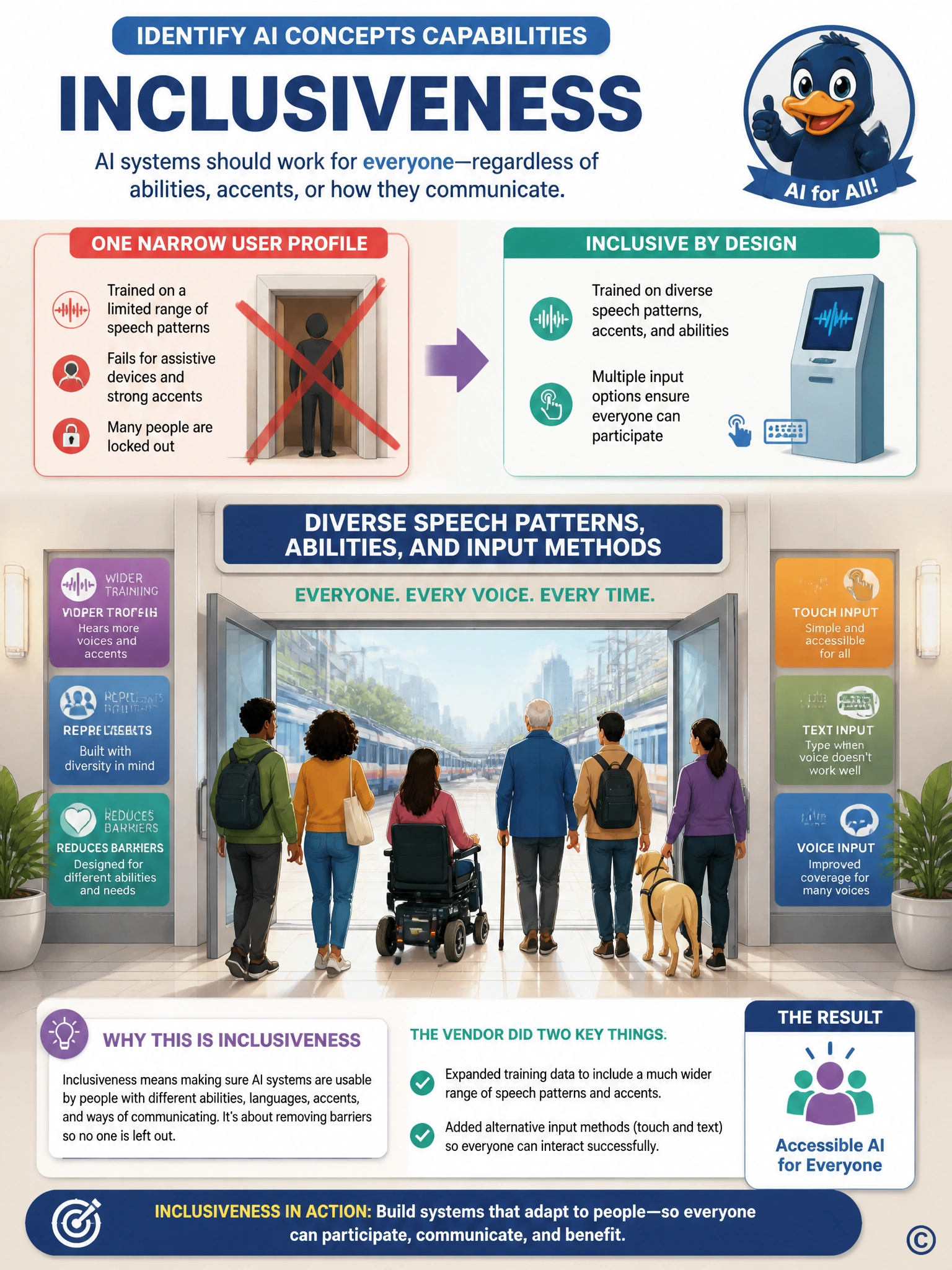
Imagine designing a doorway that only fits people of one exact height. Everyone else has to duck, squeeze, or just can't get through. That's basically what happened with this kiosk: it was built and tuned around one kind of voice, so anyone speaking through an assistive device or with a strong accent kept getting locked out. The fix isn't about correcting a biased decision or hiding how the system works, it's about literally rebuilding the doorway so more people fit through it in the first place. Widening the training data so the system hears a much broader range of speech, and adding a backup way to interact, like touch or typed text, for anyone the voice recognition still can't handle, both point at the same goal: making sure the tool works for people with different abilities and different ways of speaking, not just the narrow slice of users it happened to be tested on.
Full Explanation
The correct answer is C. Inclusiveness is the principle that AI systems should be designed to bring in and work well for people of all abilities, backgrounds, and ways of communicating, rather than only serving the group the system happened to be built and tested around. Widening the speech training data to cover accents and assistive devices, and adding non-voice input options for people the voice system still cannot serve, are both direct efforts to make the kiosk usable by a broader range of riders. Option A is incorrect because fairness in this context specifically concerns whether an AI system's decisions or outcomes disadvantage people based on protected characteristics, such as unequal loan approvals across groups; this scenario is about accessibility of interaction rather than biased decision outcomes. Option B is incorrect because privacy and security concern how personal data is collected, stored, and protected, which is not what is being changed here. Option D is incorrect because transparency is about helping people understand how a system reaches its outputs, not about broadening who can physically or practically use the system in the first place.