
A news publisher's Foundry-hosted assistant drafts satirical opinion pieces that use pointed language about public figures but must never generate content depicting graphic violence. Using the default content safety configuration blocks too many legitimate satire drafts for mild insults while still occasionally allowing violent content through at the default threshold. What should the team do?
Select an answer to reveal the explanation.
Short Explanation
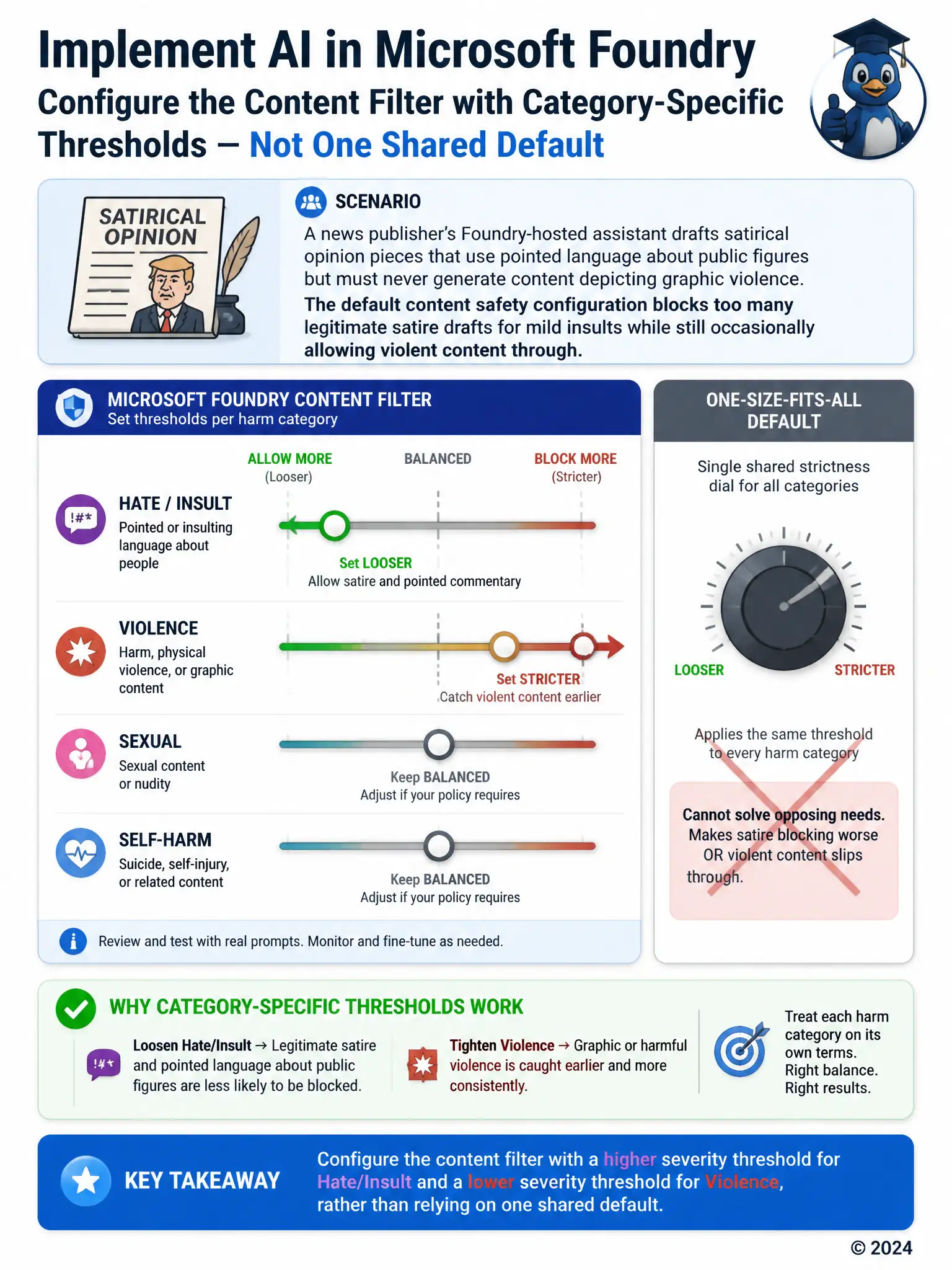
You've got two opposite problems: satire gets flagged as insults, and violent drafts still slip through. Tune the filters by category: loosen the insult/hate threshold for satire and tighten the violence threshold. Don't turn the whole filter off or use a blunt name blocklist.
Full Explanation
The correct approach is to configure the content filter with a higher severity threshold for the hate/insult category and a lower severity threshold for the violence category, rather than relying on one shared default. Azure AI Foundry's content safety configuration lets each harm category be tuned independently, so the team can raise the threshold for hate/insult content to let more pointed satirical language through while lowering the threshold for violence so graphic content is blocked more aggressively, matching the two different needs described in the stem. The disable-filter option is incorrect because disabling the filter entirely removes protection against the violence category too, the exact risk the publisher must not allow. The uniform stricter thresholds option is incorrect because tightening every category uniformly would make the insult-related blocking worse, not better, continuing to reject legitimate satire drafts. The public-figure keyword blocklist option is incorrect because a keyword blocklist keyed on public figures' names would block drafts that mention those figures regardless of whether the content is violent, failing to distinguish the harm type the team actually cares about and blocking harmless satire in the process.