
An enterprise multi-agent assistant needs (1) turn-by-turn dialogue context, (2) shared scratch state for the agent team during a case, and (3) long-term semantic memory of resolved cases—with tenant isolation. Which memory architecture should you specify?
Select an answer to reveal the explanation.
Short Explanation
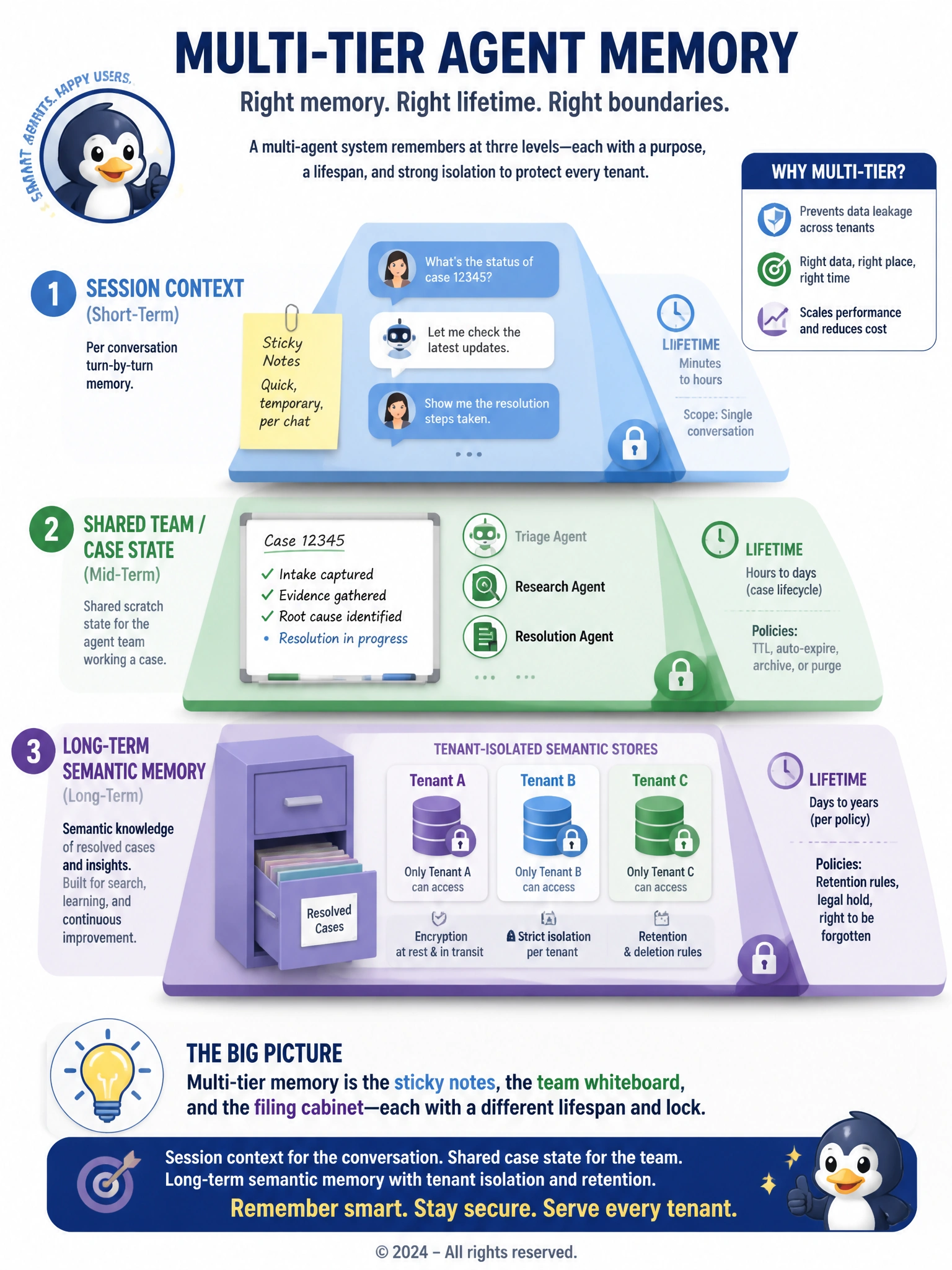
Correct answer: B. Multi-tier memory is the sticky notes, the team whiteboard, and the filing cabinet—each with a different lifespan and lock. Session context, shared case state, and long-term semantic memory with tenant isolation match how real multi-agent systems need to remember without leaking across customers.
Full Explanation
Architecture skills include short- and long-term memory designs and multi-tier state persistence for session state, shared team state, and long-term semantic memory with lifecycle and tenant isolation. Option B matches that three-tier model with isolation and retention policies.
Option A is incorrect: a single global store without tenant boundaries is a data-leakage and compliance failure.
Option C is incorrect: memory is a core multi-agent capability when governed properly; responsible AI does not ban memory, it governs it.
Option D is incorrect: per-message fine-tuning is impractical, costly, and not a substitute for explicit memory systems.
Exam tip: Map “session / shared team / long-term semantic + tenant isolation” language directly to multi-tier memory architecture answers.