
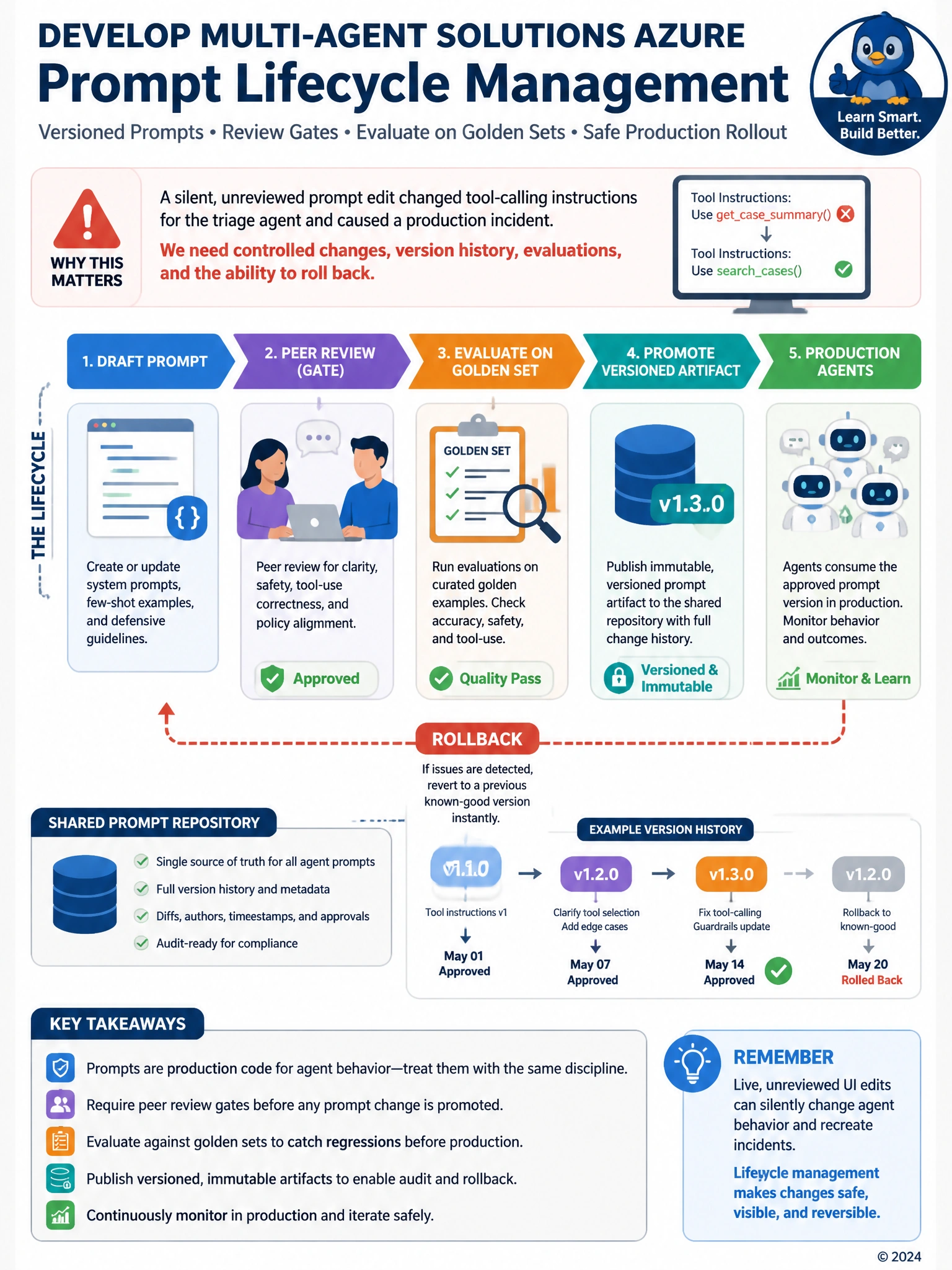
A multi-agent support platform stores system prompts, few-shot examples, and defensive guidelines for each agent in a shared repository. Last month’s production incident was traced to an unreviewed prompt edit that silently changed tool-calling instructions for the triage agent. Leadership wants controlled changes, rollback, and the ability to compare prompt versions in evaluation runs. What should the team implement?
Select an answer to reveal the explanation.
Short Explanation
Prompts are production code for agent behavior. Lifecycle management means versions, reviews, evals, and rollback—exactly what you need after a silent bad edit. Live unreviewed UI edits recreate the incident. Ephemeral env vars without history cannot support audit or rollback. Fine-tuning alone does not eliminate the need for prompt governance and is the wrong exclusive strategy here. A is the operational answer.
Full Explanation
Correct answer: A. Advanced prompt engineering for multi-agent solutions includes prompt lifecycle management: versioning, controlled promotion, and evaluation. Treating prompts as governed artifacts reduces silent regressions in tool instructions and agent behavior.
B is incorrect because unreviewed live edits are a primary cause of prompt regressions.
C is incorrect because ephemeral storage without history prevents audit, comparison, and rollback.
D is incorrect because fine-tuning does not replace prompt lifecycle controls and is not a substitute for operational prompt management of tool and policy instructions.
Exam focus: prompts need SDLC-like lifecycle in multi-agent production systems.