
A public-sector multi-agent benefits assistant will converse with vulnerable citizens. The architect must design human-AI experience (HAX) and responsible AI controls into the workflow, not bolt them on later. Which design choice best reflects that mandate?
Select an answer to reveal the explanation.
Short Explanation
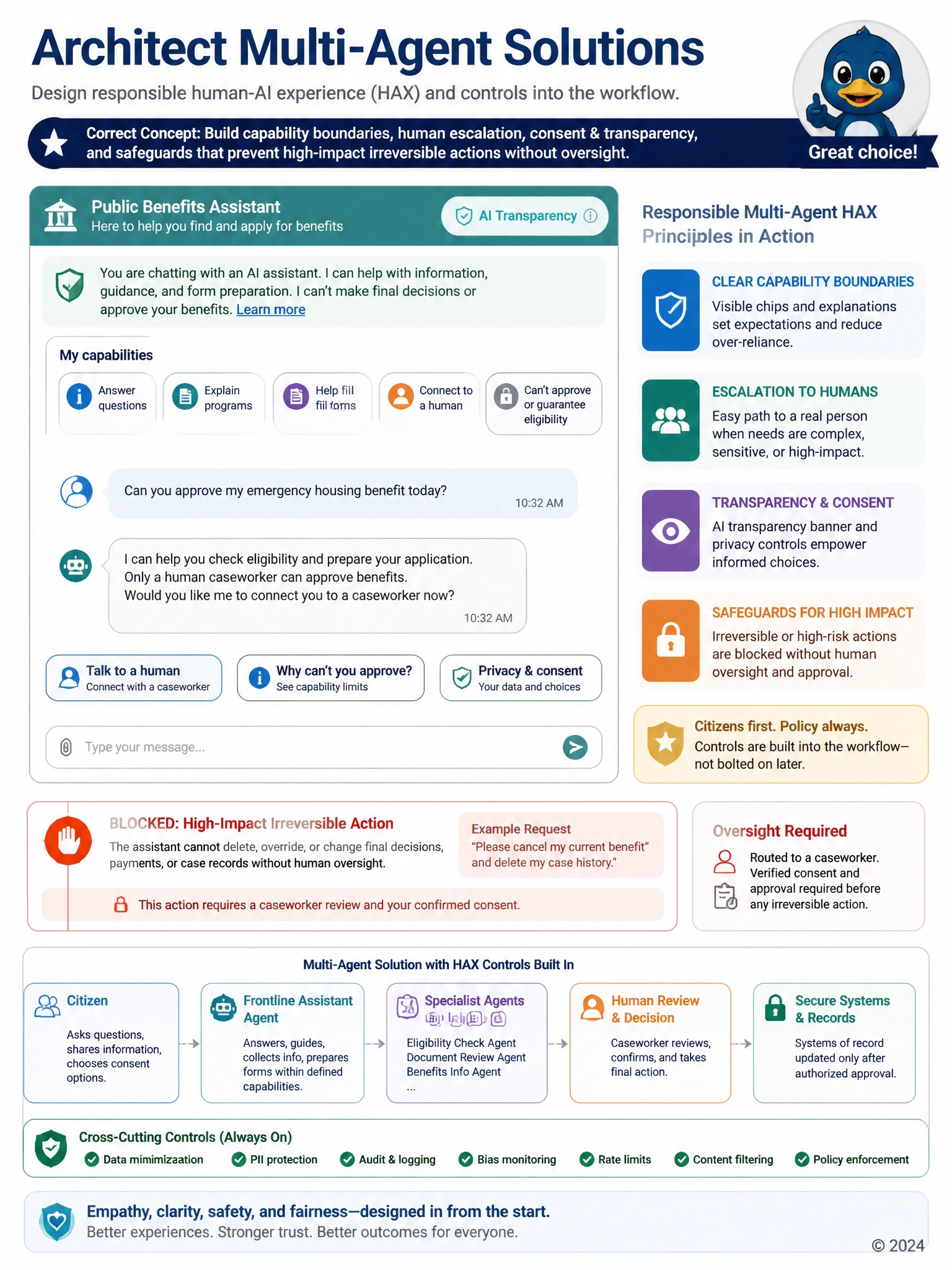
The correct answer is B. Responsible multi-agent HAX means clear capability limits, human escalation, transparency/consent, and blocks on high-impact irreversible moves without oversight. Silent max-autonomy, hiding the AI, and public demo datasets of sensitive speech fail citizens and policy.
Full Explanation
Option B is correct. Logical architecture skills include designing controls for human-AI experience (HAX) and responsible AI principles: transparency, appropriate autonomy limits, escalation paths, and safeguards on high-impact actions—especially for vulnerable users in public-sector benefits scenarios.
Option A is incorrect because maximizing irreversible autonomy without confirmation increases harm risk and conflicts with responsible AI control design.
Option C is incorrect because concealing AI involvement undermines transparency expectations for public services.
Option D is incorrect because publishing sensitive citizen utterances by default violates privacy and responsible data handling.