
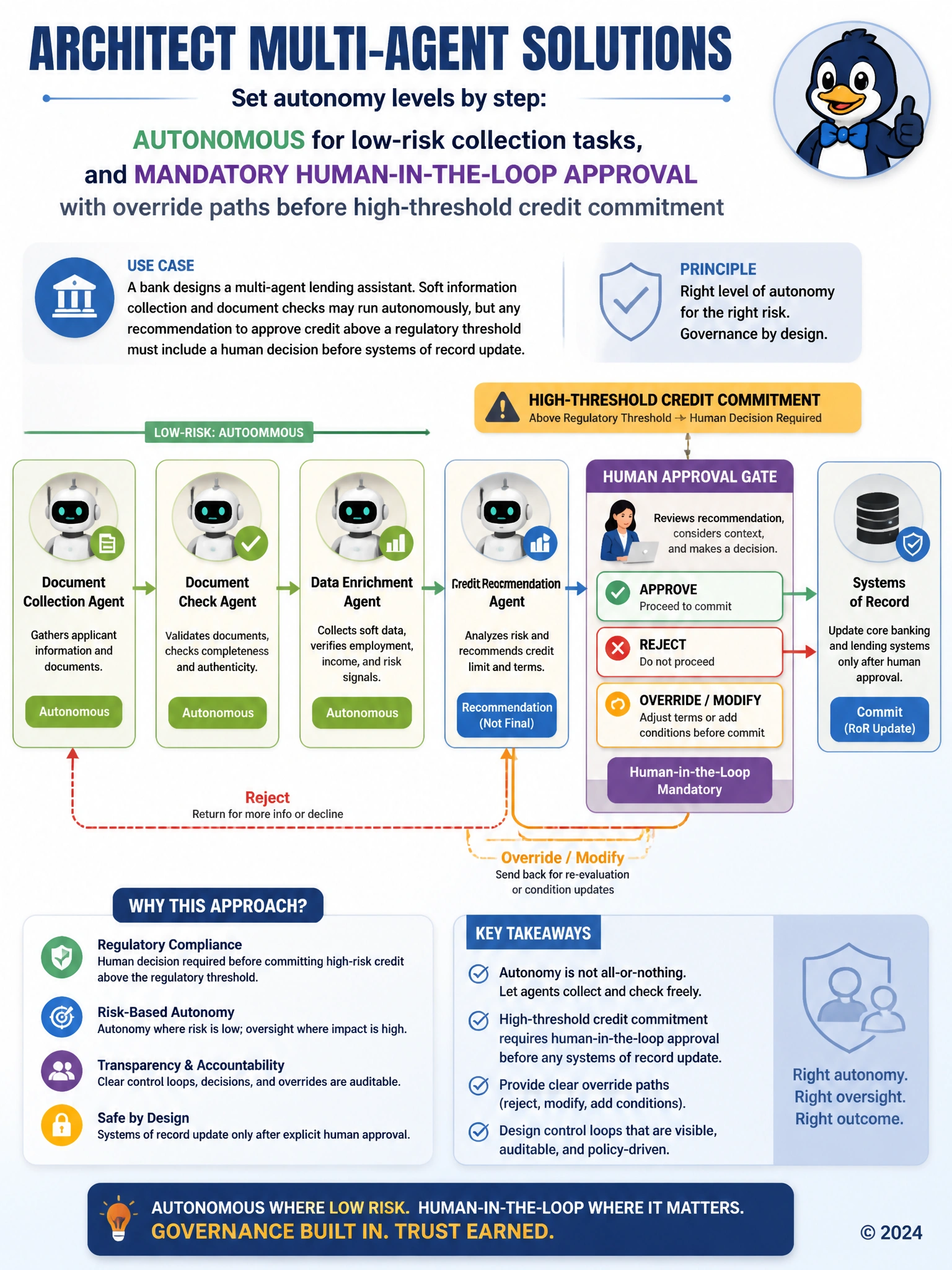
A bank designs a multi-agent lending assistant. Soft information collection and document checks may run autonomously, but any recommendation to approve credit above a regulatory threshold must include a human decision before systems of record update. How should the architect specify autonomy and control loops?
Select an answer to reveal the explanation.
Short Explanation
The correct answer is B. Autonomy is not all-or-nothing: collect docs freely, but high-threshold credit needs human-in-the-loop with overrides before systems of record move. Full auto on approvals ignores the regulatory boundary. Dropping checks or hiding breaches makes governance worse.
Full Explanation
Option B is correct. Logical architecture skills include specifying agent autonomy levels and human-in-the-loop workflows with approval and override paths. Differentiating low-risk autonomous steps from high-stakes human-gated commitments matches regulated lending requirements.
Option A is incorrect because unrestricted autonomous writes of credit decisions above threshold violate the stated control requirement.
Option C is incorrect because removing document checks weakens evidence quality and does not implement the required human gate.
Option D is incorrect because concealing threshold breaches prevents the human control the design must provide.