
A shared multi-agent Foundry platform serves three business units. Finance demands showback of model and tool spend per unit; one unit is exhausting the shared quota and starving others. What cost-management strategy should you design?
Select an answer to reveal the explanation.
Short Explanation
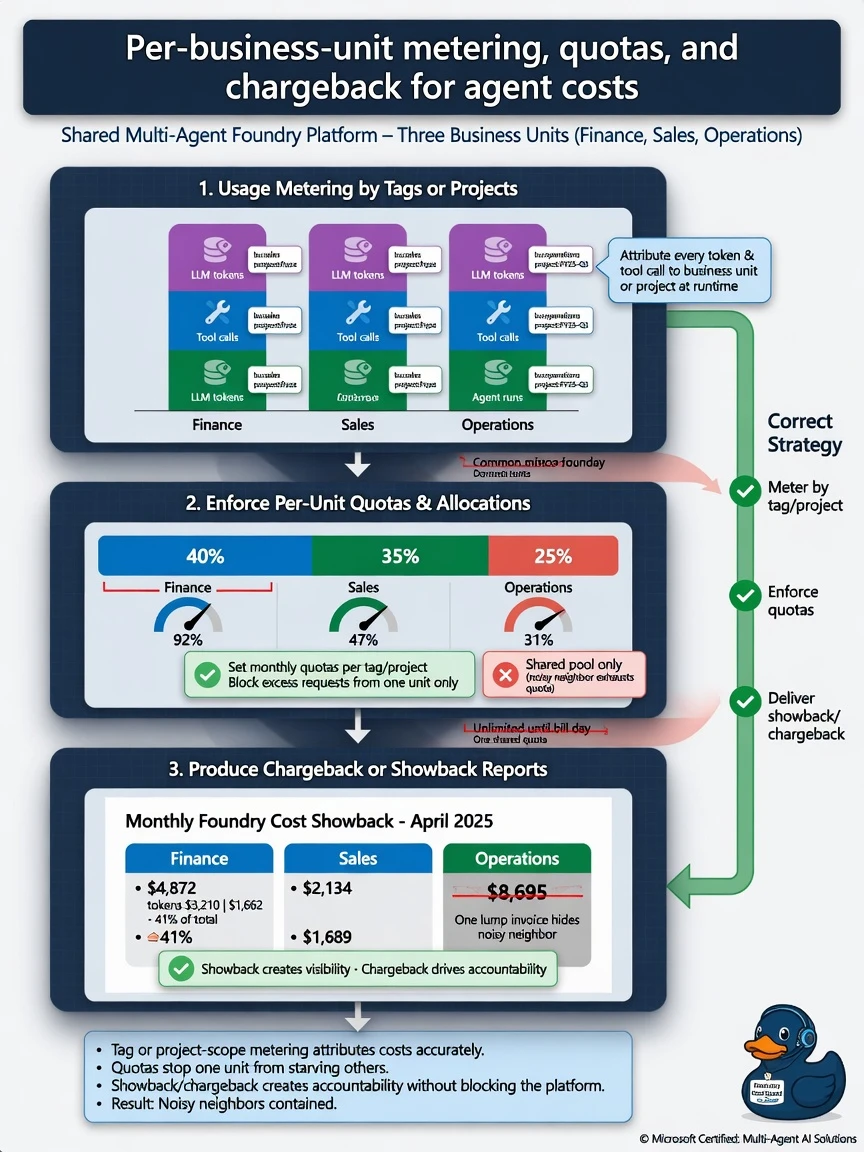
D is the platform answer. Cost strategy for multi-agent solutions includes usage, quotas, allocations, and chargebacks. Tag or project-scope metering attributes tokens and tool calls to business units; quotas stop one unit from consuming the shared pool; showback/chargeback creates accountability. One lump invoice hides the noisy neighbor. Unlimited until bill day is how outages and surprises happen. “Experimental” is not an excuse in production shared platforms.
Full Explanation
Correct Answer — D
Monitoring and managing cost includes usage tracking, quotas, allocations, and chargebacks. Shared multi-agent platforms need per-business-unit metering (tags/projects), enforced allocations, and showback/chargeback so one unit cannot starve others.
Why A is wrong: Unallocated invoices prevent accountability and noisy-neighbor diagnosis.
Why B is wrong: Unlimited shared use without quotas creates starvation and bill shock.
Why C is wrong: Production multi-agent platforms require active cost governance.
Exam tip: Meter + quota + chargeback/showback for shared agent platforms.