
A regulated enterprise deploys multi-agent workloads that call Azure OpenAI-compatible model endpoints, Azure AI Search, and internal APIs. Policy forbids public ingress to data-plane services where private connectivity is available. Agents run on Azure Container Apps. Which network design best aligns with resource access and network boundary controls?
Select an answer to reveal the explanation.
Short Explanation
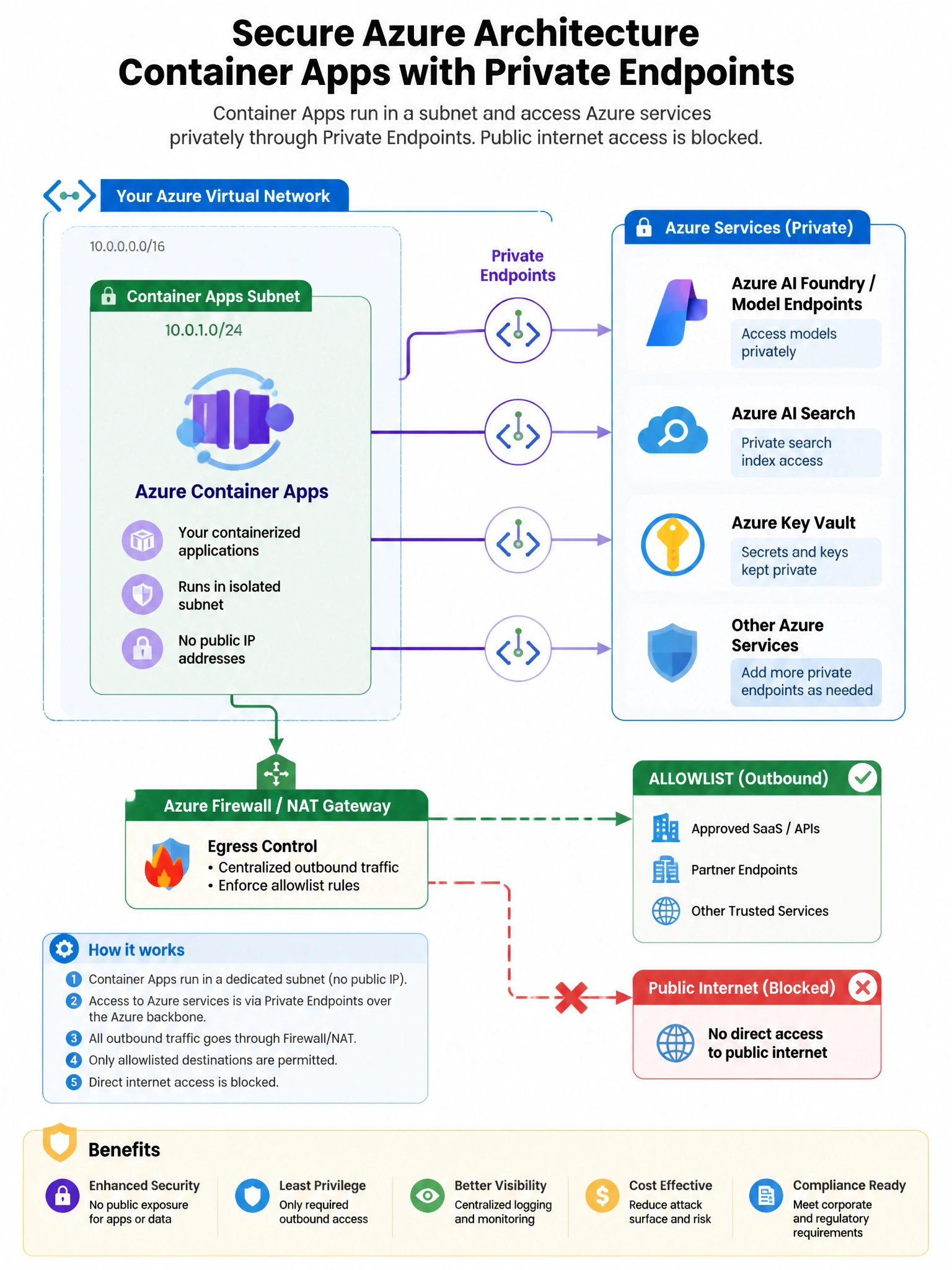
Correct answer: A. Zero Trust multi-agent design pairs identity with network boundaries: private endpoints, VNet integration, and controlled egress so agents cannot freely phone home to arbitrary hosts. Public-only keys (B) lack defense-in-depth. Disabling TLS (C) is unsafe. Unrestricted egress (D) enables data exfiltration via tool calls. Combine private networking with RBAC and guardrails on tool URLs.
Full Explanation
AI-500 security objectives include network boundaries alongside identity-based access and RBAC. Multi-agent systems are especially sensitive to egress abuse because tool-calling models may attempt unexpected URLs. Integrating Container Apps (or AKS/App Service) with virtual networks, using private endpoints for PaaS (models, search, storage, Key Vault), and applying NSGs/firewall policies reduces exposure. Option B relies on a single control. Option C violates encryption expectations. Option D is a common agent incident pattern (SSRF/exfil). Also scope DNS, use allowlisted MCP/tool hosts, and monitor denied connection attempts as security signals. Network design should map to compliance control frameworks for regulated deployments.