
Your organization manages multi-agent solutions across Dev, Test, Acceptance, and Production. Agent definitions, MCP tool registrations, Azure resources, and evaluation suites must stay consistent and auditable. Which CI/CD approach best meets multi-environment release requirements?
Select an answer to reveal the explanation.
Short Explanation
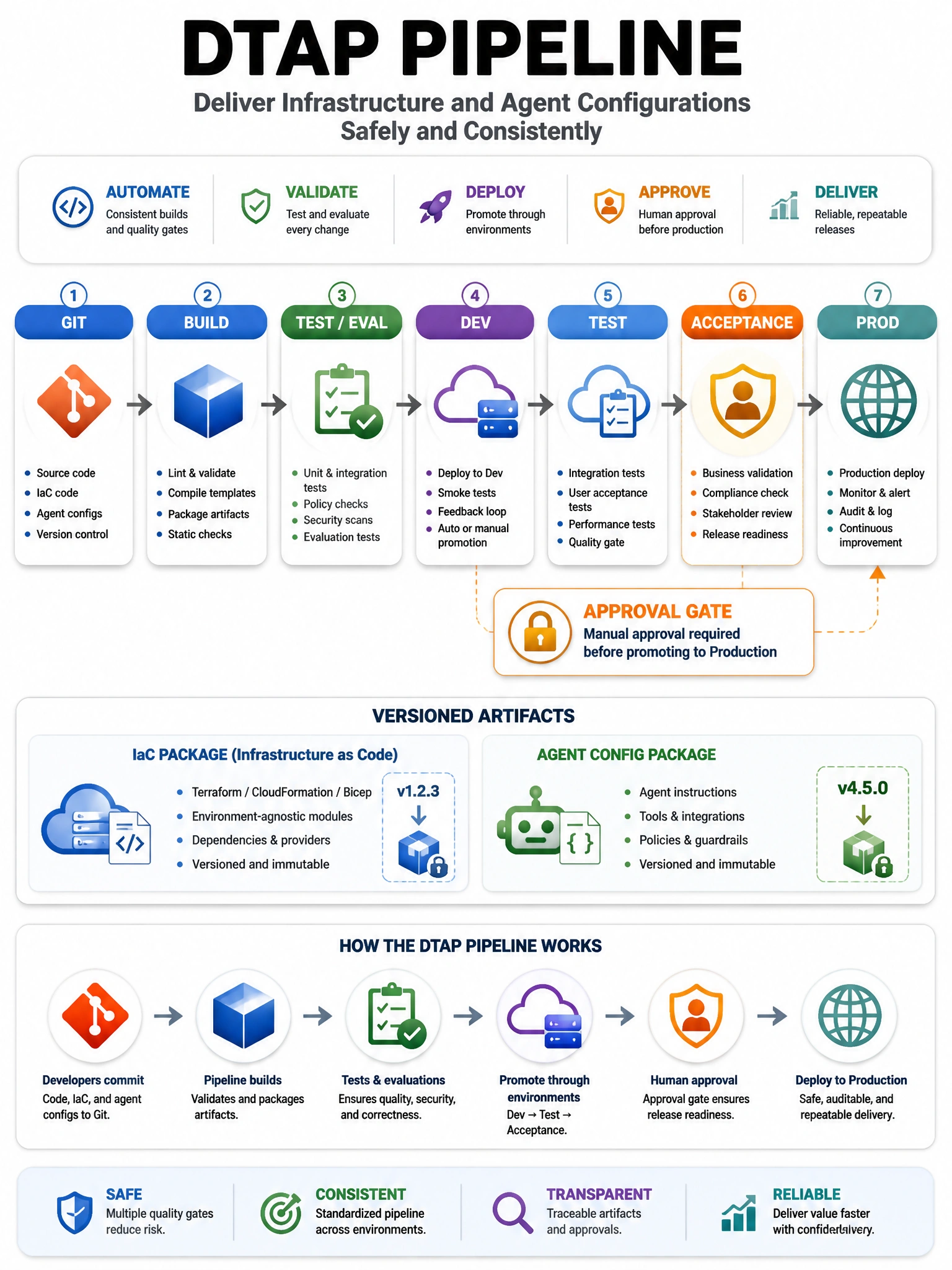
Correct answer: D. Production multi-agent delivery needs IaC plus versioned agent/tool configs, automated unit/integration/evaluation gates, and controlled promotion across DTAP. Portal-only recreation (A) is non-repeatable. Shared prod workspaces (B) erase isolation. Partial Git without infra pipelines (C) still leaves drift. Treat agents like software: build once, promote many times, with rollback tags.
Full Explanation
Skills measured for deployment include multi-environment strategies, testing (unit, regression, integration, automated evaluations), and CI/CD with infrastructure-as-code. Multi-agent systems couple code, prompts, tool contracts, model deployments, and Azure resources; all should be declarative and reviewable. Pipelines should validate schemas, run offline evals, apply environment-specific parameters (endpoints, identities) without forking logic, and record release metadata for audit. Option A does not scale and fails compliance. Option B mixes experimental risk with live traffic. Option C leaves infrastructure outside the control plane. Prefer Bicep/Terraform/ARM or equivalent for Azure resources, package agent definitions and guardrail policies with the app, and require approval gates for Production with automated rollback paths.