
A multi-agent customer-support system can read knowledge bases, call refund tools, and generate customer-facing replies. Risk review found that harmful content can enter via user chat, malicious tool payloads, or model-generated text. Leadership wants layered controls, not a single filter at the end. Which guardrail strategy best matches multi-intervention design?
Select an answer to reveal the explanation.
Short Explanation
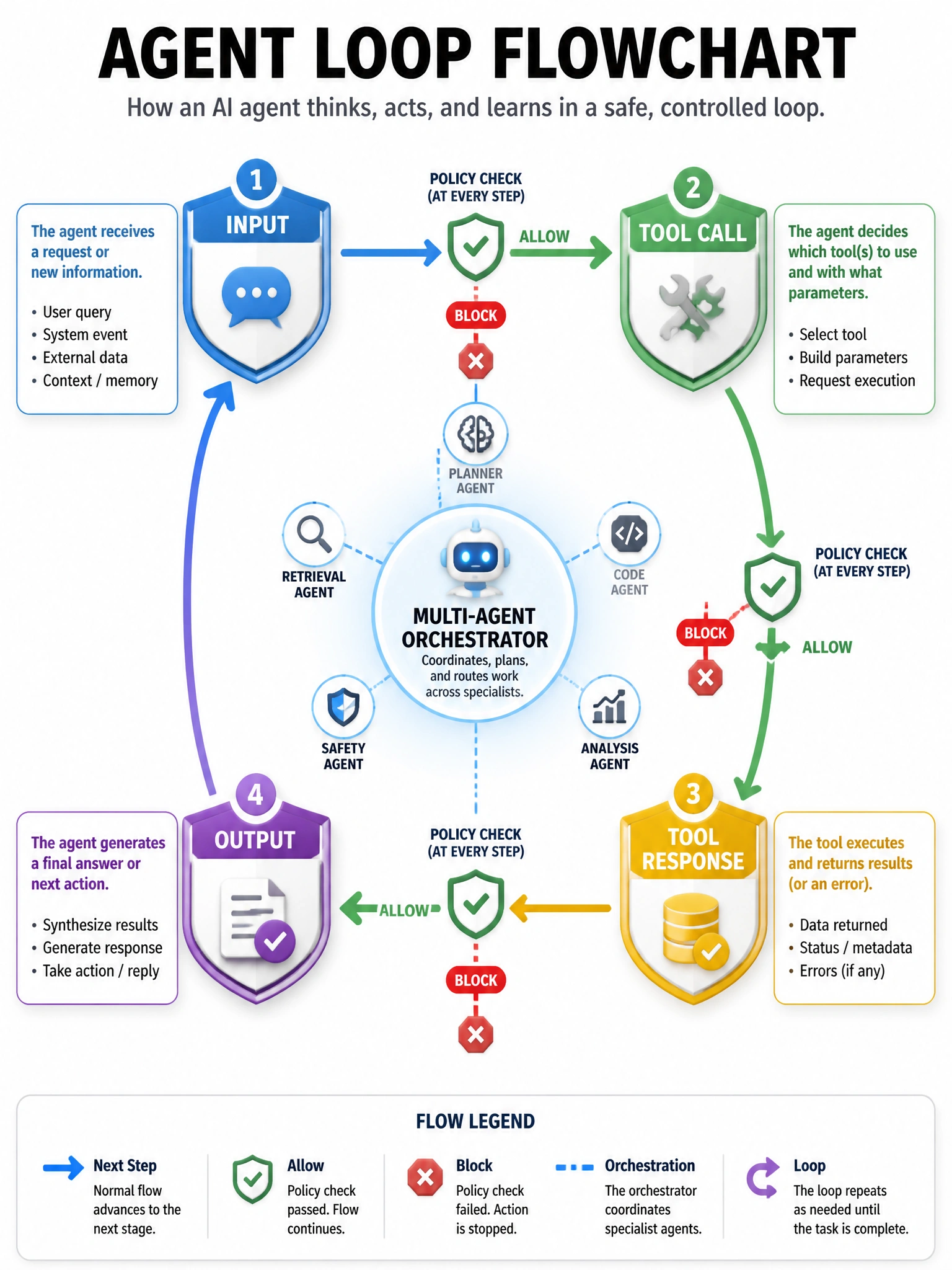
Correct answer: A. Multi-intervention guardrails place controls at every risky hop: inbound user text, planned tool calls, tool results re-entering context, and outbound answers. That stops attacks that bypass a final-output-only filter. B leaves tool channels open. C over-trusts the model. D is detective-only and too late for real-time abuse. Design policies per stage with clear block/allow/rewrite actions and test them with synthetic adversarial data.
Full Explanation
AI-500 explicitly covers multi-intervention guardrail strategies spanning user inputs, tool calls, tool responses, and outputs. In multi-agent systems the attack surface is wider than chat: a subagent can inject content through tool results, or an orchestrator can issue a dangerous tool invocation. Stage-specific checks might include jailbreak detection on input, schema and allowlist validation on tool arguments, untrusted-content labeling and sanitization of tool payloads, and groundedness/safety checks on final messages. Option B is a single point of failure. Option C ignores operational guardrails required for production. Option D may help compliance audits but does not prevent live harm. Implement custom domain constraints (for example, refund amount caps) as first-class guardrails, version them with prompts and tools, and include them in automated evaluation suites before each release.