
Before promoting a multi-agent mortgage underwriting workflow, compliance requires human review of a statistically valid sample of agent decisions, including tool inputs and final rationales. How should the team design this process in Microsoft Foundry?
Select an answer to reveal the explanation.
Short Explanation
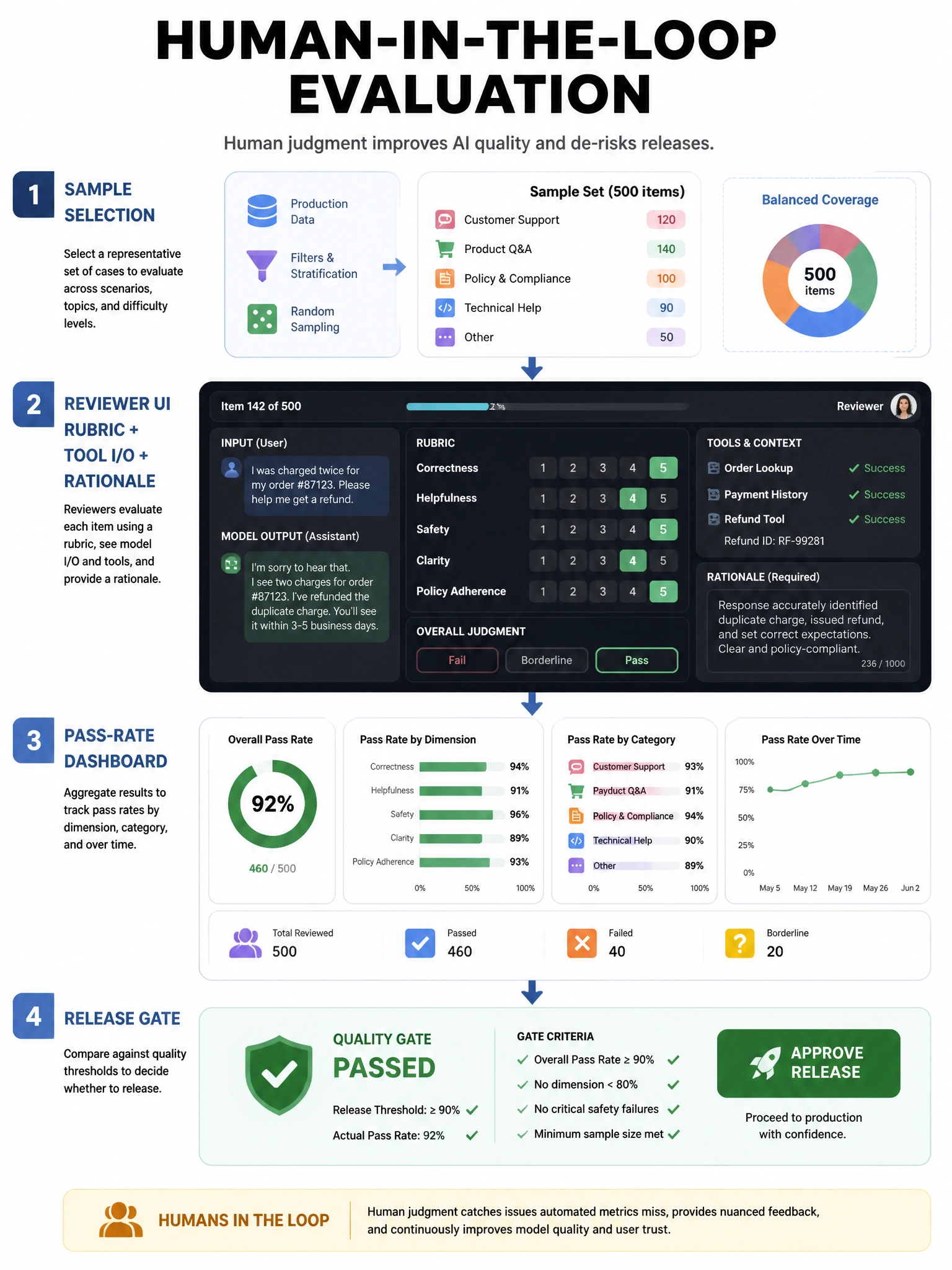
Correct answer: C. Regulated underwriting needs a real human review process: sampling plan, rubrics, full capture of tool inputs and rationales, agreement metrics, and a release gate tied to pass rates. Complaint-driven quality (A) is too late. Informal transcript skimming (B) is not auditable. Fully automating regulated approvals with another agent and no humans (D) fails compliance intent. Use Foundry evaluation and review capabilities so evidence is stored with runs, then let automation handle the bulk while humans cover the sample and edge cases.
Full Explanation
Designing a human review process to evaluate multi-agent solutions in Foundry is an explicit exam skill. Option C includes sampling criteria, structured rubrics, artifact capture (tools + rationales), reviewer agreement, and promotion gates—meeting compliance and quality needs. Option A is reactive and insufficient for regulated domains. Option B lacks methodology and gate integration. Option D removes required human oversight for high-stakes decisions. Combine human review with automated evaluations so volume is handled by machines while humans validate residual risk.