
A parallel research swarm repeatedly re-queries the same MCP search tool in tight loops, driving token spend and latency far above SLA. Product wants lower cost without removing the tool entirely. Which optimization strategy should you implement first?
Select an answer to reveal the explanation.
Short Explanation
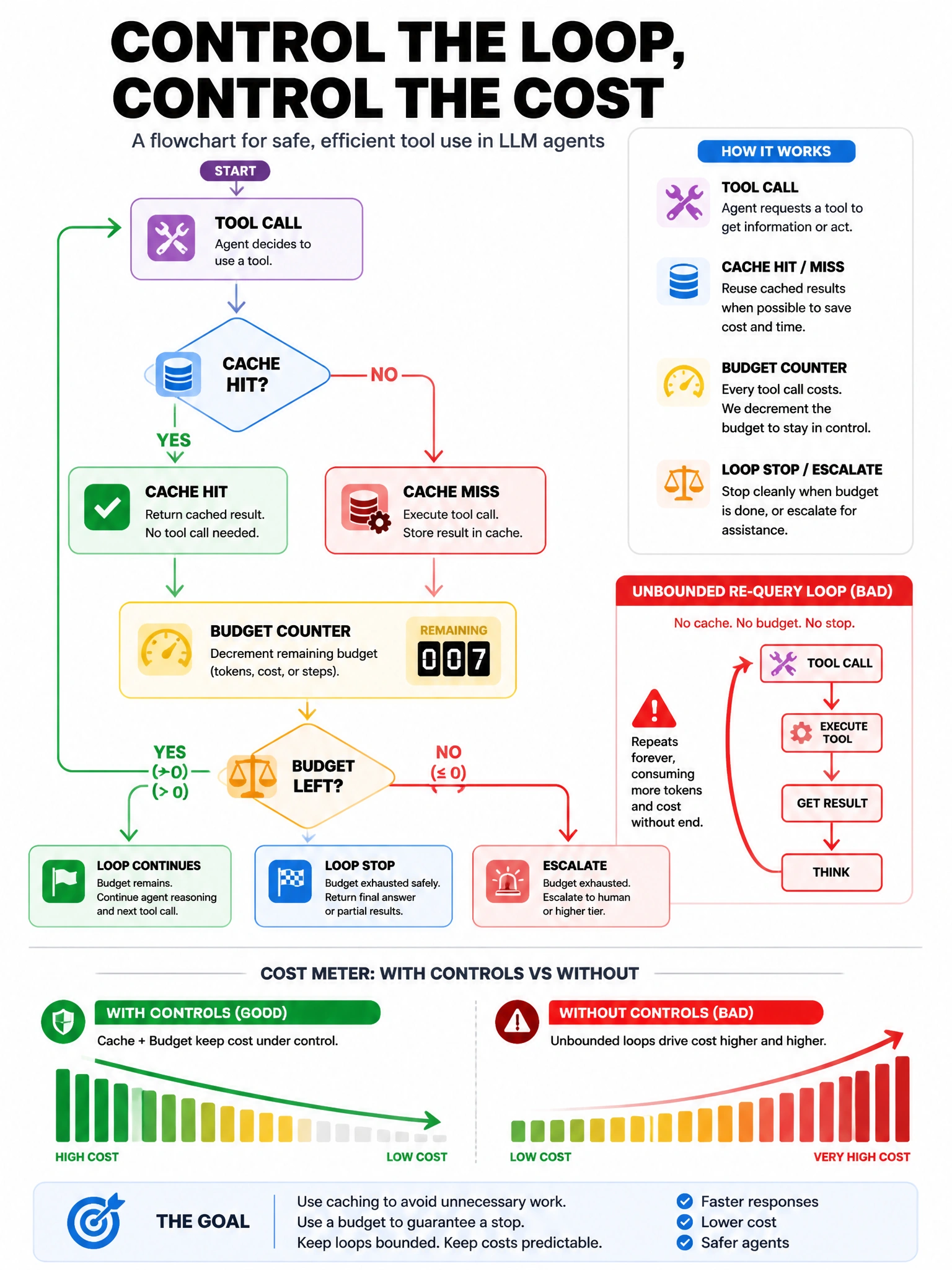
Correct answer: A. Unbounded tool loops are a classic multi-agent cost leak. Put hard loop controls and per-agent tool-call budgets in place, cache identical tool results inside the session, and stop recursive replanning after a set iteration count—then finalize or escalate to a human. Bigger models (B) usually raise cost, not lower it. Emptying system prompts (C) worsens control. Client-side-only execution (D) does not fix server agent loops and breaks enterprise controls. Instrument token use per tool call so you can prove the budget works.
Full Explanation
Token optimization for multi-agent systems emphasizes token limits, loop controls, and disciplined tool-call counts. The swarm’s repeated identical MCP queries indicate missing termination conditions and missing result reuse. Option A directly addresses those failure modes with budgets, session-level tool caches, and replanning caps. Option B is incorrect because larger multimodal models typically increase token and dollar cost and do not stop loops. Option C removes defensive guidelines and system structure, increasing uncontrolled behavior. Option D is not a viable enterprise multi-agent optimization path and bypasses centralized metering and guardrails. Pair these controls with cost dashboards and alerts when tool-call rates spike above baseline.