
You are implementing multi-agent RAG for a legal research suite. A retrieval agent fetches passages; a drafting agent writes memos; a cite-check agent validates sources. Lawyers report fluent memos that miss controlling authority. Which RAG implementation focus best improves multi-agent consumption quality?
Select an answer to reveal the explanation.
Short Explanation
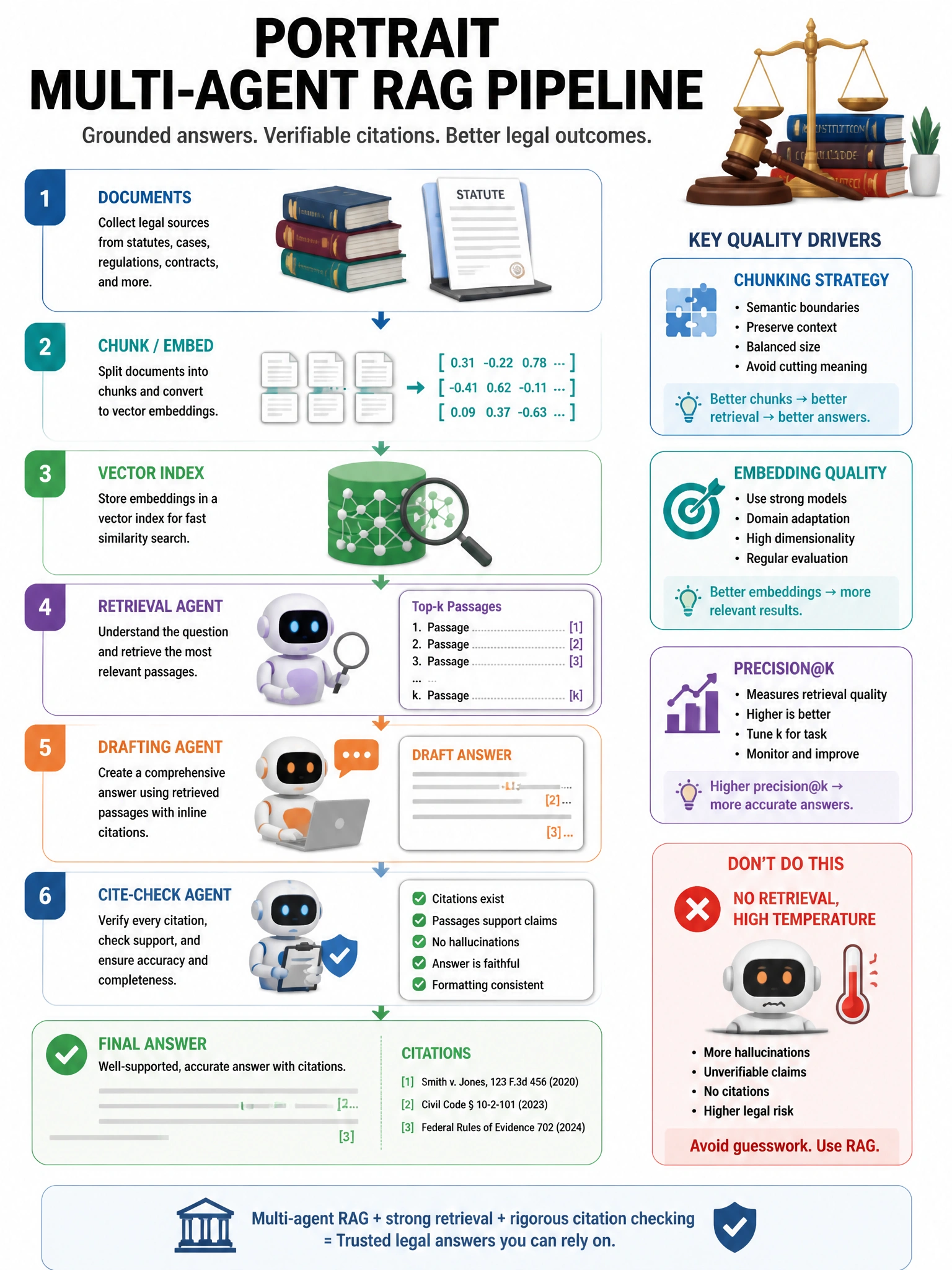
A targets the real failure mode: drafting fluency without grounded controlling authority. Multi-agent RAG lives or dies on chunking, embeddings, and retrieval precision so the retrieval agent feeds the right passages, with metadata/citations flowing to draft and cite-check agents. B invites hallucination. C blows the context window and tanks precision. D ignores evaluation. For AI-500 development skills, treat retrieval quality as a first-class pipeline with metrics—not a black box behind a chatty writer agent.
Full Explanation
A is correct because multi-agent RAG architecture requires attention to chunking, embedding quality, and retrieval precision, plus knowledge integration patterns so multiple agents consume consistent, citable context. Metadata-rich retrieval enables the cite-check agent to validate claims. B is incorrect: higher temperature without retrieval increases ungrounded content. C is incorrect: dumping entire PDFs is inefficient and often exceeds useful context. D is incorrect: untested chunking and ignored retrieval metrics prevent continuous improvement. Evaluate groundedness and citation accuracy across the agent chain.