
A multi-agent research workflow fans out five specialist agents that each call the same Foundry model deployment. End-to-end duration is poor: some specialists idle while others hit HTTP 429s. What optimization strategy should you apply first?
Select an answer to reveal the explanation.
Short Explanation
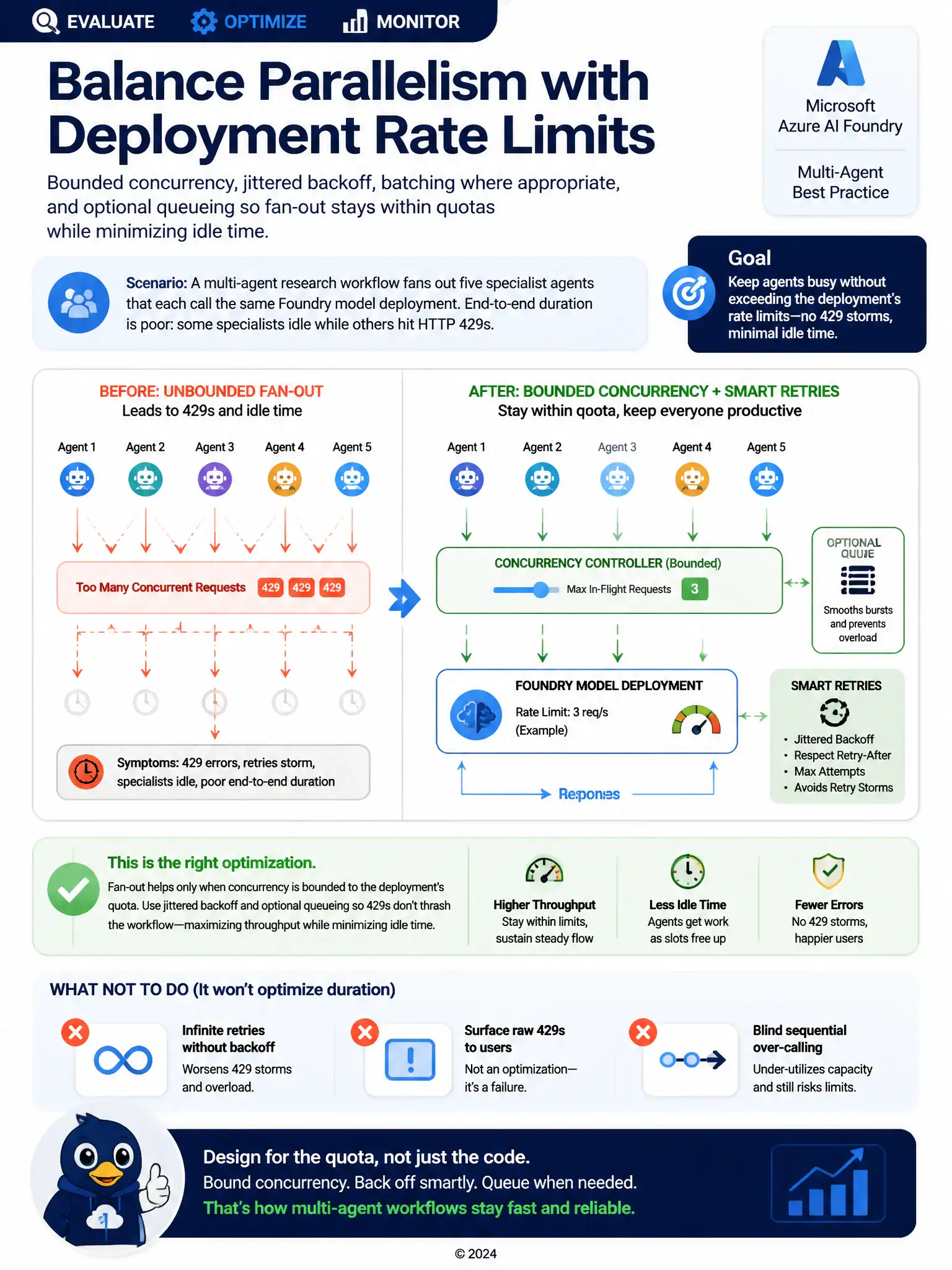
You should start by balancing parallelism with deployment rate limits: bounded concurrency, jittered backoff, batching where appropriate, and optional queueing. That keeps fan-out within quotas while minimizing idle time and stops 429s from thrashing the workflow.
Full Explanation
Multi-agent duration optimization must jointly consider parallel specialist work and platform rate limits. The first strategy is balancing parallelism with deployment rate limits: bounded concurrency, jittered backoff, batching where appropriate, and optional queueing so fan-out stays within quotas while minimizing idle time. Use a concurrency governor aligned to tokens-per-minute and requests-per-minute, exponential backoff with jitter, and work queues; batch similar sub-tasks when allowed. Removing specialists and always calling twenty models sequentially with no concurrency controls is wrong: excessive sequential calling increases latency, may still hit limits, and discards beneficial parallelism. Ignoring rate limits and retrying infinitely with zero backoff is wrong: it amplifies load and prolongs outages. Storing rate-limit errors in the user-facing answer as the final response is wrong: rate-limit faults should trigger control-plane handling and user-safe fallbacks, not become the business answer. Monitor queue depth, 429 rates, and p95 workflow duration together.