
While specifying technology components for a Zero Trust multi-agent solution in a regulated industry, which combination best addresses per-agent identity scoping and lateral movement prevention?
Select an answer to reveal the explanation.
Short Explanation
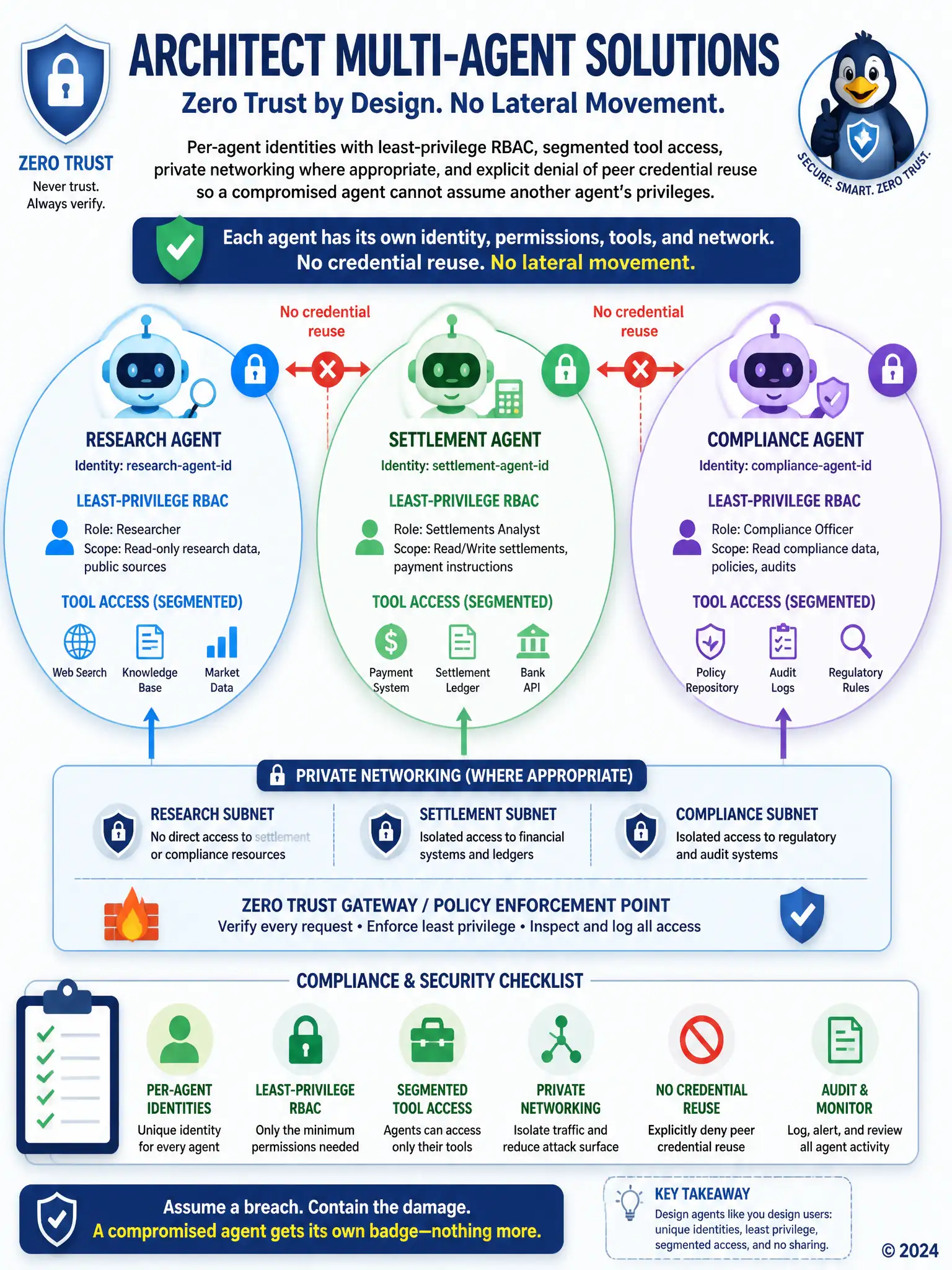
Zero Trust multi-agent design assumes an agent can get phished someday, so it must not be able to wear another agent’s badge. You stop lateral movement by giving each agent its own identity, segmenting tools, and refusing shared credentials.
Full Explanation
Specifying Zero Trust multi-agent components includes per-agent identity scoping, lateral movement prevention, and compliance control mapping. The correct combination enumerates those controls: distinct identities, least privilege, segmented tools/network, and no peer credential reuse.
The shared service principal with a flat network and common secrets file, the optional authentication only on the user-facing agent with internal agents trusting any caller on the private network, and the single database login used by every agent tool each create shared trust that enables lateral movement and are incorrect for regulated Zero Trust designs.
Exam tip: Any answer that shares one identity or secrets bag across agents is almost always wrong on Zero Trust items.