
A public-sector multi-agent benefits assistant will converse with vulnerable citizens. The architect must design human-AI experience (HAX) and responsible AI controls into the workflow, not bolt them on later. Which design choice best reflects that mandate?
Select an answer to reveal the explanation.
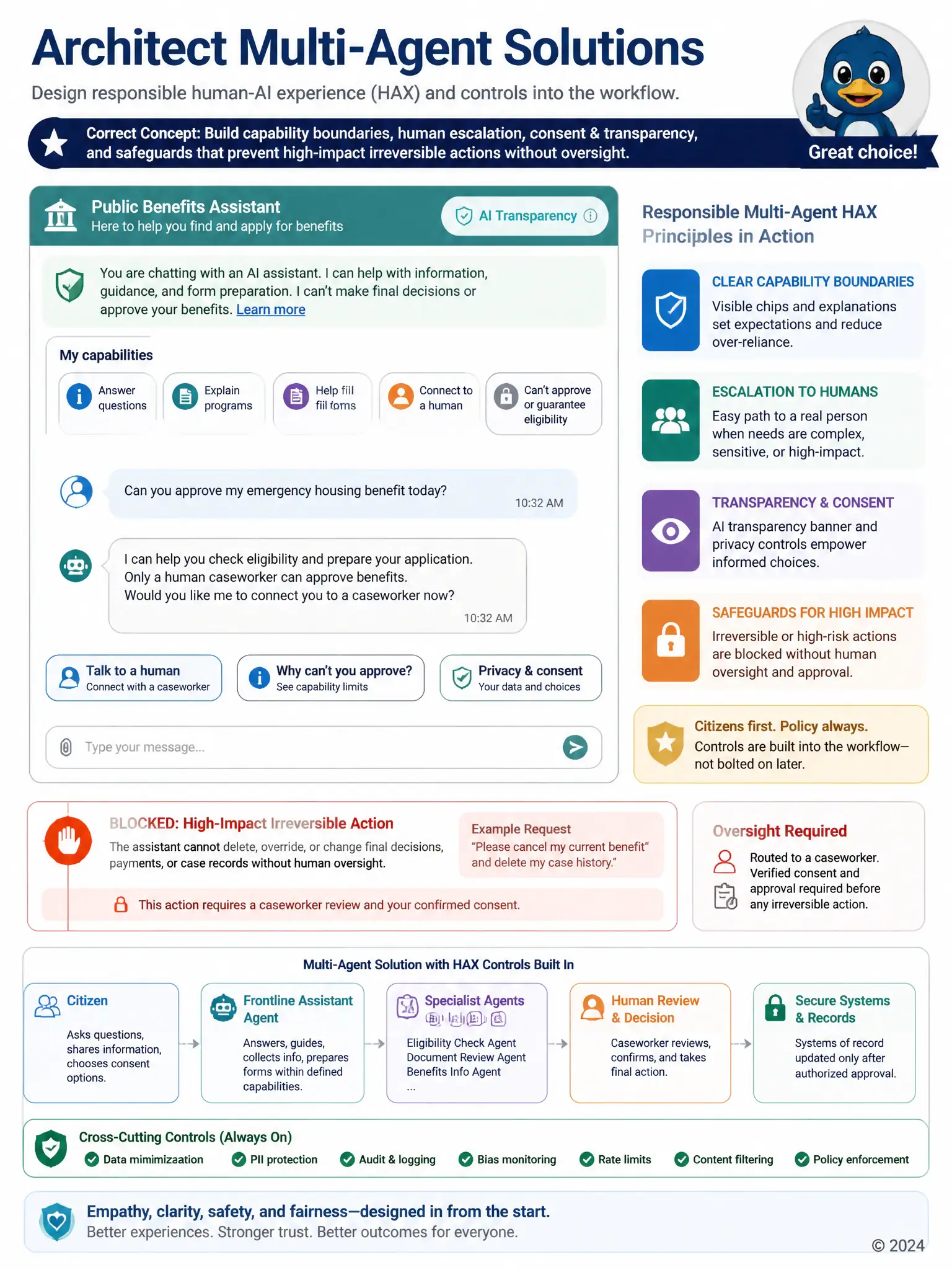
Short Explanation
You need to build in clear agent capability boundaries, human escalation, consent and transparency cues, and controls that stop high-impact irreversible actions without oversight. That protects vulnerable citizens and keeps responsible AI inside the workflow instead of treating it as an afterthought.
Full Explanation
The best design choice is the one that includes clear agent capability boundaries in the experience, escalation to humans, consent and transparency cues, and controls that prevent high-impact irreversible actions without appropriate oversight. This reflects the mandate because public-sector benefits workflows involve vulnerable citizens, so human-AI experience and responsible AI controls must be designed into the architecture. The design should make what the agent can and cannot do clear, provide a path to human help, obtain and signal consent, and block irreversible actions unless proper oversight is present. The choice to maximize autonomous irreversible actions with no user confirmation is wrong because it increases harm risk and conflicts with responsible AI control design. The choice to hide that the citizen is interacting with AI systems to increase engagement metrics is wrong because it undermines transparency expectations for public services. The choice to store all sensitive citizen utterances in a public demo dataset by default is wrong because it violates privacy and responsible data handling.