
You implement multi-agent memory for a public-sector casework system. Requirements include encryption, retention limits, session isolation between citizens, and purge on case closure. Which memory implementation approach is correct?
Select an answer to reveal the explanation.
Short Explanation
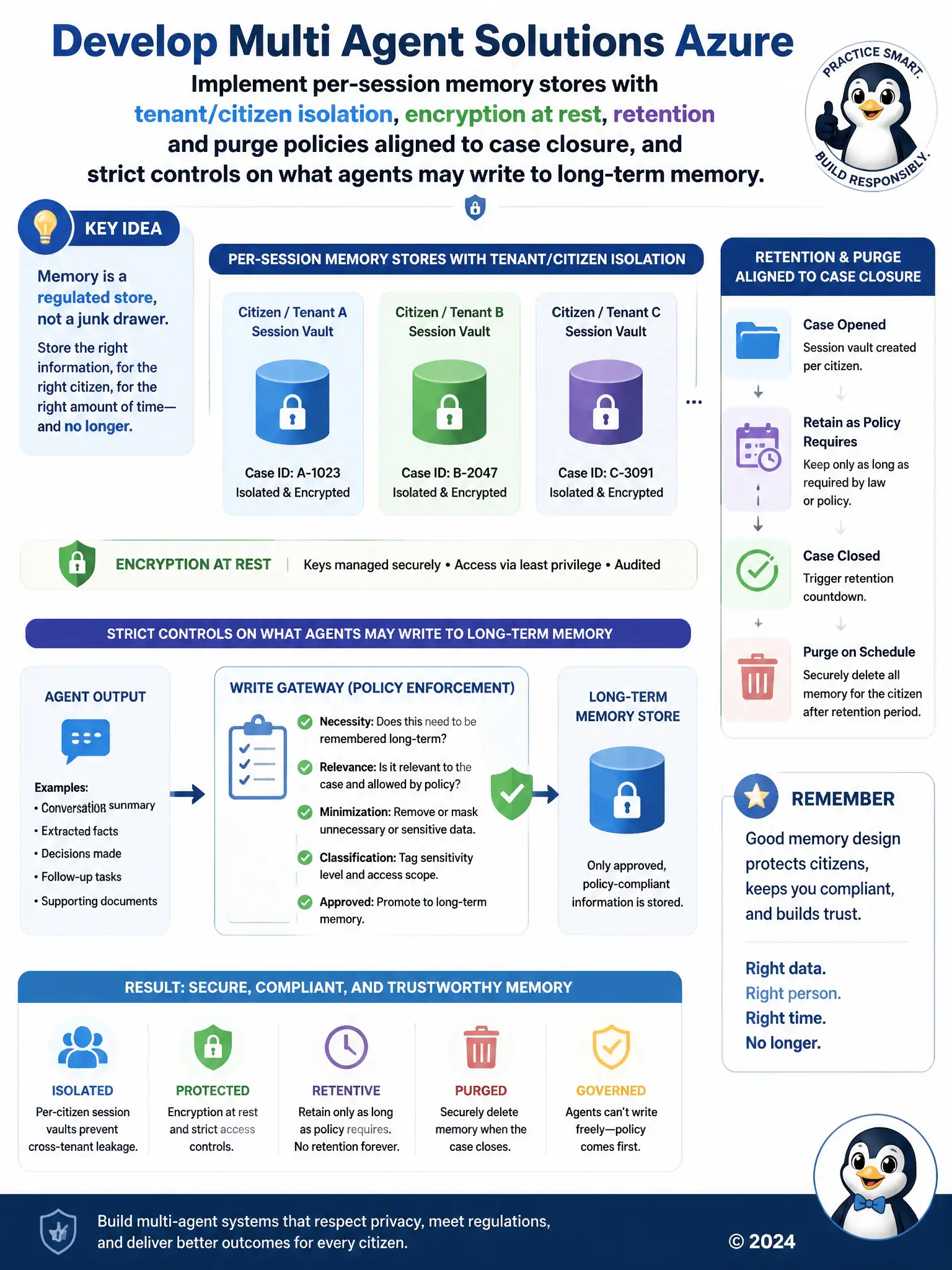
Memory is a regulated store, not a junk drawer. You need per-citizen session isolation, encryption, retention and purge tied to case closure, and strict controls on long-term memory writes. Shared threads, forever retention, and public backups leak data or break compliance.
Full Explanation
Memory strategies must address security, compliance, lifecycle, storage, and session management. Per-session stores with citizen isolation, encryption at rest, retention/purge tied to case closure, and controlled long-term writes cover those needs. Shared citizen threads leak data across sessions. Forever embedding retention violates minimization and retention rules. Public gist backups create an unacceptable exfiltration path. Align memory TTLs with legal holds and support subject-access deletion workflows. Exam tip: long-term memory writes should be deliberate and policy-checked, not automatic transcript dumps.