
You are designing the human-AI experience for a multi-agent legal research assistant used by junior associates. Responsible AI stakeholders require transparency about agent actions, ability to intervene, and clear limits on autonomy for filing-related recommendations. Which design elements should you include?
Select an answer to reveal the explanation.
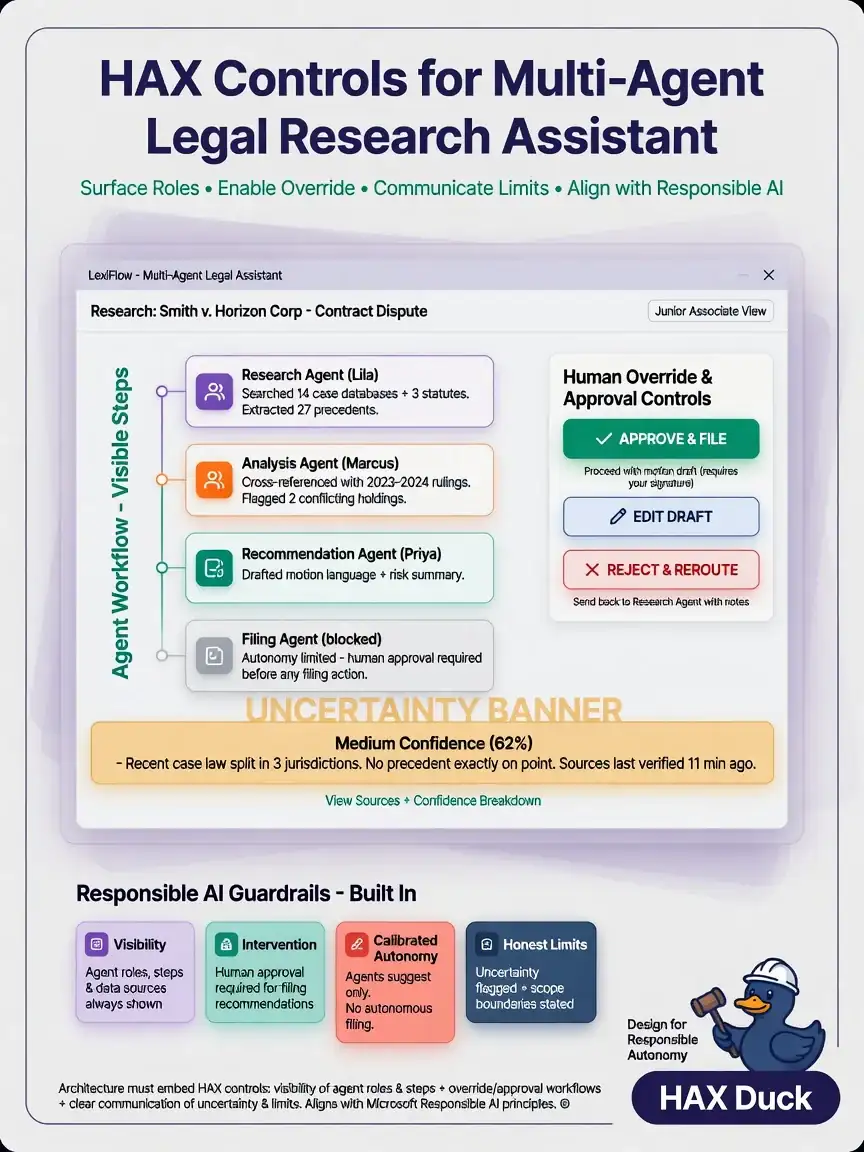
Short Explanation
You need human-AI experience controls that show agent roles and key steps, let humans override or approve, and communicate uncertainty and limits. That keeps autonomy aligned with responsible AI. Hiding steps, auto-filing, or claiming binding advice breaks transparency and intervention.
Full Explanation
AI-500 includes designing controls and functionality for human-AI experience (HAX) and adherence to responsible AI principles. Multi-agent systems can feel like black boxes; HAX design exposes which agent acted, what tools were used (appropriately redacted), and where humans must decide. For legal and other high-stakes domains, recommendations should not silently execute irreversible actions. The correct design surfaces agent roles and key steps, supports human override or approval, communicates uncertainty and limits, and aligns autonomy with responsible AI principles. Hiding all tool use and intermediate steps with no undo or escalation, auto-filing without confirmation, and omitting disclaimers to present drafts as binding advice increase automation bias and risk. Specify UX states for waiting on human input, audit trails of overrides, and content that avoids overclaiming. Tie HAX to autonomy levels defined per agent.