
A multi-agent compliance workflow flags ambiguous policy cases. Business requires humans to approve, override, or escalate before external communications are sent. How should you design the workflow controls?
Select an answer to reveal the explanation.
Short Explanation
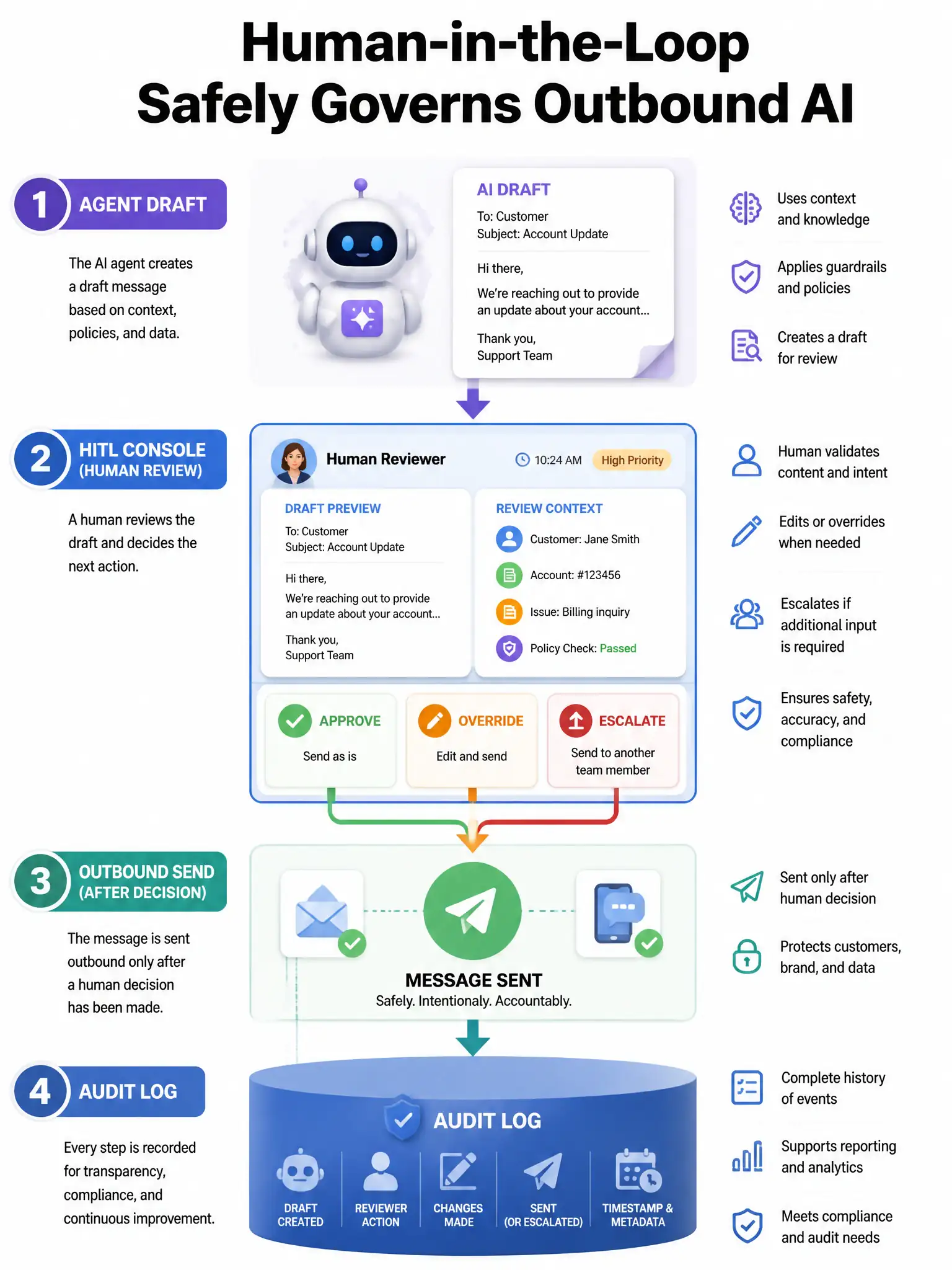
You need human-in-the-loop stages for approval, override, and escalation, and you must block outbound side effects until a decision is recorded and audited. Sending first and summarizing later is too late, dropping humans at 70% quiz accuracy is reckless, and self-override loops defeat controls. Design the reviewer experience so tool context and agent rationale are visible quickly.
Full Explanation
Workflow design includes human-in-the-loop processes—approval, overrides, edge cases—and HAX/responsible AI controls. The correct design adds approval, override, and escalation stages, blocks outbound side effects until a decision is recorded, and captures rationale for audit. Sending immediately then emailing a summary is detect-after-harm. Removing humans at 70% quiz accuracy uses an inadequate threshold to remove oversight. Letting agents re-prompt themselves to override blocks bypasses policy. Specify SLAs for human queues and fallback behavior when reviewers are unavailable, with the safe default being do not send.