
You are building an Azure multi-agent assistant that must call internal APIs for order status and, when needed, dynamically select optional tools for returns or exchanges. Which tool-use implementation is most appropriate?
Select an answer to reveal the explanation.
Short Explanation
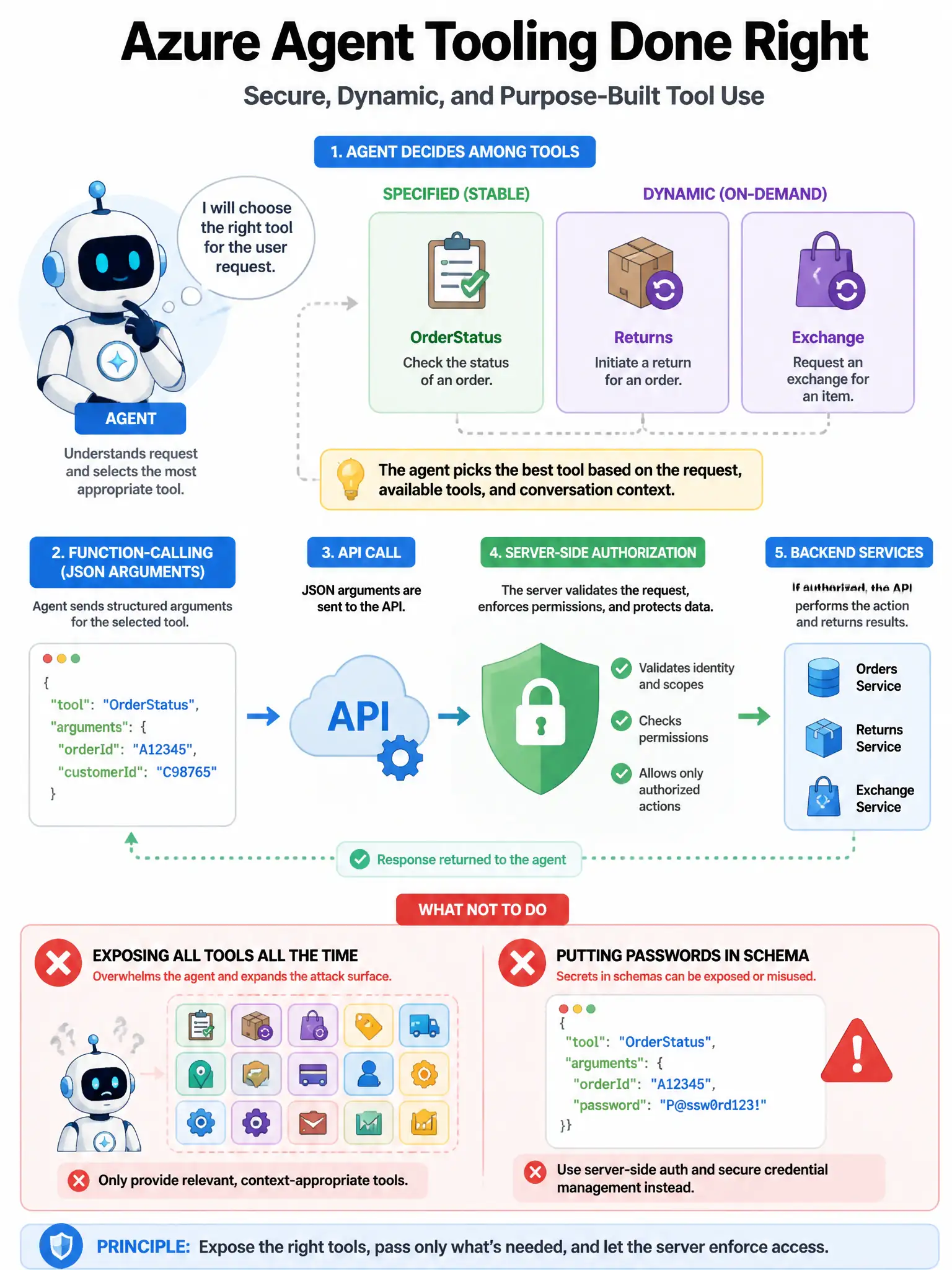
You want function/tool calling for structured tool use, with specified tools for common intents and controlled dynamic tool selection for optional returns or exchanges. You still enforce authorization server-side, because the model isn't your security boundary.
Full Explanation
The correct approach integrates external resources through function/tool calling, uses specified tools for common paths, and allows controlled dynamic tool selection for optional returns/exchange flows while authorization remains enforced server-side. Server-side authorization must validate every invocation. Always calling every registered tool on every turn regardless of user intent is wrong because it wastes tokens, increases latency, and expands attack surface. Never using function calling and pasting API JSON schemas into the user chat for manual invocation only is wrong because it defeats agent automation. Embedding VPN passwords in tool descriptions is wrong because secrets must not appear there; use managed identity and Key Vault patterns. Validate tool arguments and results before side effects.