
Litware is designing a multi-agent workplace assistant that can draft emails, propose calendar changes, and call internal HR tools. Legal and UX require transparency, user control, and minimization of harmful or over-autonomous behavior. Which design package best supports human-AI experience (HAX) and Responsible AI principles?
Select an answer to reveal the explanation.
Short Explanation
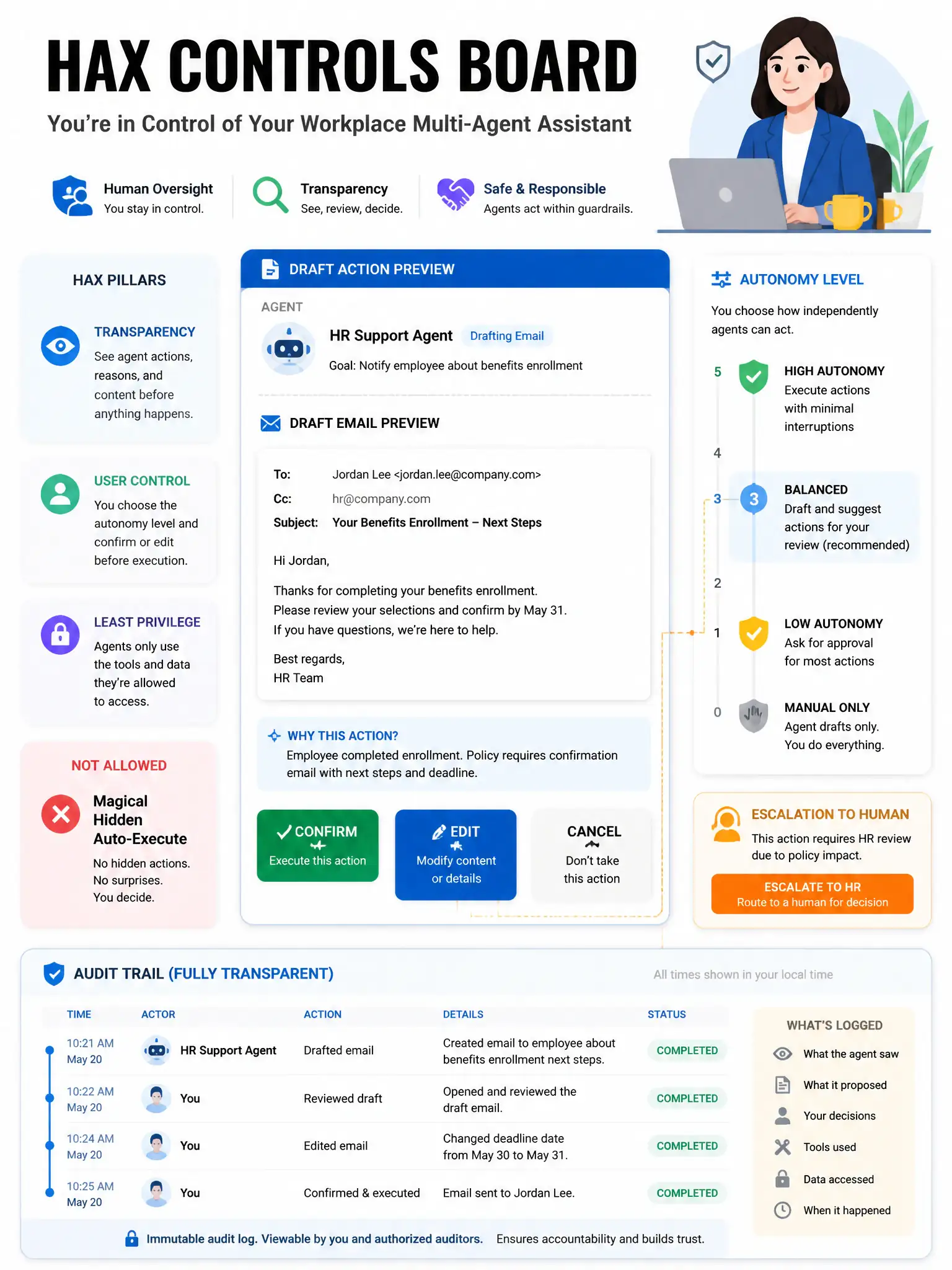
You want the package that shows what the agent is doing, previews consequential actions, and makes you confirm state-changing tool calls. It also gives undo or escalation paths, audit logs, and clear refuse rules for sensitive HR actions. That keeps autonomy bounded and keeps users in control.
Full Explanation
The correct package exposes agent purpose and action previews, requires confirmation for state-changing tool calls, provides undo or escalation paths, logs decisions for audit, and constrains tools with clear refuse guidelines for sensitive HR actions. Multi-agent logical architecture must include controls supporting human-AI experience and Responsible AI: transparency, appropriate autonomy, human oversight, and constrained tools; action previews, confirmations, undo or escalation, audit logs, and refuse guidelines operationalize those principles. The hidden-tool, auto-execute option is incorrect because opaque auto-execution increases harmful autonomy and reduces user trust and control. The undisclosed executive-impersonation option is incorrect because it violates transparency and organizational policy norms. The remove-explanations option is incorrect because removing explanations undermines informed user oversight. Pair human-AI experience patterns with technical enforcement, such as tool gates, not UI copy alone.