
Adventure Works is integrating a research agent that must call internal knowledge tools and also collaborate with a partner-built planning agent hosted outside Adventure Works’ subscription. Architects must choose communication approaches. Which protocol selection is most appropriate?
Select an answer to reveal the explanation.
Short Explanation
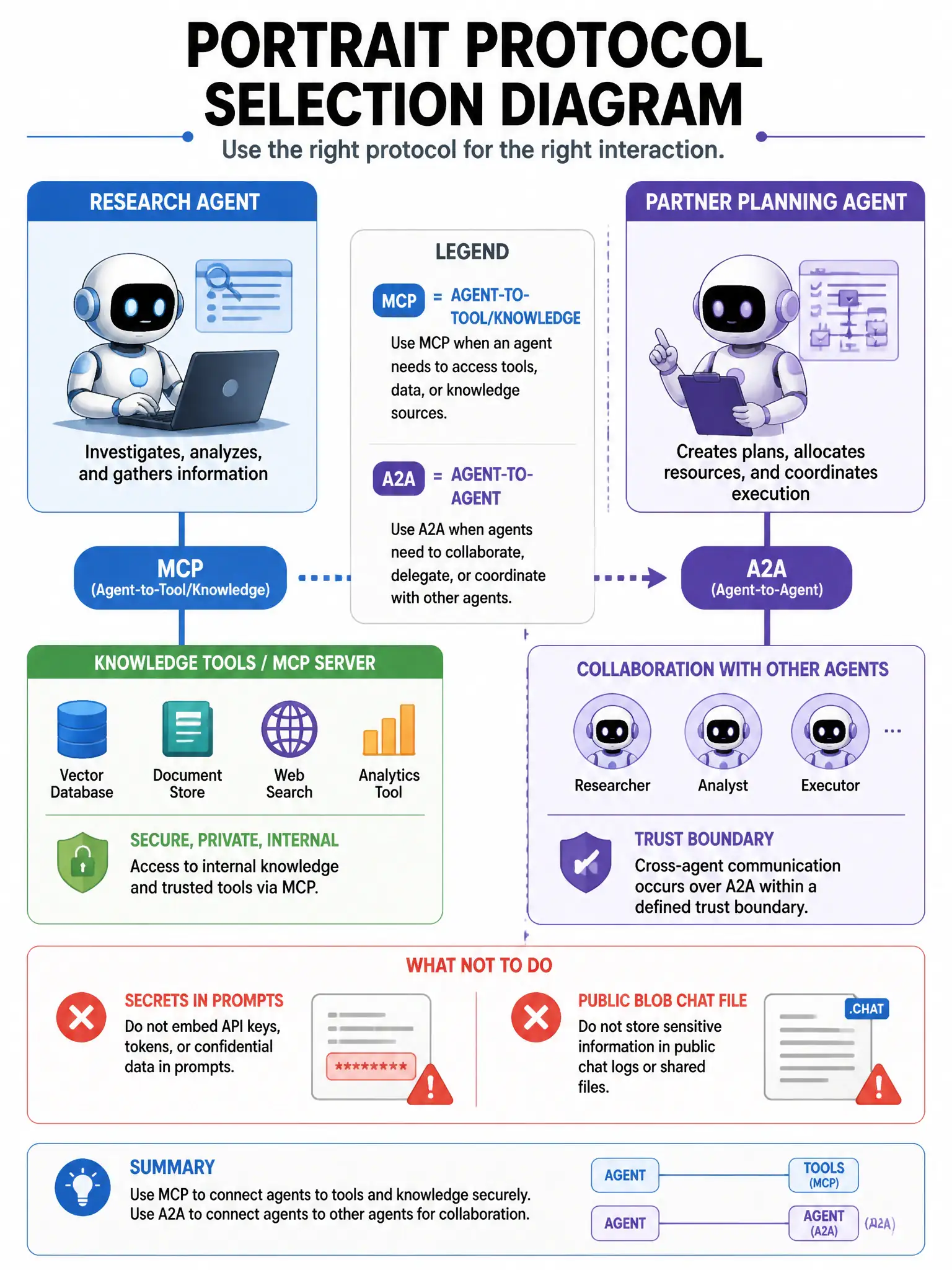
Use Model Context Protocol for standardized agent-to-tool and knowledge-source access, and use Agent2Agent patterns to securely integrate the external planning agent. You're matching protocols to interaction types: tools and knowledge need MCP-style interfaces, while peer agents need Agent2Agent or orchestration messaging. The other choices leak secrets, skip reliable control planes, or expose shared transcripts.
Full Explanation
Architects must specify appropriate protocols for communication between multiple agents and between agents and other components. Using Model Context Protocol for standardized agent-to-tool and knowledge-source access, and Agent2Agent patterns to integrate the external planning agent securely, is correct. MCP standardizes tool and knowledge integration, including MCP servers and clients often built with Azure Functions, Logic Apps, or API Management. Agent2Agent supports secure integration of existing or external agents into a multi-agent solution. Exposing raw database connection strings to every agent prompt is wrong because embedding database credentials in prompts violates secrets management and least privilege. Using only email between agents and avoiding APIs is wrong because email is not a reliable, securable agent protocol for production orchestration. Replacing both tool access and partner collaboration with a single shared chat transcript file on a public blob container is wrong because public shared files provide neither authentication boundaries nor structured tool contracts. Map each edge in the architecture to an explicit protocol and auth method.