
Fabrikam Logistics is specifying agent personas for a fleet-operations multi-agent system. One agent negotiates carrier rates via external APIs; another summarizes SLA breaches for executives. Security requires least privilege and clear behavioral boundaries. Which specification set is most appropriate for the rate-negotiation agent?
Select an answer to reveal the explanation.
Short Explanation
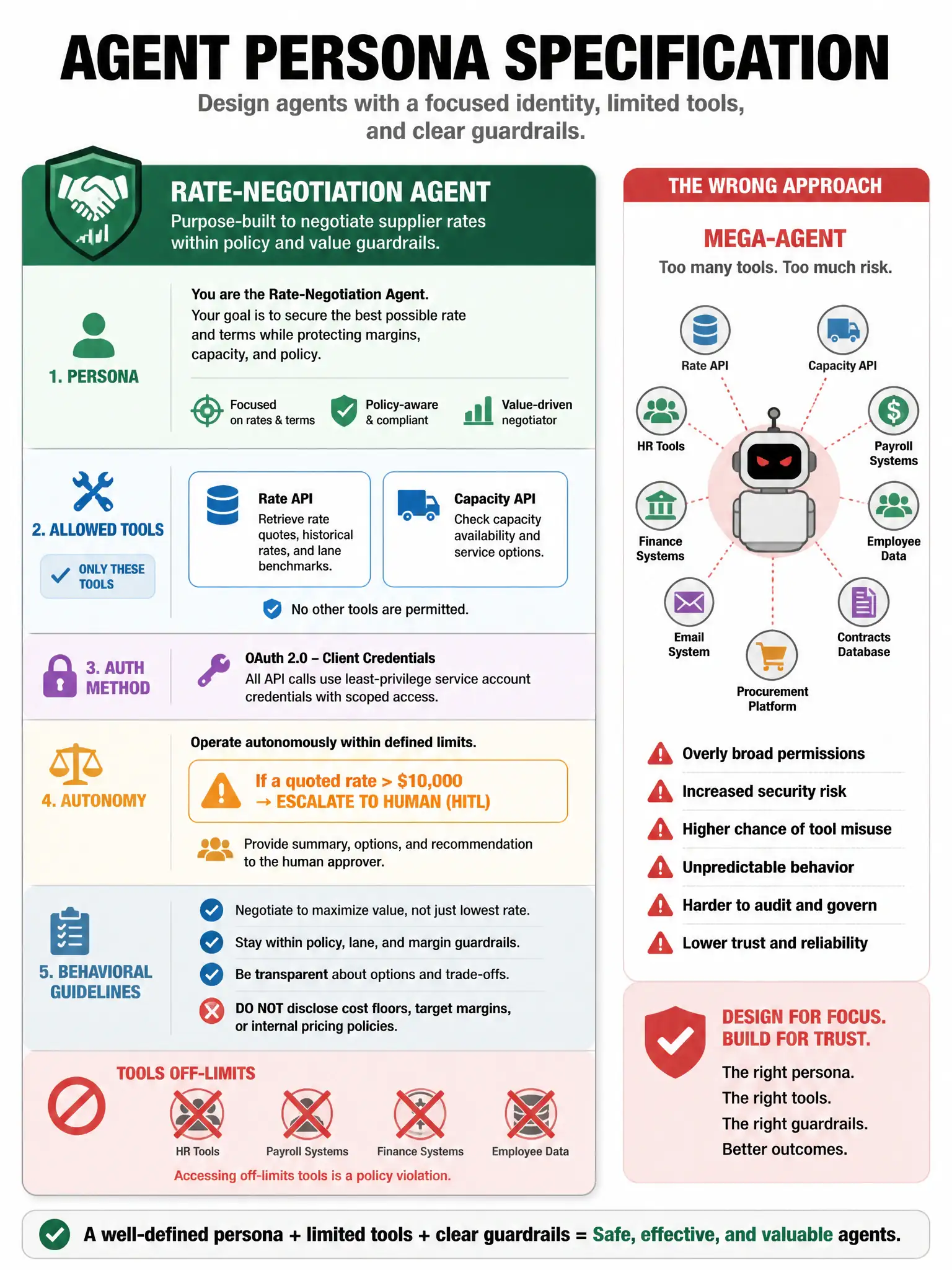
You nail persona design by giving the rate-negotiation agent a commercial persona, only rate-quote and capacity APIs, a threshold that forces human approval, and hard rules against leaking cost floors. That gives you scope, permission boundaries, and behavioral guidelines. Executive summarizers, unlimited payroll/HR access, and identical agents all miss least privilege.
Full Explanation
The correct specification is the one with a persona focused on commercial negotiation, tools limited to rate-quote and capacity APIs, autonomy capped so binding quotes above a threshold require human approval, and behavioral guidelines forbidding disclosure of internal cost floors. Architecting multi-agent solutions requires specifying agent personas, scopes, boundaries, autonomy levels, behavioral guidelines, tool scopes, and authentication methods. The rate-negotiation agent should be specialized, tool-constrained, and subject to approval thresholds for high-value commitments. The executive-friendly, read-only dashboard option is incorrect because it describes an executive summarizer, not a negotiator, and inventing discount policies is unsafe. The unlimited payroll and HR tools option is incorrect because broad access and unrestricted contract binding violate least privilege and Zero Trust. The identical persona and tool set option is incorrect because it increases blast radius and dilutes behavioral controls. Strong designs map each agent’s mission to minimal tools and explicit refuse/handoff rules.