
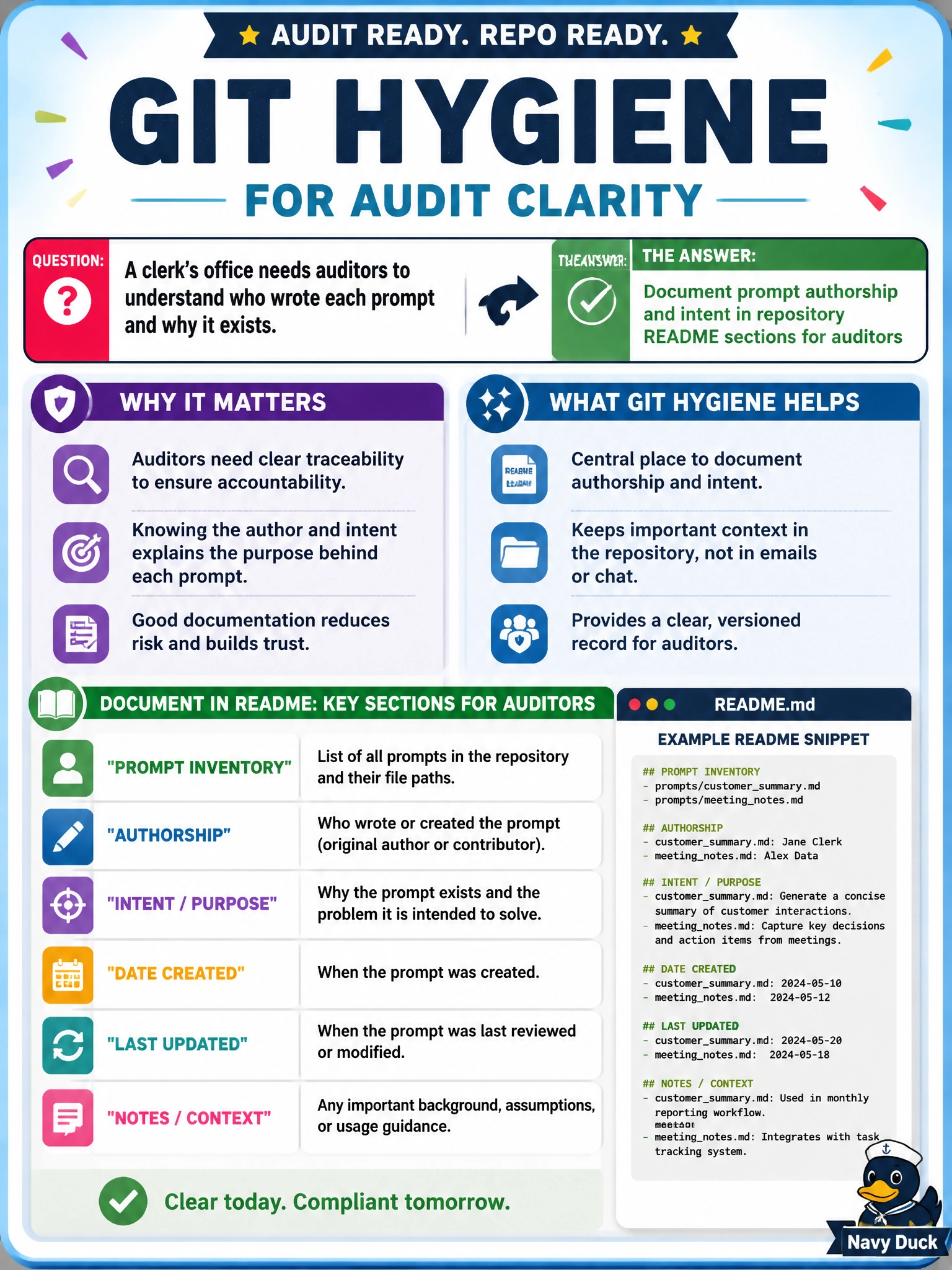
A clerk’s office needs auditors to understand who wrote each prompt and why it exists. What Git hygiene helps?
Select an answer to reveal the explanation.
Short Explanation
Semantic version tags won’t tell you who wrote each prompt or why it exists. Put authorship and intent next to the prompts in the README so the clerk’s office has a clear paper trail.
Full Explanation
Documenting prompt authorship and intent in repository README sections gives a clerk's office auditors a durable explanation of who wrote each prompt and why it exists. READMEs beside prompt assets record owner, business purpose, related ordinance or SOP references, and known limitations. That Git hygiene turns prompt repos into auditable civic records instead of anonymous text blobs, speeding clerk-office reviews and reducing dependency on oral history when staff rotate.
Tracking prompt file versions with commit messages describing syntax edits for reviewers fails the question’s need—commit messages explain how syntax changed, not who authored each prompt or why it exists for auditors. Maintaining CHANGELOG entries listing prompt file names and edit dates for tracking fails the question’s need—a changelog records when files changed, not the authorship and business intent auditors require. Tagging prompt releases with semantic version numbers to signal deployment stages to teams fails the question’s need—version tags mark release stages, they do not document who wrote each prompt or why it exists.
Exam caveat: README documentation supports auditors but does not replace signed release tags, PR approvals, or runtime drift detection. Keep sensitive personal data out of READMEs; document roles and intent, not private resident examples.
Operational check: Verify each production prompt directory has a README with owner, intent, and last-review date; include README updates in the PR checklist; sample auditor walkthroughs using only the repo; and alert when prompts merge without documentation changes when intent clearly shifted.
Prefer to study offline? Printable PDF study book + test engine ($7.50, unofficial). These questions stay free here.