
A municipal AI CoE must allocate Foundry cost across departments and keep inventories searchable. What resource hygiene helps?
Select an answer to reveal the explanation.
Short Explanation
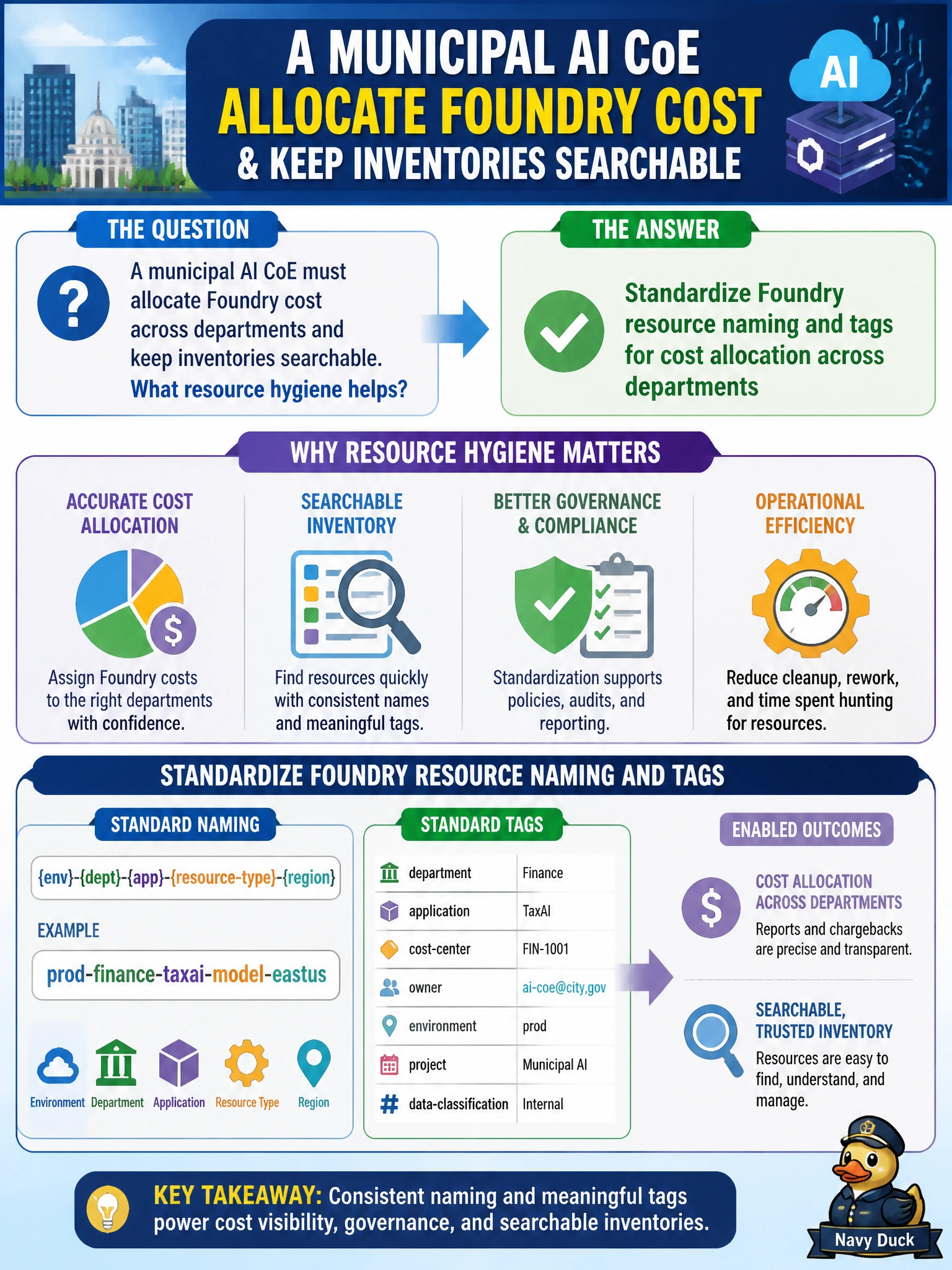
If finance cannot tell Parks from Public Health on the bill, naming and tags failed. Standardize Foundry names and tags so CoE cost allocation actually works.
Full Explanation
Standardizing Foundry resource naming and tags for cost allocation across departments is the correct hygiene for a municipal AI CoE that must allocate Foundry cost and keep inventories searchable. Consistent names (department, environment, workload) and mandatory tags (cost center, owner, program) let Azure Cost Management, Resource Graph, and CoE inventories attribute spend to Parks, Public Health, Courts, and other departments. Without that hygiene, chargeback and search collapse into unmarked resources that finance and security cannot map.
Attributing departmental Foundry usage with separate Log Analytics workspaces fails because it fragments logging across separate workspaces instead of standardizing resource names and tags, so Cost Management still cannot reliably attribute Foundry spend to Parks, Public Health, Courts, or other departments. Centralizing Foundry cost tracking with a center-wide tag value for departments fails because a single shared value cannot distinguish Parks from Public Health, Courts, or other departments, so Cost Management cannot allocate spend and inventories stay unsearchable by department. Managing departmental Foundry inventories with private endpoint access controls fails because it secures traffic boundaries but does nothing to standardize names or tags, leaving inventories unsearchable and cost allocation unable to bind spend to a civic owner.
Exam caveat: naming and tagging support FinOps and inventory; they do not replace RBAC or private endpoint access controls. When the stem emphasizes cost allocation and searchable inventories across departments, choose standardized naming/tags rather than private endpoint access controls or model answers.
Operational check: publish a Foundry naming/tagging standard, enforce required tags via Azure Policy where possible, and sample Cost Management views to confirm department filters resolve cleanly for CoE chargeback.
Prefer to study offline? Printable PDF study book + test engine ($7.50, unofficial). These questions stay free here.