
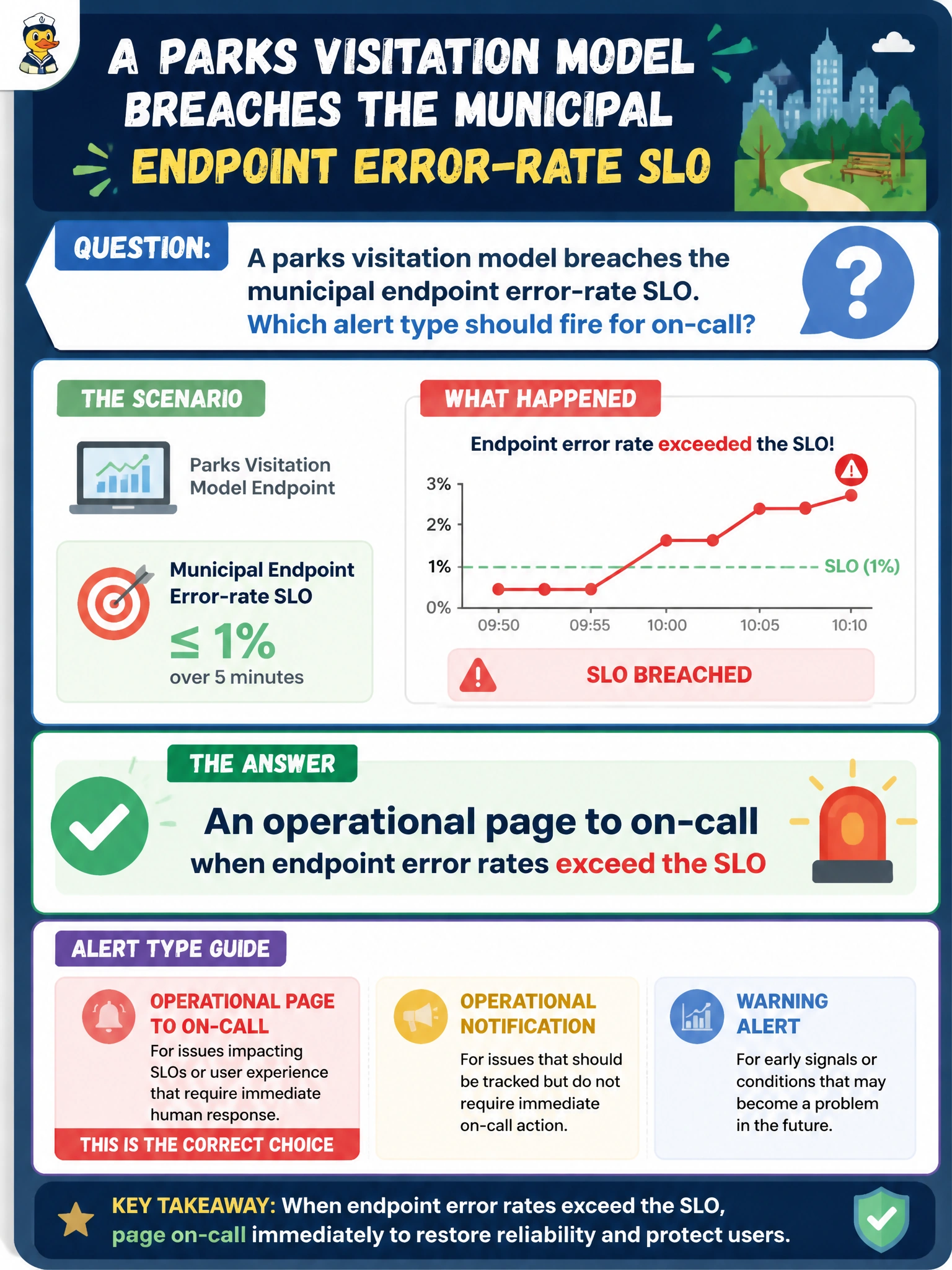
A parks visitation model breaches the municipal endpoint error-rate SLO. Which alert type should fire for on-call?
Select an answer to reveal the explanation.
Short Explanation
You'll page on-call when the endpoint error rate breaches the SLO because it's an active reliability incident. You'll ignore pages for weekly trends ready for review and for nightly sync completion because they're routine and they'll fatigue on-call without signaling a breach. You'll keep drift-triggered retraining off the paging track because it's a quality signal, not proof the endpoint is erroring now.
Full Explanation
An operational page to on-call when endpoint error rates exceed the SLO is correct because a parks visitation model that breaches municipal endpoint reliability must wake responders immediately. Error-rate SLO alerts are operational reliability controls: they mobilize people who can roll back, scale, or fix serving issues. That alert path is distinct from—though coordinated with—an operational page to on-call when drift scores trigger retraining evaluation, which follows a slower model-quality cadence rather than signaling an endpoint error-rate breach. An operational page to on-call when weekly SLO trends are ready for review fails urgency and relevance for an SLO breach because paging for a routine weekly review creates alert fatigue and is not triggered by the actual error-rate breach. An operational page to on-call when drift scores trigger retraining evaluation fails because reliability incidents need on-call response for endpoint errors now; a drift-triggered retraining trigger is a model-quality signal, not evidence that the endpoint is erroring now. An operational page to on-call when data ingestion completes for nightly sync fails as a control because a routine successful sync is not an incident, and paging on-call for it creates noise while never detecting the error-rate breach itself. Exam caveat: distinguish operational SLO/error-rate pages from operational pages to on-call when drift scores trigger retraining evaluation. When the stem cites endpoint error-rate SLO breach, choose on-call operational alerting. Operational check: configure an alert rule on visitation-endpoint error rate against the municipal SLO, verify it pages the on-call roster (not for weekly SLO trends ready for review), document rollback steps in the runbook, and keep operational pages for drift-triggered retraining evaluation on a separate quality-governance track.
Prefer to study offline? Printable PDF study book + test engine ($7.50, unofficial). These questions stay free here.