
A municipal climate team must patch an Azure Machine Learning environment after a dependency CVE while keeping builds reproducible. What should they do?
Select an answer to reveal the explanation.
Short Explanation
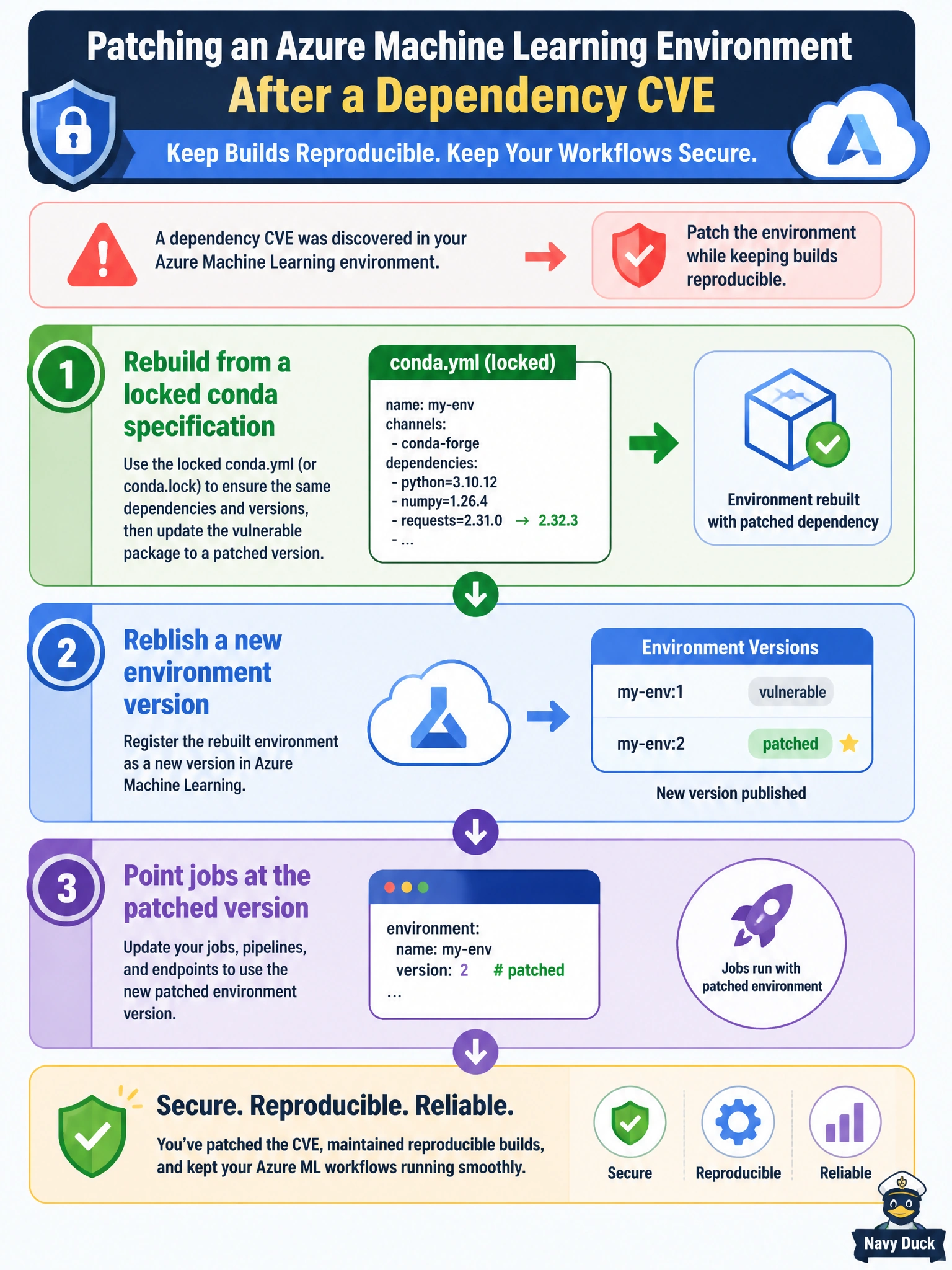
Security patches still need a recipe card. You rebuild from the locked conda spec, cut a new environment version, and move jobs to it. Editing an unlocked file without re-locking, swapping only the OS base, or grabbing the latest packages is how you'll end up with an unrepeatable build.
Full Explanation
Rebuilding from a locked conda specification, publishing a new environment version, and pointing jobs at the patched version is correct because CVE remediation for Azure ML environments must remain reproducible. The municipal climate team patches by updating the locked spec, building a new environment version that includes fixed dependencies, and migrating jobs deliberately. Historical runs stay attributable to prior environment versions while new work uses the patched stack. Patching the dependency in the conda file, rebuilding the Docker image, and publishing a new environment version for jobs fails reproducibility because it edits an unlocked conda file without establishing a new lock — the published version can resolve to different packages on rebuild instead of pinning the patched set. Updating the base image to the patched OS image, rebuilding the conda environment, and publishing a new environment version fails because it patches the wrong layer: the CVE lives in the conda dependency, so a new OS base without an updated locked spec still ships the vulnerable package. Rebuilding from the latest conda packages, publishing a new environment version, and pointing jobs at the patched version fails because pulling latest abandons pinning — it introduces untested package changes beyond the CVE fix and a later rebuild could pull different versions, the opposite of the locked posture the stem requires. Exam caveat: patch, new version, retarget jobs — the lock file carries the fix. Don't confuse editing an unlocked file without re-locking, patching only the OS base, or pulling latest packages with real locked environment management. Operational check: update the locked conda spec with patched package versions, build and publish environment vN+1, run a climate-model smoke job on the new version, then update schedules/pipelines to the patched environment and retire vulnerable versions from new production submissions.
Prefer to study offline? Printable PDF study book + test engine ($7.50, unofficial). These questions stay free here.