
Embedding dimension mismatches start failing vector upserts citywide. How should KQL help find the pattern?
Select an answer to reveal the explanation.
Short Explanation
KQL on dimension-mismatch exceptions is like spotting every form stamped with the wrong box count—same systemic error everywhere.
Full Explanation
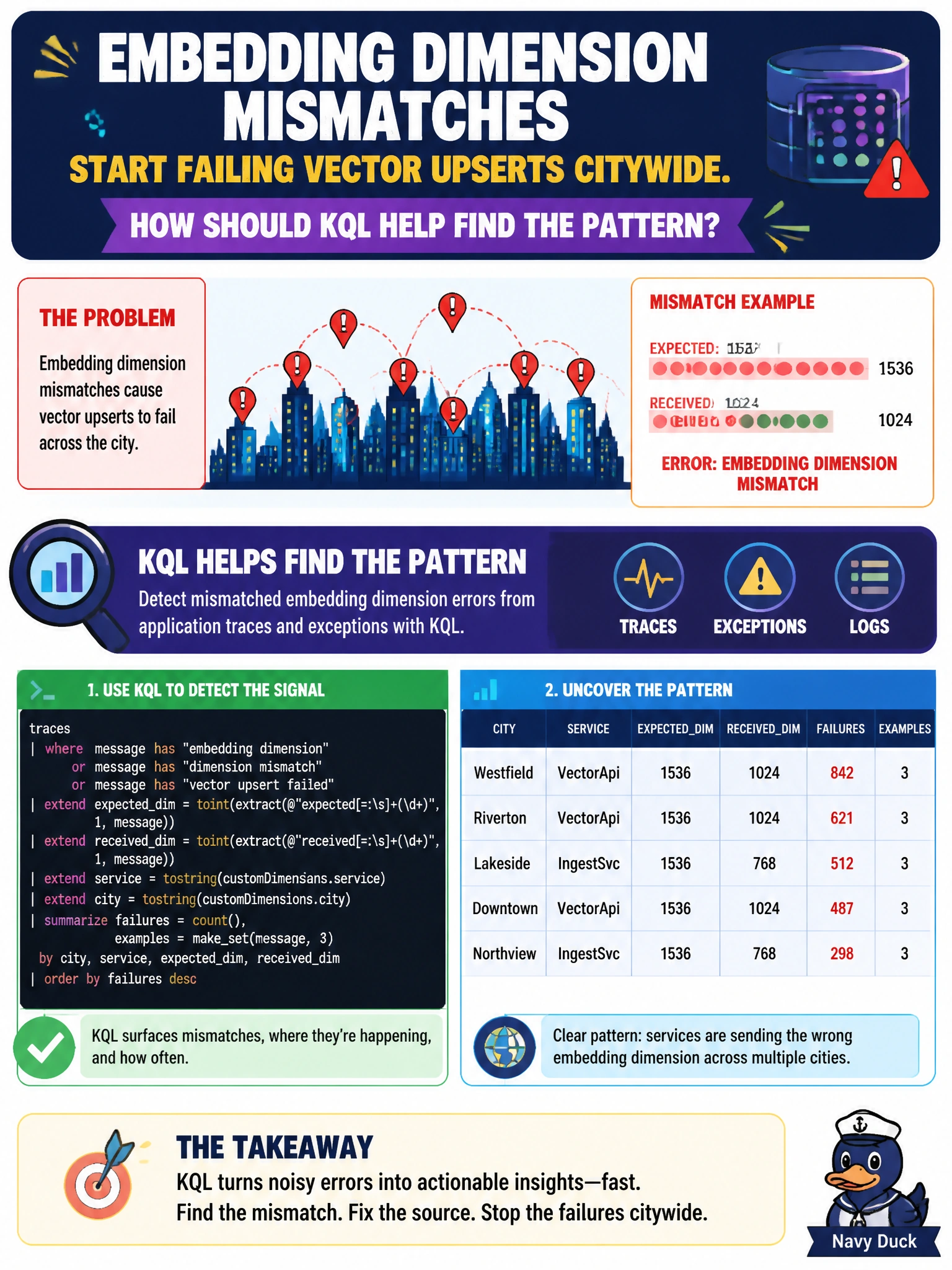
When embedding dimension mismatches start failing vector upserts citywide, KQL should detect mismatched embedding dimension errors from application traces and exceptions. Dimension mismatch typically means the embedding model output size no longer matches the vector index schema (for example after a model swap). Surfacing those exception messages/types across services shows whether the failure is systemic—critical for municipal RAG and search features that suddenly cannot upsert vectors.
Filtering only informational heartbeats and hiding exception tables conceals the exact failure signature ops needs. Aggregating ACR build minutes instead of exception messages tracks CI duration, not embedding schema errors. Querying Key Vault soft-delete events that are unrelated to embedding errors wastes investigative time during a citywide upsert outage.
Exam caveat: Embedding dimension is a hard schema constraint for many vector stores; silent truncation is not acceptable. A model deployment name change in App Configuration can trigger widespread mismatches if indexes are not recreated or dual-written carefully. Distinguish transient network upsert failures from explicit dimension validation exceptions in KQL filters.
Operational check: Create a KQL alert on dimension-mismatch exception text/types across civic embedding producers, inventory which services and model deployment keys are implicated, pause bad upserts if needed, align model output dimensions with index definitions (or migrate indexes), and re-run a controlled upsert canary. Confirm exception counts return to zero before resuming full citywide vector writes.