
A parks permitting API emits custom token-count metrics. How should ops monitor generative cost proxies?
Select an answer to reveal the explanation.
Short Explanation
Think of token metrics like a water meter on the generative pipe—dashboards show usage before the bill surprises anyone.
Full Explanation
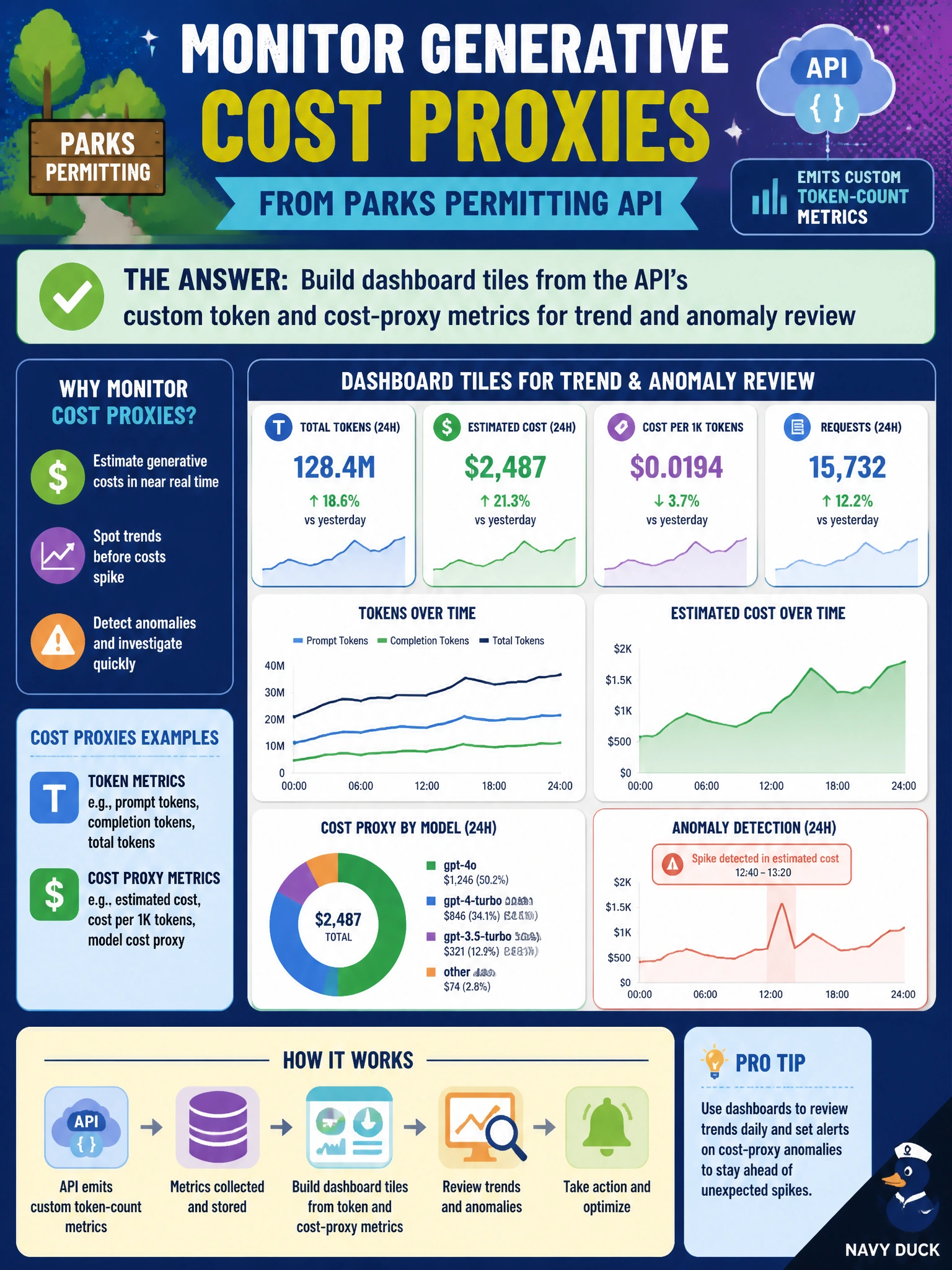
A parks permitting API that emits custom token-count metrics gives operations a near-real-time proxy for generative cost before the Azure invoice arrives. The correct practice is to build Azure Monitor dashboard tiles from those custom token and cost-proxy metrics so trends, spikes, and anomalies are visible while residents and staff continue submitting permit requests. Token volume often leads dollar spend; watching it continuously lets the city throttle, cache, change models, or adjust quotas before a month-end surprise hits the parks budget.
Ignoring custom metrics and reviewing only weekly subscription invoice PDFs is lagging and coarse—by the time finance sees the PDF, anomalous generative spend may already have run for days. Storing invoice CSVs only in a shared mailbox without near-real-time dashboards creates the same delayed-signal problem and lacks alerting. Turning off metrics exporters so cost signals never appear in Azure Monitor removes the operational feedback loop entirely and is the opposite of responsible municipal FinOps for AI.
Exam caveat: Custom metrics are application-defined signals; they complement—not replace—Azure Cost Management. Token counts are proxies: pricing tiers, prompt/completion splits, and multi-model routes can skew dollars even when token charts look stable. Sampling, aggregation windows, and dimension cardinality also affect how useful the tiles are for anomaly detection.
Operational check: Wire the permitting API's token and estimated-cost custom metrics to a parks ops dashboard with day-over-day and week-over-week views, add threshold alerts for sudden spikes during peak permit season, and periodically reconcile dashboard totals to Cost Management actuals. After a model or prompt change, verify the tiles move as expected and capture a baseline so seasonal permitting surges are not mistaken for runaway spend.