
An internal civic agent calls HTTP-triggered tool Functions. Which auth approach best fits machine-to-machine calls inside the city tenant?
Select an answer to reveal the explanation.
Short Explanation
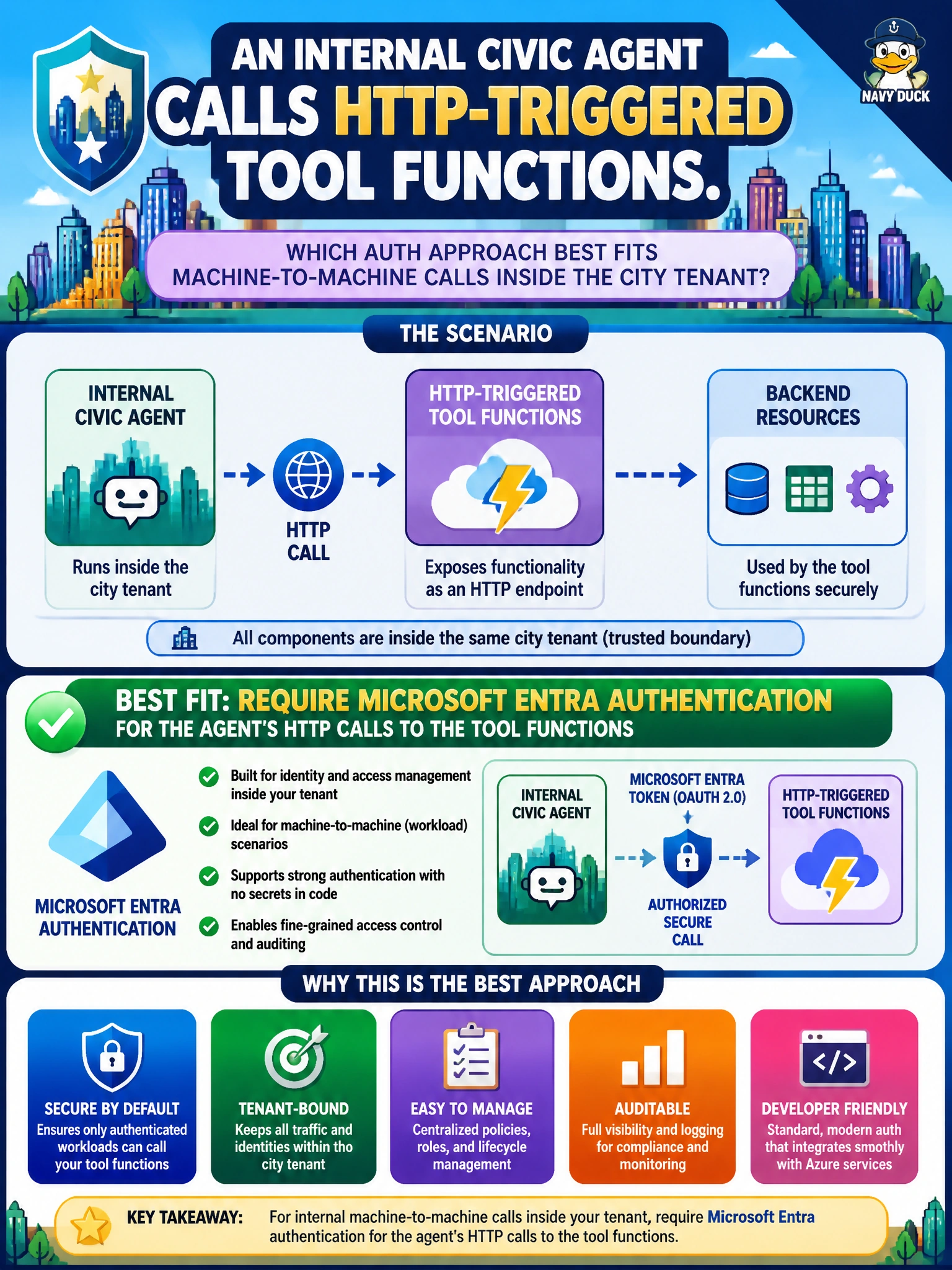
For your city-to-city tool calls, Microsoft Entra authentication gives each agent a verifiable identity and keeps access accountable. You can avoid anonymous access and shared or publicly exposed secrets with Entra at the door.
Full Explanation
Internal civic agents invoking HTTP-triggered tool Functions inside the city Microsoft Entra tenant should authenticate with Entra, using the Function app’s authentication or token validation against its app registration. Machine-to-machine calls can use managed identity or client credentials, making each invocation attributable and credentials rotatable while supporting least-privilege app roles—important for agents accessing resident cases, permits, or internal knowledge tools. Leaving the Function anonymously accessible on the public internet invites abuse, prompt-injection-driven tool spam, and untracked municipal data access. Sharing one static password in chat between agents and Functions is non-auditable, difficult to rotate, and likely to end up in logs. Publishing function keys in the public parks website footer exposes privileged keys to the world and confuses public FAQ endpoints with internal agent tool surfaces. Exam caveat: AI-200 distinguishes public HTTP surfaces, such as limited-key or anonymous read-only FAQs, from internal agent tool APIs, which should prefer Microsoft Entra identity. Function keys alone are shared secrets; Entra adds identity, conditional access, and role claims suited to city-to-city automation. Practical check: disable anonymous access, require Entra, grant the agent app’s managed identity the needed app role, then test calls with and without a valid token. Confirm unauthenticated calls return 401, authenticated calls succeed, and audit logs identify the correct service principal—not a parks-site key.