
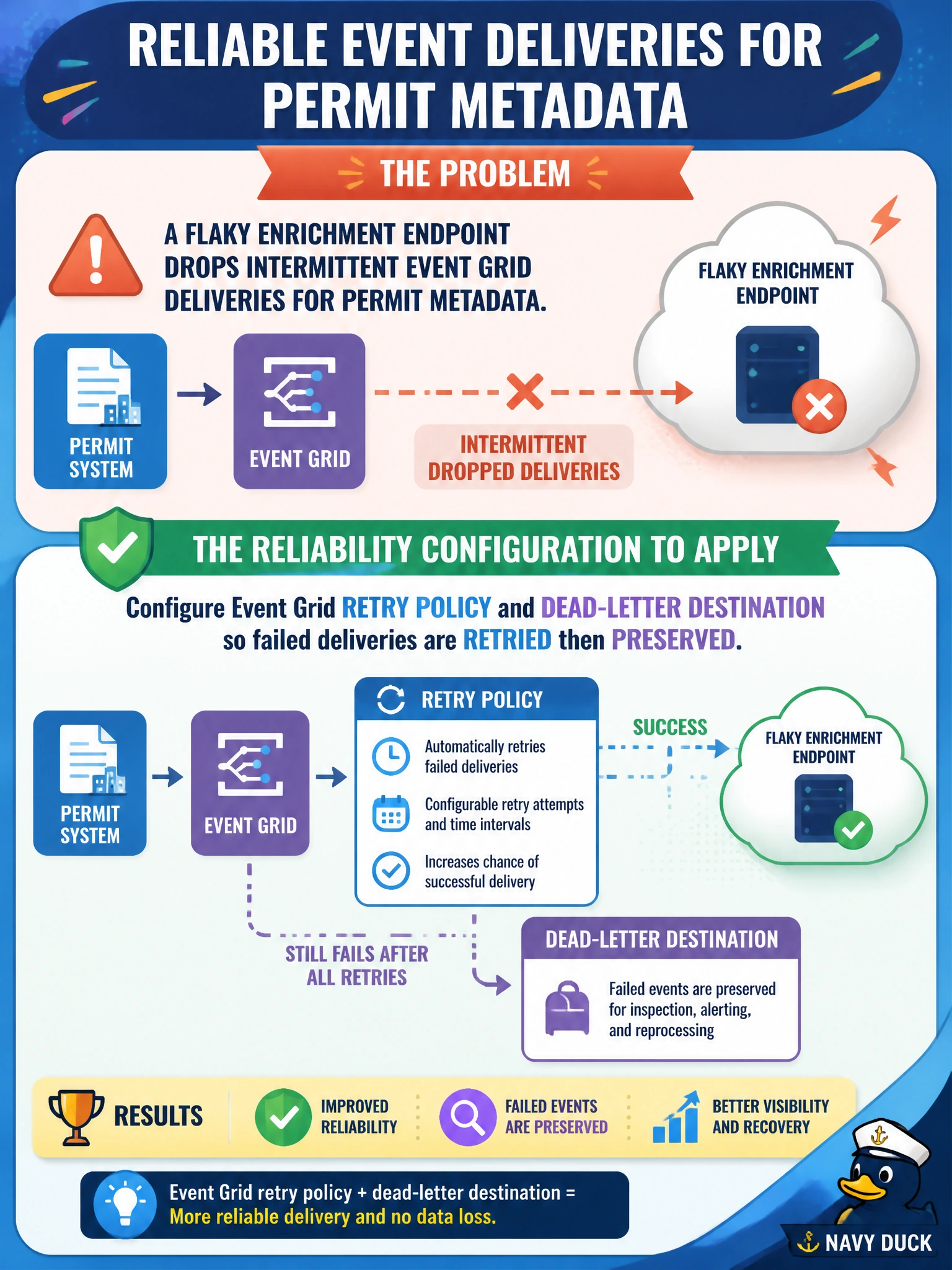
A flaky enrichment endpoint drops intermittent Event Grid deliveries for permit metadata. What reliability configuration should the city apply?
Select an answer to reveal the explanation.
Short Explanation
Retries plus a dead-letter spot are the city’s “try again, then put it in the lost-and-found”—transient enrichment blips shouldn’t erase permit metadata events forever.
Full Explanation
Flaky enrichment endpoints drop intermittent Event Grid deliveries for permit metadata unless retry and dead-letter policies are configured. Event Grid can retry failed deliveries according to policy, then send undeliverable events to a dead-letter destination (commonly a storage blob container) so municipal ops retain the payload for replay. That combination absorbs transient Function or network faults without permanently losing enrichment signals that keep permit AI features accurate.
Disabling all retries so a single failure permanently drops enrichment events fails reliability: brief cold starts or 503s become silent data loss. Setting max delivery attempts to one and deleting undeliverable events immediately is the same class of failure—no second chance and no preserved evidence. Replacing Event Grid with fire-and-forget client-side JavaScript from the clerk browser fails architecture and trust: browsers are not a durable event fabric, offline clerks lose events, and enrichment should not depend on an open clerk session.
Exam caveat: retries help transient faults; poison handler bugs need dead-letter inspection and a fix before endless retries help. Configure dead-letter identity and permissions correctly or events will fail both delivery and dead-lettering. Operational check: temporarily break the enrichment endpoint, publish events, confirm retries occur, then confirm dead-letter blobs appear with the original event; restore the endpoint and replay from dead-letter under change control.