
Clerk form-help snippets are generated by an LLM and reused through Azure Managed Redis. Which caching pattern is typically preferred for this side data?
Select an answer to reveal the explanation.
Short Explanation
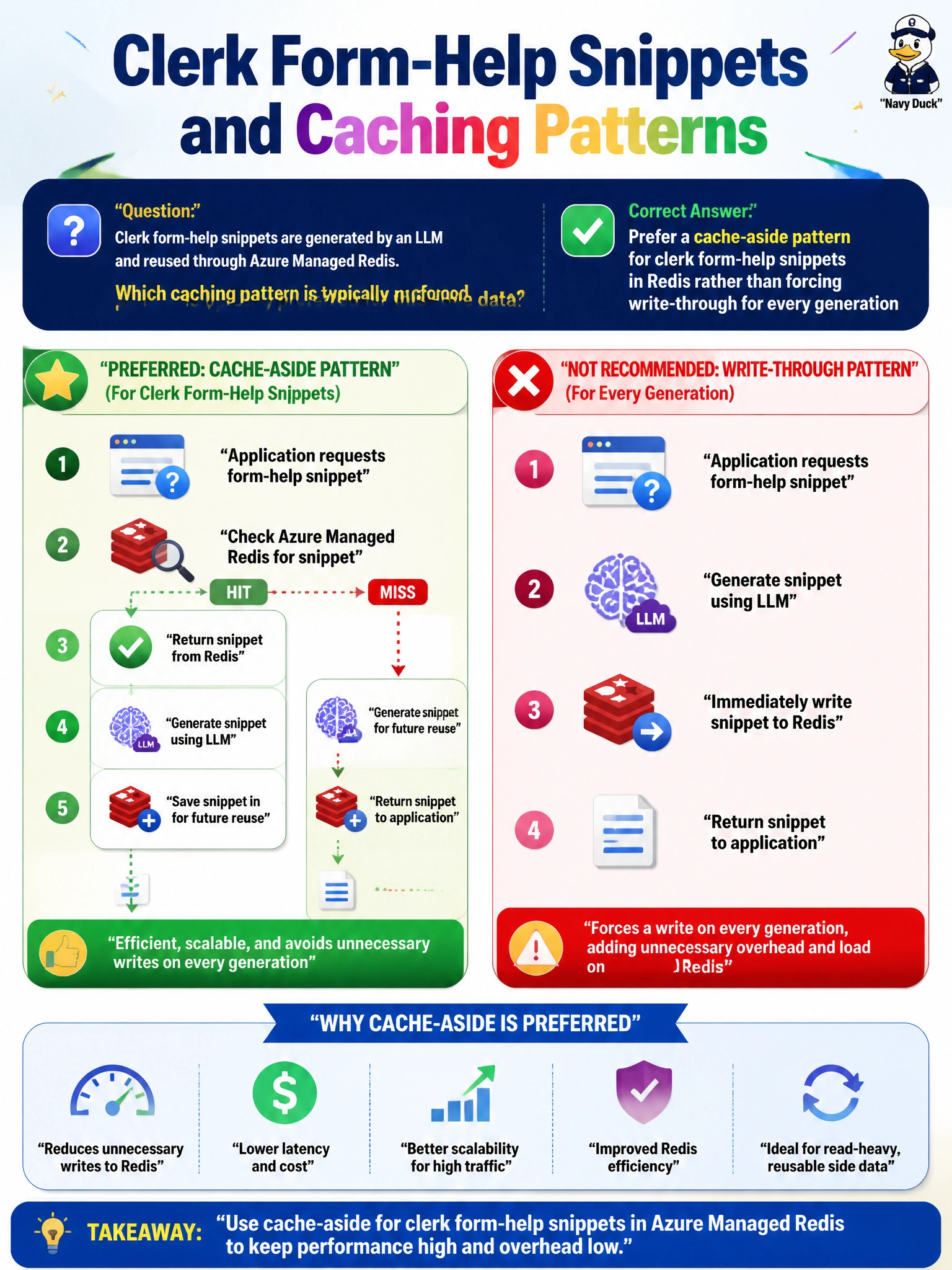
Cache-aside is the clerk’s ‘check the drawer first’ habit—look in Redis for form-help, and only call the LLM when the drawer’s empty, instead of writing through every half-baked draft.
Full Explanation
Clerk form-help snippets generated by an LLM and reused through Azure Managed Redis typically follow a cache-aside pattern: the service reads Redis first, and on a miss it generates (or loads) the snippet, then populates the cache. Cache-aside avoids write-through cost on every speculative generation and fits side data that is read often but not rewritten on each token. That pattern controls municipal AI spend for form-help side content.
Write-through on every token generation even when most snippets are never reread amplifies Redis write traffic and complexity without proportional benefit. Never caching snippets and regenerating full form help on every keystroke maximizes latency and token use. Caching only failed generations and discarding successful help text immediately inverts the purpose of an answer cache.
Exam caveat: cache-aside implies explicit miss handling and stampede control (locks or single-flight) under concurrent clerk usage; associate questions focus on preferring cache-aside over blind write-through for this side-data case. Operational check: implement get-then-fill for form-help keys, measure hit ratio during clerk peaks, add short TTL or version segments for form template changes, and confirm successful snippets—not only failures—are stored.