
Transit ops must upgrade the disruption-narrator Deployment on AKS with zero downtime for riders. Which strategy should they use?
Select an answer to reveal the explanation.
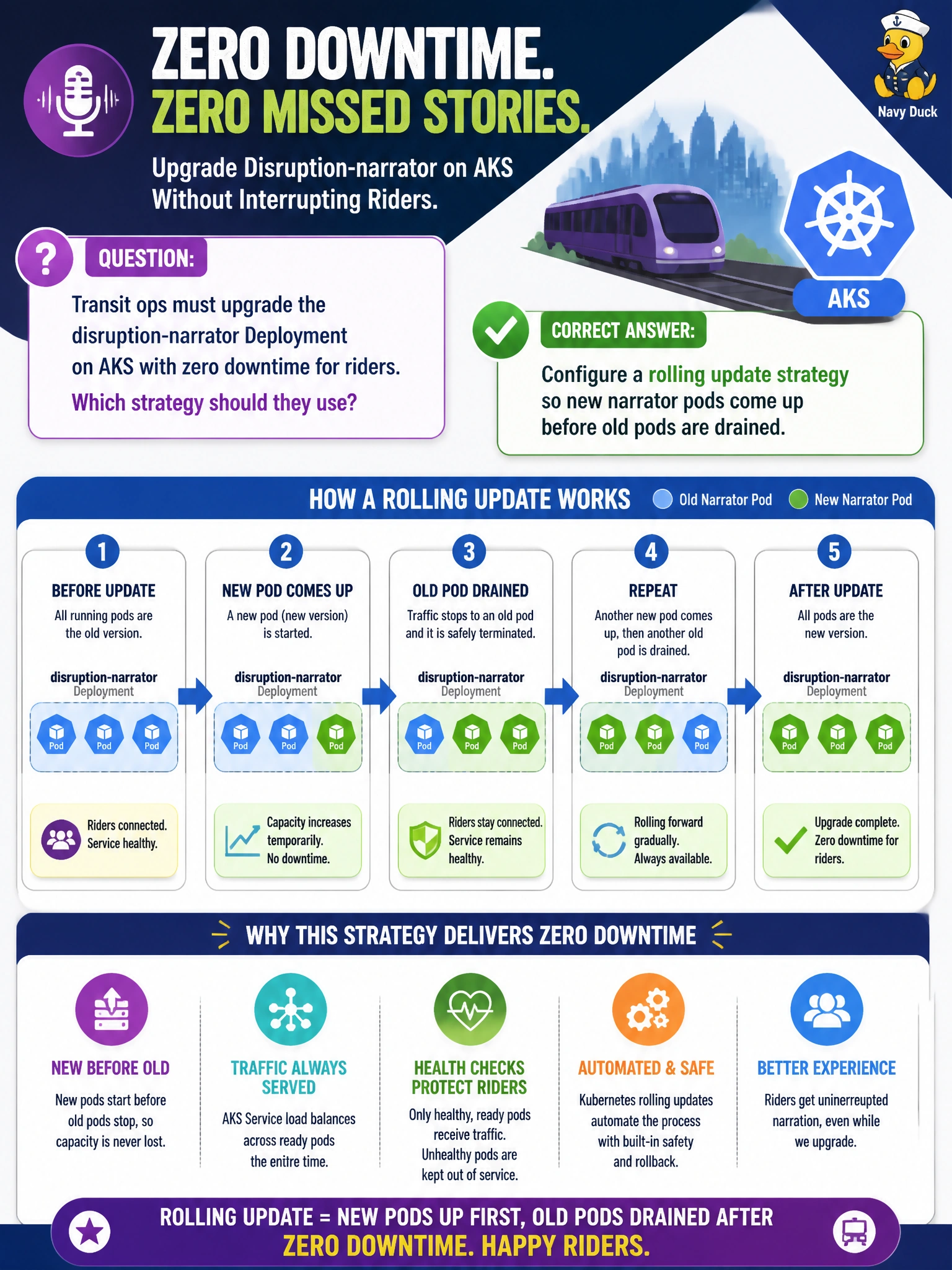
Short Explanation
A rolling update is like swapping bus drivers one coach at a time so the route never goes dark—new disruption-narrator pods rise before old ones leave, not a full stop mid-rush hour.
Full Explanation
A Kubernetes rolling update on AKS upgrades the transit disruption-narrator Deployment by bringing new pods to Ready before terminating old pods according to maxUnavailable/maxSurge settings. Riders keep hitting healthy replicas throughout the image change, which is the standard zero-downtime (or minimal-downtime) strategy for municipal APIs. That matches the stem's requirement to upgrade without dropping the route mid-rush hour.
Deleting all pods at once and waiting for residents to refresh fails by concept because it creates a full outage window until replacements schedule and pass readiness. Stopping the entire AKS cluster during rush hour fails because cluster-wide downtime is the opposite of zero-downtime application upgrade. Using a Recreate strategy that terminates every replica before starting replacements fails because Recreate intentionally allows a gap with no pods—unacceptable for continuous rider-facing narration.
Exam caveat: Rolling updates still need readiness probes; without them, traffic may hit pods that are up but not ready. PodDisruptionBudgets and surge capacity affect how "zero" downtime feels under node drains. Recreate versus RollingUpdate is a common exam contrast—choose RollingUpdate for availability-sensitive civic services.
Operational check: Set Deployment strategy to RollingUpdate with conservative maxUnavailable, confirm readiness probes on the narrator container, perform the image upgrade during a controlled window, and watch that available replicas never hit zero while transit traffic continues. Verify old ReplicaSets scale down only after new pods are Ready.