
A city wants to control Azure Container Registry cost for a permit-bot by pruning untagged images older than 30 days. Which feature should they configure?
Select an answer to reveal the explanation.
Short Explanation
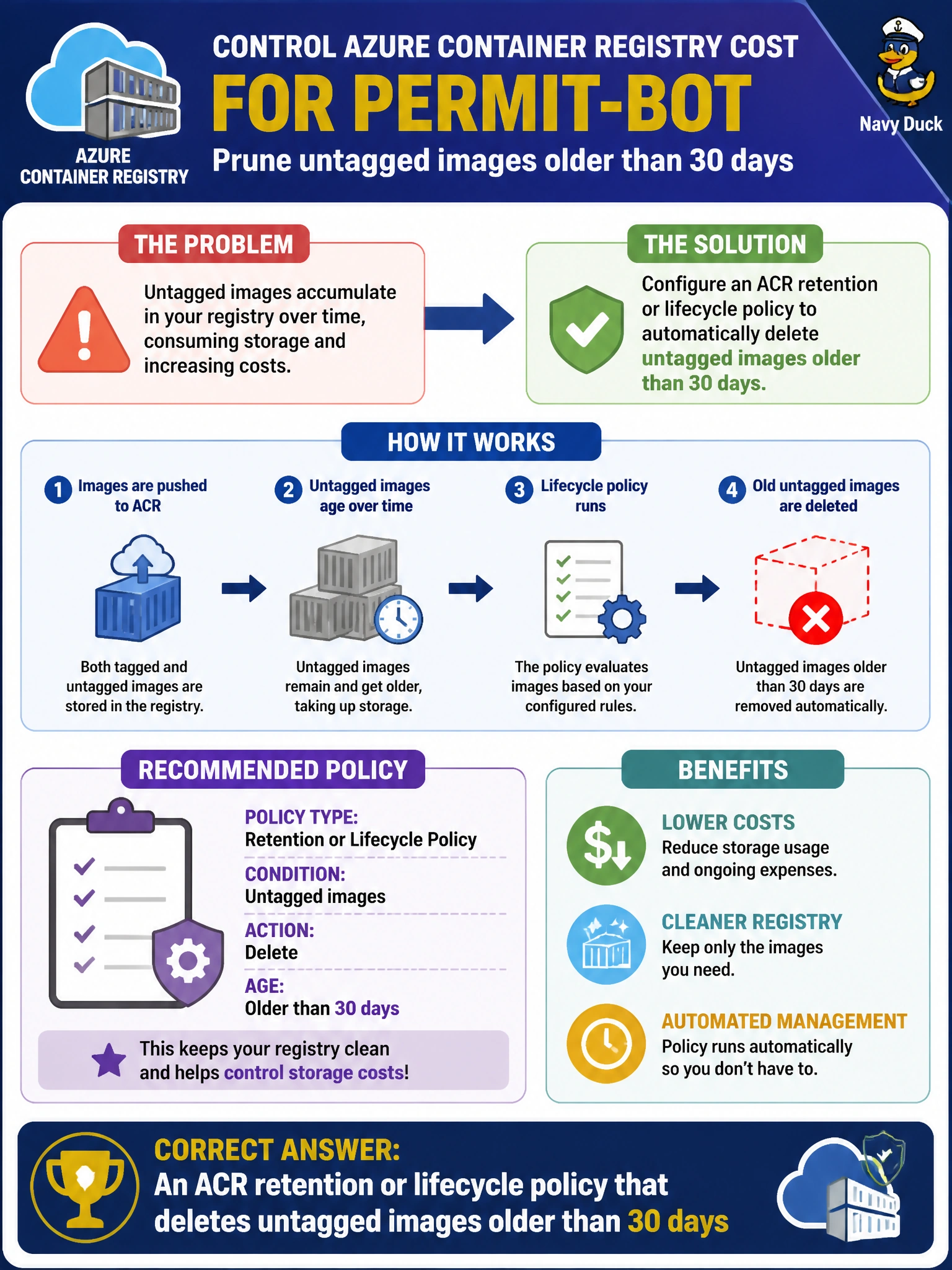
Untagged permit-bot leftovers pile up like forgotten boxes in the city warehouse. An ACR retention or lifecycle policy that drops untagged images older than 30 days clears the clutter without deleting the tagged releases you still need.
Full Explanation
ACR retention and lifecycle policies can automatically delete untagged manifests after a retention window, controlling registry storage cost. A city pruning untagged permit-bot images older than 30 days should configure such a policy so CI churn does not accumulate forever while tagged production releases remain. Untagged leftovers commonly appear after retagging or digest-only workflows; lifecycle cleanup keeps the municipal registry lean without weekend heroics deleting the wrong tags.
Disabling garbage collection and keeping every untagged layer forever fails cost control as permit-bot builds accumulate. Manual deletion of production tagged releases every weekend fails the goal—tagged releases are what you keep; untagged intermediates are what policies target. Moving all images to anonymous public registries without retention controls fails privacy and still does not implement ACR lifecycle management.
Exam caveat: Policy details differ (retention vs. purge commands/tasks), but the concept is automated deletion of untagged or aged artifacts per rules. Do not purge immutable production tags you still need; scope policies to untagged or explicitly aged candidates.
Operational check: Enable a retention/lifecycle rule for untagged images older than 30 days on the permit-bot repository, dry-run or monitor purge results, and confirm recent tagged production releases remain pullable while old untagged manifests disappear and storage trends down.