
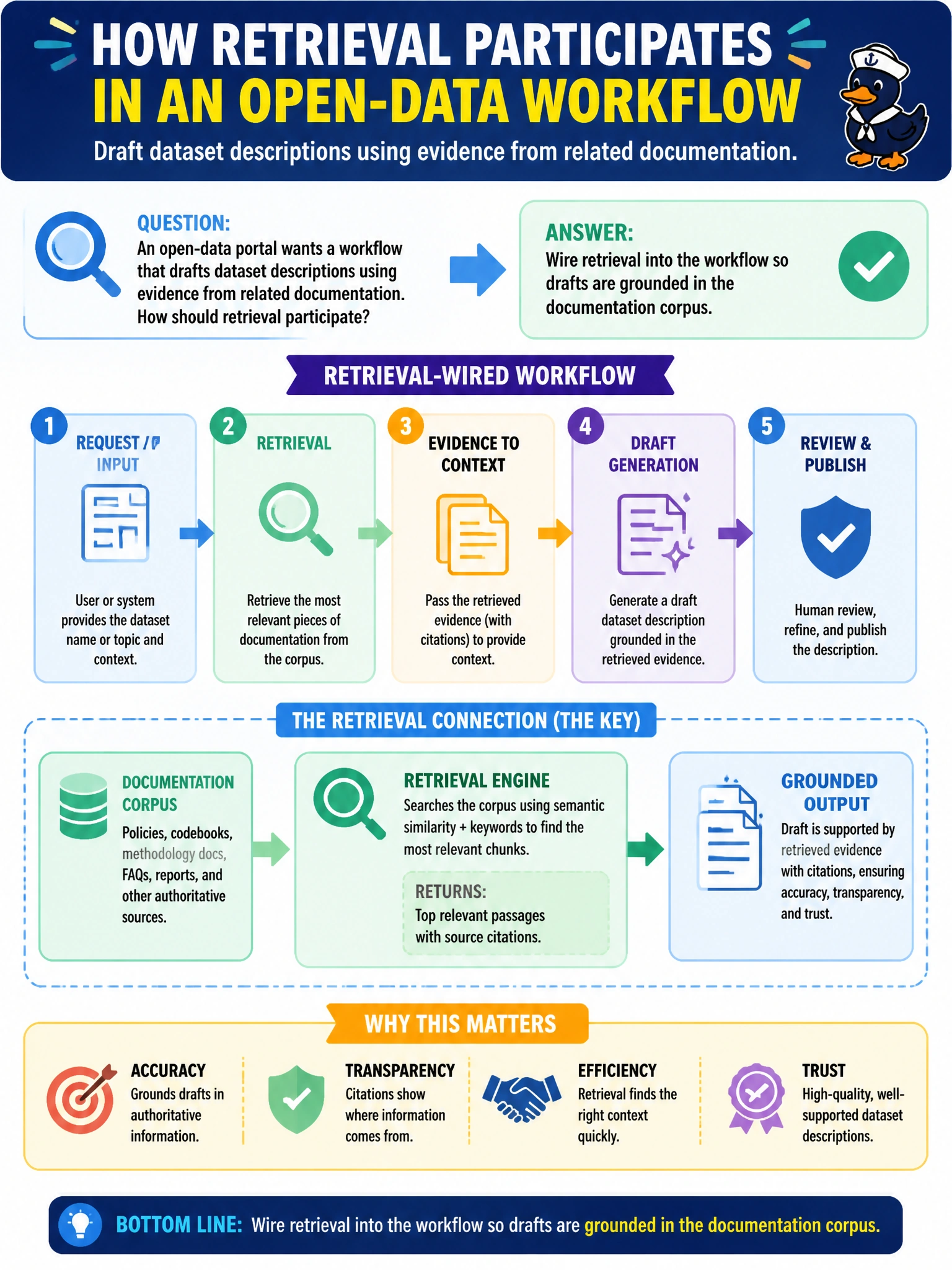
An open-data portal wants a workflow that drafts dataset descriptions using evidence from related documentation. How should retrieval participate?
Select an answer to reveal the explanation.
Short Explanation
Good dataset blurbs should lean on the docs you already published. Wire retrieval into the drafting workflow so the generative step stays grounded. Reusing templates, inheriting metadata, or echoing headings won't ground your drafts because you'll copy surface structure without using the docs as evidence.
Full Explanation
An open-data portal drafting dataset descriptions from related documentation should wire retrieval into the workflow so generative drafts stay grounded in the documentation corpus. Retrieval supplies titles, methodology notes, field definitions, and update cadences already published, which reduces invented blurbs and keeps catalog copy aligned with municipal evidence. Wiring retrieval into the workflow so drafts reuse templates from the documentation corpus mistakes formatting for grounding — the draft copies layout from documentation without using titles, methodology notes, field definitions, and update cadences as evidence, so borrowed structure can still hold invented claims. Wiring retrieval into the workflow so drafts inherit metadata from the documentation corpus leaves the draft itself ungrounded — inherited tags and catalog fields label the record but don't supply documentation evidence to the generative step, so descriptions still invent substance. Wiring retrieval into the workflow so drafts echo headings from the documentation corpus copies surface organization rather than evidence — echoing headings repeats documentation titles while the descriptive text is still generated without retrieved methodology notes and field definitions, so alignment is only cosmetic. Exam caveat: generative municipal catalog drafting that must use documentation evidence requires retrieval-in-the-loop—not template reusing, metadata inheriting, or heading echoing. Operational check: connect the documentation index as a retrieval step before the draft LLM call; require citations or retrieved snippets in the draft artifact; review a sample of open-data descriptions for factual alignment with source docs before publishing to the portal.
Prefer to study offline? Printable PDF study book + test engine ($7.50, unofficial). These questions stay free here.