
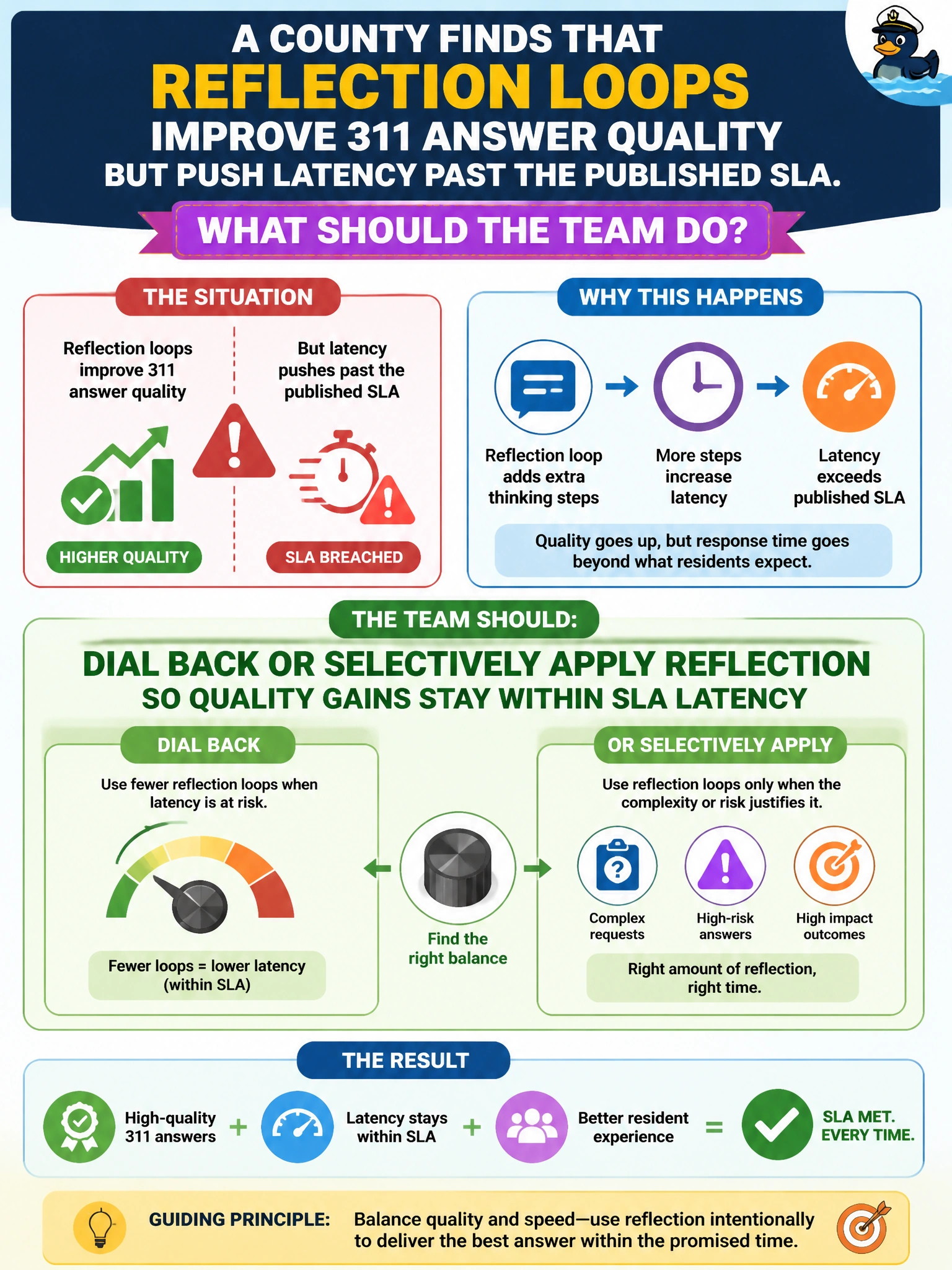
A county finds that reflection loops improve 311 answer quality but push latency past the published SLA. What should the team do?
Select an answer to reveal the explanation.
Short Explanation
Quality is great until the resident hangs up waiting. If reflection loops blow the 311 SLA, dial them back or use them only where they pay off. Keeping self-critique loops on 311 replies for quality while meeting SLA latency targets keeps you over the SLA, and that’s not a civic service win.
Full Explanation
When a county finds reflection loops improve 311 answer quality but push latency past the published SLA, the team should dial back or selectively apply reflection so quality gains stay within SLA latency. Reflection is valuable, not absolute. Civic service levels are published promises; unbounded critique passes that make residents wait indefinitely are not a win. Selective application (harder intents only, fewer passes, or async review where allowed) keeps the quality benefit without violating latency. Send the first draft promptly and add reflection afterward to remain inside SLA latency fails because it sends the resident an unreflected answer instead of the improved one, trading away the quality gain just to show a faster first response. Move reflection to batch scoring of 311 logs to keep replies inside SLA latency fails because scoring chats after they’re done does nothing for the resident waiting on a live reply and leaves real-time answers outside the published SLA. Keep self-critique loops on 311 replies for quality while meeting SLA latency targets fails because insisting on those loops keeps the extra latency that caused the SLA breach, so it cannot actually meet the targets instead of tuning reflection to fit them. Exam caveat: reflection must be tuned against civic latency SLAs—sending the first draft promptly with reflection afterward, moving reflection to batch scoring of logs, or keeping self-critique loops are wrong extremes. Operational check: measure reflection’s latency cost on 311 intents, apply full reflection only where quality risk justifies it, reduce passes or skip on simple FAQs, and re-validate p95 latency against the published SLA after the change.
Prefer to study offline? Printable PDF study book + test engine ($7.50, unofficial). These questions stay free here.