
Parks expects a weekend concert series to spike chatbot traffic and wants capacity without a permanent year-round cost jump. What approach fits?
Select an answer to reveal the explanation.
Short Explanation
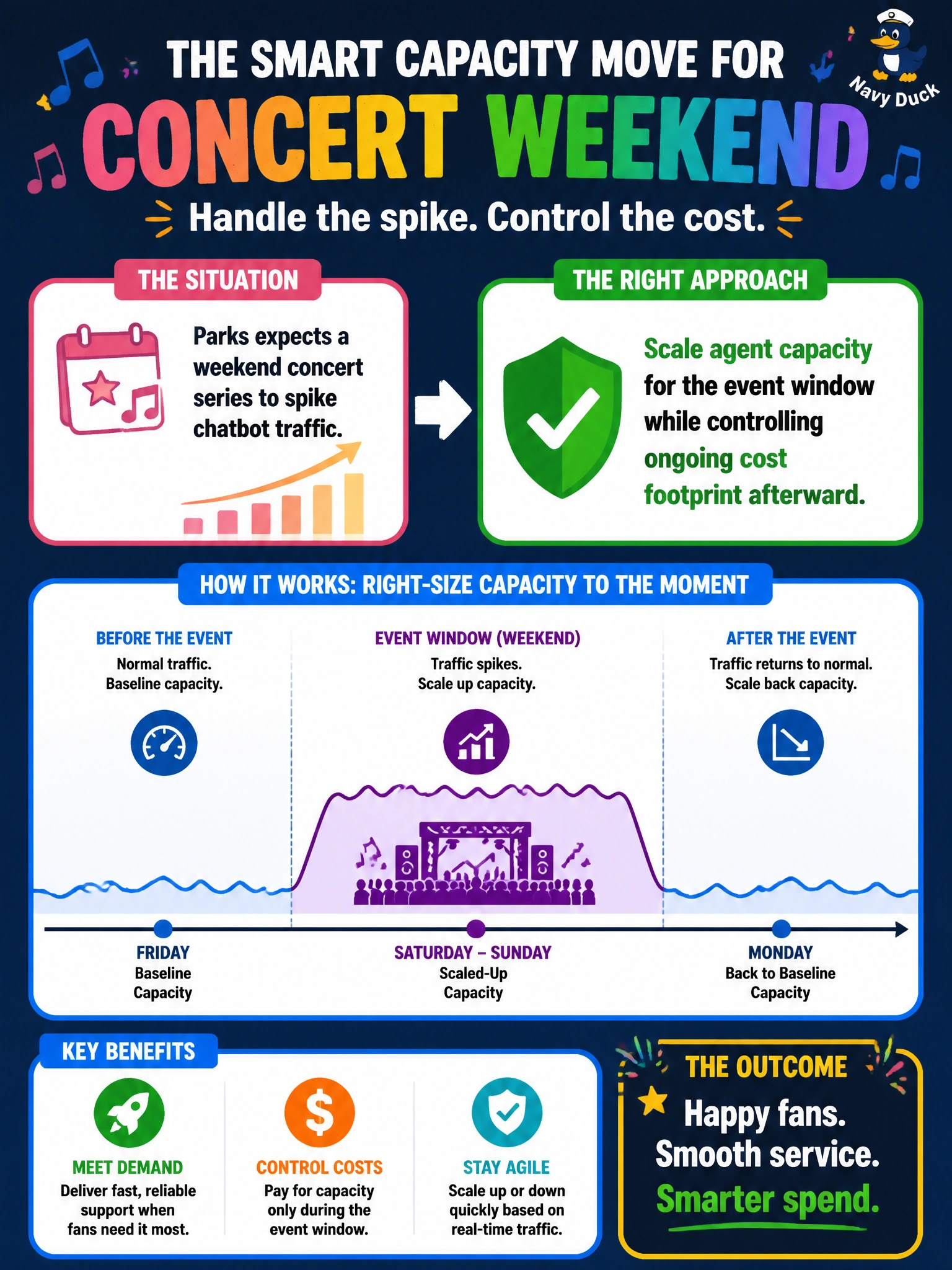
Festival weekends are temporary—reserving year-round agent throughput sized for concert peak demand sticks you with maximum costs all year, even when the stages are empty. Scale Foundry agent capacity for the event, then scale back when the crowds leave. That gives residents help without paying for peak capacity when it’s quiet.
Full Explanation
Parks should scale Foundry agent capacity for the concert-weekend traffic window while controlling the ongoing cost footprint afterward so temporary demand does not become a permanent municipal spend increase. The approach works because event-driven civic chatbots need burst capacity (quotas, scale settings, possibly higher TPM) for a known interval, then a deliberate scale-down and budget baseline once attendance drops. Aligning capacity with the event calendar is the FinOps pattern that preserves rider/park visitor experience without year-round maximum spend.
Provisioning reserved year-round agent throughput sized for peak concert demand levels fails by concept because it over-provisions steady state and locks in cost unrelated to actual demand, keeping peak-level spend in place even when there are no concerts. Splitting the parks chatbot into separate venue-specific bots for individual concert locations fails because it fragments the visitor experience and adds operational overhead instead of managing the temporary surge with shared capacity. Increasing conversation log retention and reviewing analytics dashboards to monitor concert weekend traffic patterns fails because it only observes demand after it happens and does not add any agent capacity to handle the concert-weekend surge.
Exam caveat: scale-up without an automated or calendar-driven scale-down often “forgets” to return to baseline after the festival. Operational check: pre-approve an event capacity change window, set budget alerts, schedule post-event reversion, and compare weekend token spend and latency to the baseline week to confirm both performance and cost returned to normal.
Prefer to study offline? Printable PDF study book + test engine ($7.50, unofficial). These questions stay free here.