
Municipal courts plan Copilot license assignment waves aligned to training completion. Why is that approach sound?
Select an answer to reveal the explanation.
Short Explanation
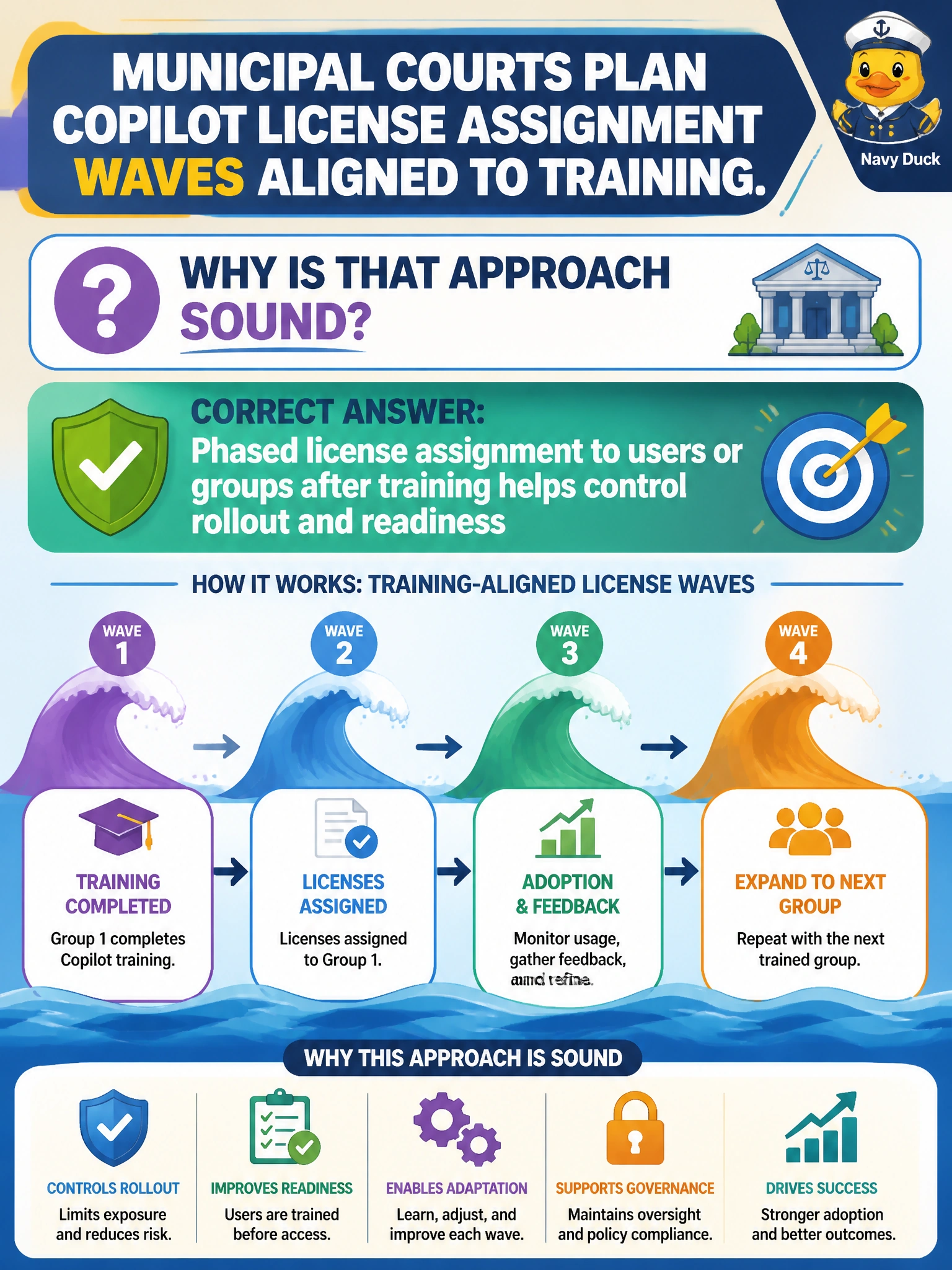
Train first, then hand out Copilot seats in waves—you keep readiness and cost under control. Conditional Access device compliance secures sign-ins but doesn't sequence licenses by training, and self-service purchase lets users skip the wave. Phase the assignments.
Full Explanation
Municipal courts aligning Copilot license assignment waves to training completion is sound because phased license assignment to users or groups after training helps control rollout and readiness. Staff who have completed acceptable-use and product training are less likely to misuse Copilot, finance can stage cost, and support desks can absorb tickets in waves instead of a single flood.
Using Entra ID group-based licensing to automate assignment by department attributes or roles fails the training gate because it can provision seats to untrained users and does not phase rollout by readiness. Requiring compliant devices through Conditional Access secures Copilot sign-in activity but does not explain why license assignment should wait for training completion; it is a separate sign-in control, not a rollout rationale. Enabling self-service purchase allows users to buy Copilot licenses with department approval but lets trainees obtain seats outside the planned wave, undermining controlled rollout and staged readiness.
Exam caveat: Training gates are organizational policy layered on top of Microsoft licensing; the exam concept is phased assignment for controlled rollout, not a specific LMS product.
Operational check: Maintain a trained-users group that feeds group-based Copilot licensing; move clerks into the group only after training completion; confirm untrained clerks remain unlicensed while Conditional Access policies stay enforced.
Prefer to study offline? Printable PDF study book + test engine ($7.50, unofficial). These questions stay free here.